This UP factory was making rose water. Inside: 1,102.88 kg mephedrone worth Rs 200 crore
Source Entity
Manish Sahu
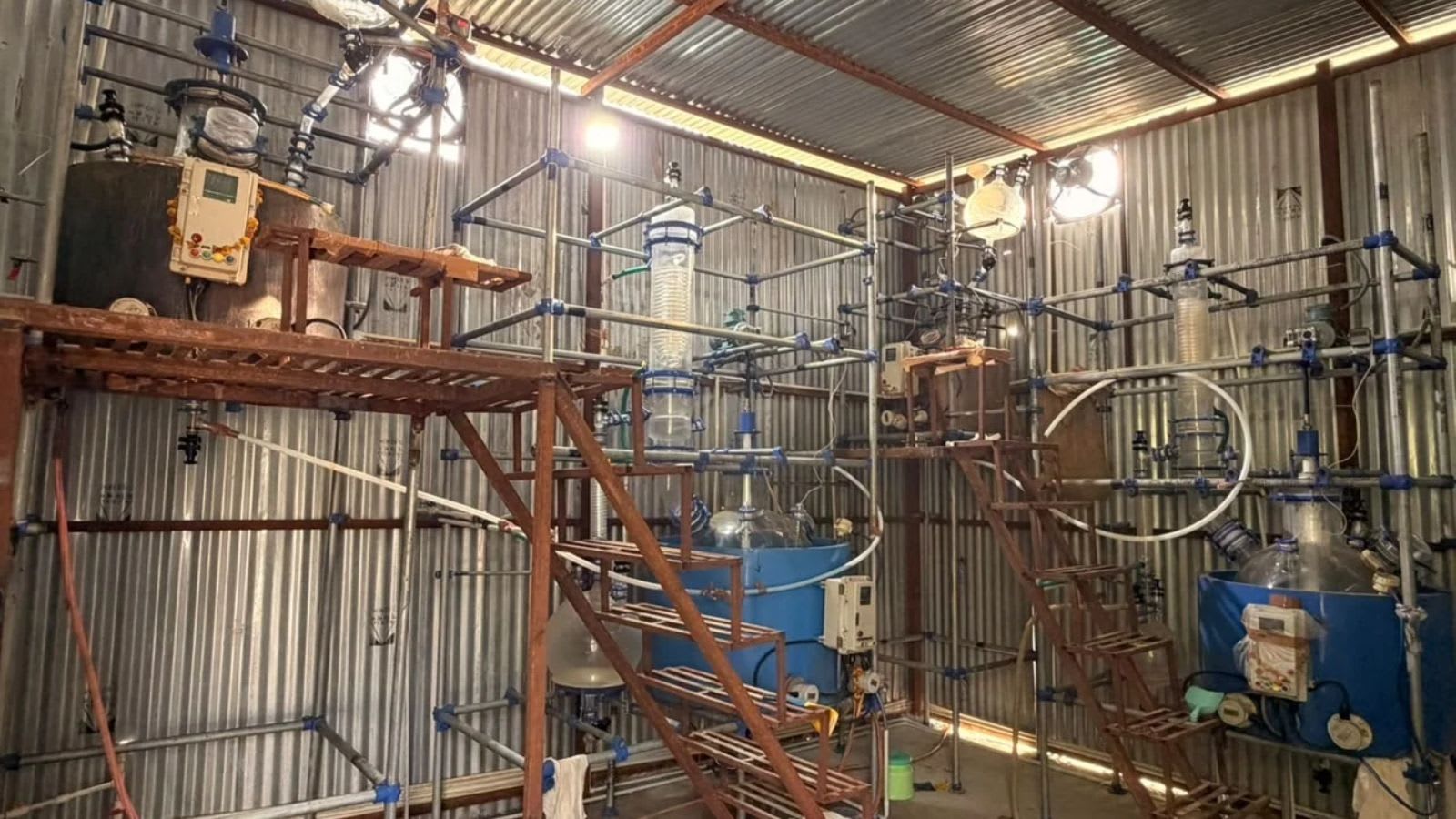
Authorities have busted a major mephedrone laboratory in Jalaun, Uttar Pradesh, hidden within a rose water factory. Two individuals are in custody as investigations into the financial backers and distribution networks continue.
The Jalaun Drug Syndicate: A Deep Dive into a Synthetic Narcotics Operation
The Discovery in Bundelkhand
In a significant crackdown on synthetic narcotics, a joint operation by the Directorate of Revenue Intelligence (DRI) and the Uttar Pradesh Anti-Terrorist Squad (ATS) has uncovered a massive mephedrone manufacturing laboratory in the Jalaun district. The facility, which operated under the guise of a legitimate rose water manufacturing unit in the village of Rampura, was found to be housing 1,102.88 kg of mephedrone, with an estimated street value of Rs 200 crore. The discovery followed a tactical raid on October 29, which brought an end to an illicit operation that had successfully blended into the quiet rural landscape of Bundelkhand.
The Modus Operandi: Camouflage and Concealment
Criminal syndicates frequently utilize legitimate industrial fronts to mask the production of illicit substances. In this instance, the choice of a rose water factory provided a strategic advantage: the strong, natural scents associated with floral water production likely helped mask the chemical odors typically emitted during the synthesis of mephedrone. The villagers of Rampura were initially alerted by the unusual nocturnal movement of vehicles, highlighting how even sophisticated criminal enterprises can be undone by the simple vigilance of a local community.
Legal Proceedings and Judicial Custody
Following the raid, two individuals—Hemendra Kushwah, 27, and Santosh, 37—were arrested and subsequently remanded to 14-day judicial custody by a special Narcotic Drugs and Psychotropic Substances (NDPS) court. The judicial process marks the first step in holding the perpetrators accountable for their roles in the syndicate. The court’s involvement signifies the severity of the charges, which fall under the purview of the stringent NDPS Act, designed to combat the trafficking and manufacturing of psychotropic substances.
Unraveling the Supply Chain
Beyond the immediate arrests, the core focus of the DRI and ATS has shifted toward the financial and logistical architecture of the operation. Investigators are actively tracing the chemical supply chains that provided the precursors necessary for mephedrone production. Understanding where these raw materials originated is critical to dismantling the broader network. Furthermore, authorities are working to identify the intended recipients of the massive stockpile, as well as investigating whether any consignments were successfully distributed prior to the laboratory’s discovery.
Broader Implications and Future Trends
This incident underscores a growing trend of clandestine laboratories moving into smaller, less scrutinized districts like Jalaun to avoid the heightened surveillance present in major metropolitan hubs. The use of agricultural or small-scale industrial zones as fronts presents a unique challenge for law enforcement agencies. As synthetic drug markets continue to evolve, the collaboration between central agencies like the DRI and state-level units like the UP ATS will remain essential in mapping out these cross-state criminal connections and preventing the further proliferation of dangerous narcotics in the region.