Amit Shah’s message to UP BJP workers: ‘Throw your resentment in the Gomti’
Source Entity
Lalmani Verma
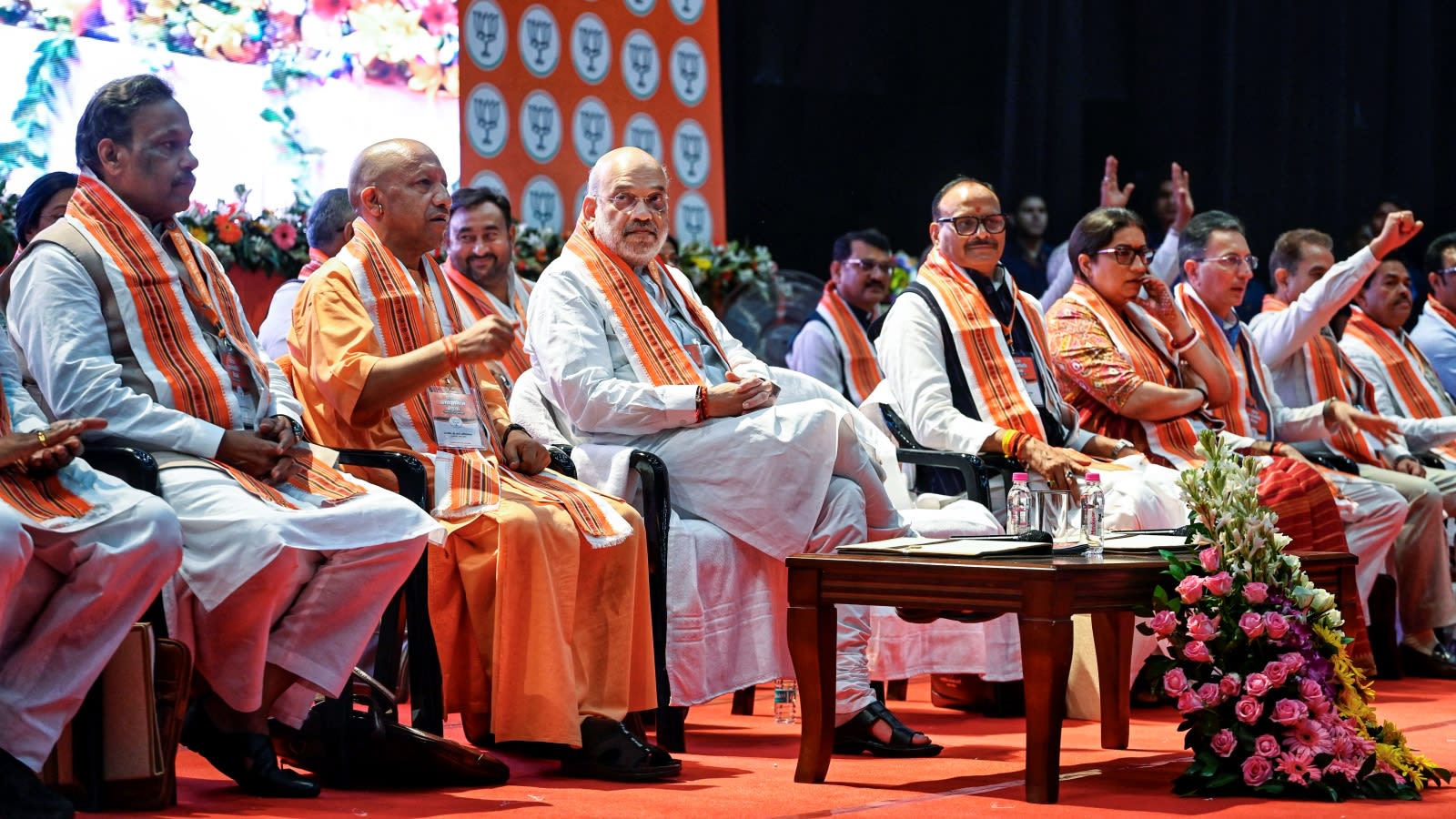
Union Home Minister Amit Shah rallied BJP workers in Lucknow, urging them to set aside internal grievances to secure a third term in Uttar Pradesh. He promised the implementation of the Uniform Civil Code and asserted that the BJP's political stronghold in the state will last for 30 years.
Strategic Consolidation: Amit Shah’s Lucknow Directive
Union Home Minister Amit Shah recently addressed over 2,800 BJP functionaries at the Ram Manohar Lohia National Law University in Lucknow, setting a clear, combative tone for the upcoming Uttar Pradesh assembly elections. By urging party workers to discard their personal grievances and frustrations into the Gomti River, Shah signaled a transition from internal friction to unified electoral mobilization. This directive emphasizes a top-down focus on discipline, framing the grassroots karyakartas as the indispensable architects of the party’s victory, rather than individual leaders.
The 'Fish Eye' Focus
Shah utilized the metaphor of the “fish eye”—a reference to Arjuna’s legendary focus in the Mahabharata—to instruct party workers to maintain singular concentration on the electoral goal. By downplaying the role of individual leadership and elevating the collective effort of the cadre, Shah aims to mitigate anti-incumbency sentiment and internal factionalism. This approach is a hallmark of the BJP’s organizational strategy, which prioritizes booth-level management and ideological alignment over localized personality cults.
Legislative Promises: The UCC Pillar
Beyond organizational discipline, Shah injected a significant ideological promise into the campaign trail: the implementation of the Uniform Civil Code (UCC) in Uttar Pradesh. By framing the UCC as a key agenda item for a potential third consecutive term, the BJP is positioning itself to consolidate its core voter base. This promise serves as a catalyst for the broader ideological discourse the party wishes to center in the state, contrasting their governance model with the opposition’s platforms.
Narrative of 'Vinash' vs. 'Vikas'
State BJP president Pankaj Chaudhary reinforced Shah’s messaging by framing the upcoming contest as a binary choice between “vinash” (destruction) and “vikas” (development), as well as “jatiwad” (casteism) and “rashtrawad” (nationalism). This rhetorical strategy is designed to shift the debate away from localized governance issues and toward a nationalistic framework. The party is clearly attempting to define the narrative landscape, forcing the opposition to defend their record against these sweeping, binary categories.
The 'Angad's Foot' Doctrine
Perhaps the most provocative element of Shah’s rhetoric was his comparison of the BJP’s presence in Uttar Pradesh to “Angad’s foot”—a reference to the Ramayana where the character Angad plants his foot so firmly that none can move it. By claiming the Samajwadi Party will not return to power for 30 years, Shah is attempting to project an image of invincibility. This psychological warfare is intended to demoralize opposition cadres and signal to the electorate that the BJP’s dominance is an inevitable, long-term political reality.
Future Implications and Conclusion
As the BJP prepares for the next electoral cycle in Uttar Pradesh, the combination of internal discipline, high-stakes ideological promises like the UCC, and a narrative of long-term dominance indicates a strategy of aggressive consolidation. The party is banking on the idea that a unified, ideologically driven base can overcome any local grievances. Whether this strategy succeeds in silencing internal dissent and capturing the voter's imagination remains the critical question for the upcoming election cycle.
Multiple Citing Sources