Total construction ban in Delhi-NCR from Nov 5 to 20
Source Entity
KUSHAGRA DIXIT
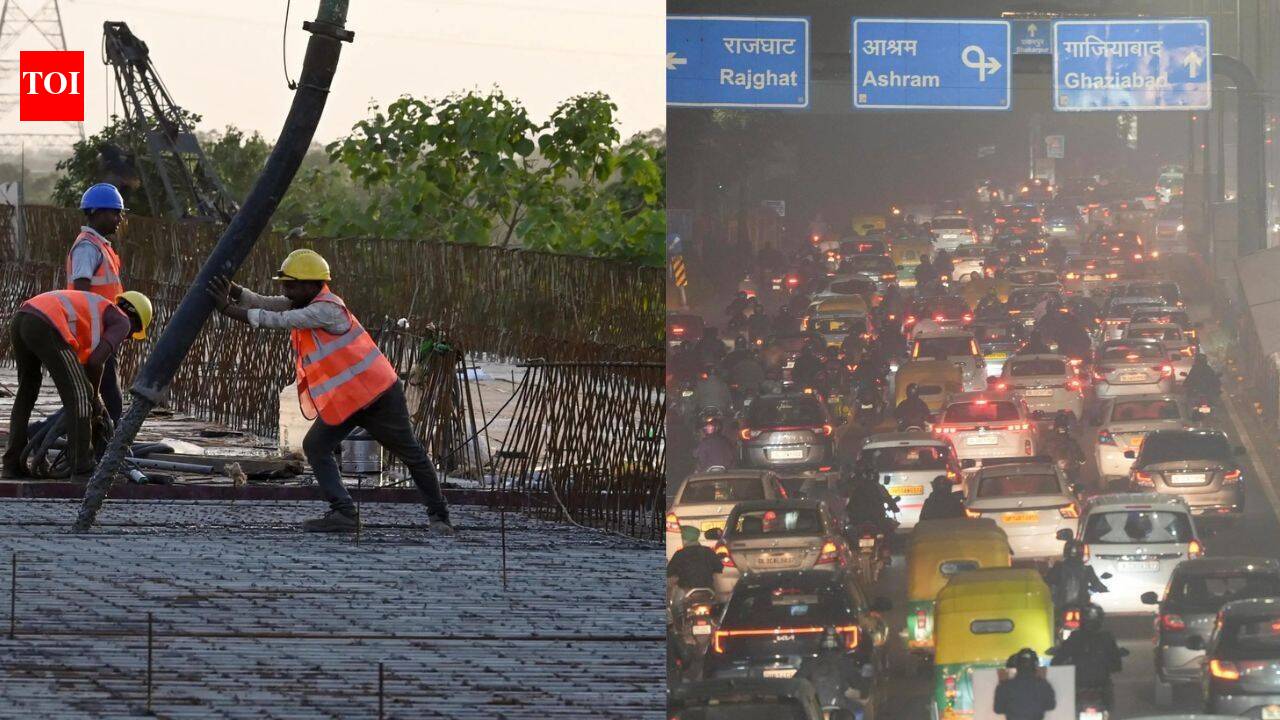
The Centre has imposed a ban on construction and demolition activities in Delhi-NCR from November 5 to 20 to combat worsening winter air quality. Additionally, offices are directed to operate at 50% physical capacity, while vehicle restrictions remain in place to address anticipated severe pollution levels.
Delhi-NCR Implements Stringent Anti-Pollution Measures
As winter approaches, the National Capital Region (NCR) is once again bracing for its annual battle against hazardous air quality. In a proactive move to mitigate the anticipated spike in pollution, the Centre has announced a comprehensive ban on all construction and demolition activities across Delhi and its surrounding satellite cities from November 5 to 20. This decision, announced by Union Environment Minister Bhupender Yadav, marks a decisive shift toward anticipating pollution peaks rather than merely reacting to them after they have reached critical levels.
Curbing Human Activity to Protect Public Health
Beyond the halt on construction, the government has mandated that both public and private offices in Delhi, Ghaziabad, Gurugram, Faridabad, Sonipat, and Gautam Buddha Nagar operate with a maximum of 50% physical staff attendance. This 'work-from-home' directive, which mirrors strategies used during the pandemic, is designed to reduce vehicular congestion—a primary contributor to local emissions. While industrial establishments and essential services are exempt from these workforce restrictions, the move underscores the gravity of the situation as AQI levels are forecasted to plummet into the 'poor' and potentially 'severe' categories.
Technological Integration and Monitoring
Minister Yadav’s announcement coincided with his visit to the Commission for Air Quality Management’s (CAQM) new PAVAN Integrated Command and Control Centre. This facility represents a technological upgrade in how the region monitors air quality, allowing authorities to target specific pollution hotspots and non-conforming industries with greater precision. By utilizing real-time data, the government aims to identify and penalize major polluters swiftly, moving away from the generalized enforcement models of previous years.
Maintaining Vehicle Restrictions
Despite calls for flexibility, the government has remained firm on its existing vehicle entry restrictions. Non-Delhi registered BS-IV and older diesel vehicles are barred from entering the capital from November 1 through January 31. The refusal to roll back these measures indicates a commitment to enforcing systemic changes to the region's transport footprint, acknowledging that vehicular emissions are a non-negotiable factor in the winter smog crisis.
Historical Context and Future Implications
Historical data consistently shows that mid-November serves as a turning point where air quality deteriorates rapidly, often hitting 'Severe' and 'Severe+' levels. This recurring pattern is exacerbated by meteorological factors, including lower wind speeds and temperature inversions that trap pollutants close to the ground. By institutionalizing these bans annually, the government is attempting to build a sustainable regulatory framework that can withstand the unique environmental pressures of the Indo-Gangetic plain.
Conclusion: A Shift in Strategy
The implementation of these measures reflects a broader policy evolution: moving from reactive emergency responses to a systematic, preemptive strategy. While these restrictions impose significant economic and logistical challenges on the construction and corporate sectors, the administration maintains that the public health imperative must take precedence. The success of these measures will likely serve as a benchmark for future urban environmental management in India’s most densely populated and polluted regions.
Multiple Citing Sources