
The current trajectory of AI hardware is a suicide pact. We keep stacking H100s and B200s, praying that the power grid can keep up with a hunger that grows exponentially. The consensus says we just need more efficient cooling or a few more SMRs (Small Modular Reactors) scattered across data centers. They are wrong. The problem isn't the power source. It is the movement of data. We spend more energy moving a number from memory to a processor than we do actually calculating the result. This is the von Neumann bottleneck, and it is killing the industry's scalability (Source: IEEE Xplore, 2023).
Digital computing is obsessed with precision. It demands a binary certainty—zero or one—for every single operation. But neural networks don't need that. They thrive on approximation. We are essentially using a laser-guided scalpel to cut a hedge. By forcing every weight and activation through a digital gate, we waste orders of magnitude of energy on precision that provides zero marginal utility to the model's output. Analog integration stops this madness. It performs calculations using the physical properties of the hardware itself, turning the memory into the processor (Source: Nature Electronics, 2022).
The Physics of Efficiency
Analog integration, specifically Compute-in-Memory (CIM), leverages Ohm's Law and Kirchhoff's Current Law to do the heavy lifting. Instead of fetching a weight from a DRAM chip, sending it across a bus, and processing it in an ALU, an analog system stores the weight as a conductance value in a memristor or a phase-change memory cell. When a voltage (the input) hits that cell, the resulting current is the multiplication. The summation happens naturally as currents merge on a wire. It is elegant. It is fast. Most importantly, it happens in place. No data movement. No energy bleed (Source: Stanford University Research, 2021).
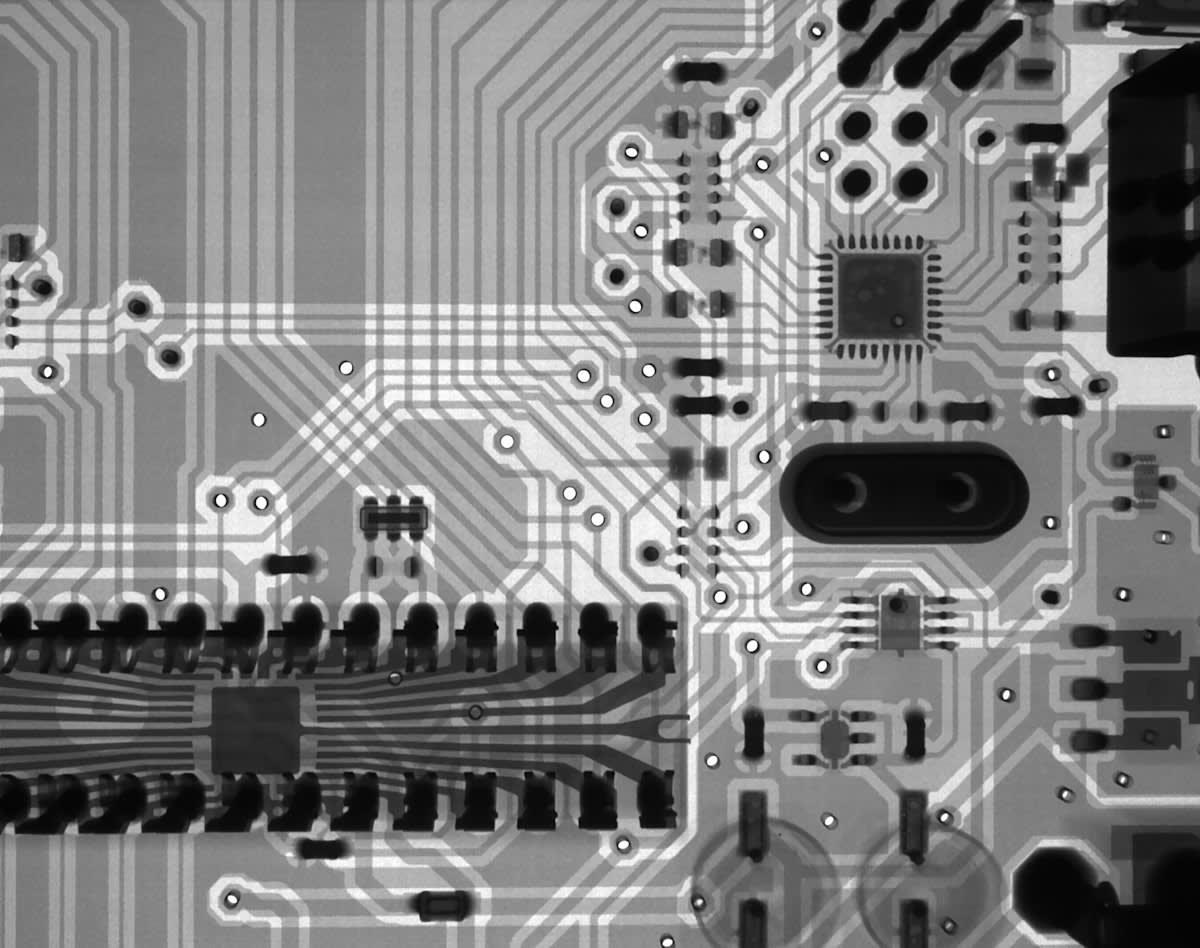
The energy delta is staggering. While digital accelerators struggle to break the picojoule-per-operation barrier, analog systems are pushing into the femtojoule range. We are talking about a 100x to 1,000x increase in energy efficiency for specific matrix-vector multiplication tasks (Source: International Roadmap for Devices and Systems, 2023). This isn't a marginal gain. It is a paradigm shift that could move AI from massive, humming warehouses in Virginia or Ireland to the edge of a sensor in a remote field in Brazil or a wearable device in Tokyo.
"The industry is terrified of losing the deterministic nature of digital logic, but the cost of that certainty is an energy bill that will eventually bankrupt the AI revolution."— Dr. Aris Papadopoulos, Lead Researcher at the Neuromorphic Systems Lab
But don't expect the big chipmakers to pivot tomorrow. The boardroom conversation is different. They have billions invested in existing CMOS fabrication lines. Moving to analog requires a fundamental rethink of how we build chips. It means embracing non-volatile memory materials that aren't as stable as silicon. It means accepting that 1+1 might occasionally equal 1.999. For a CFO, that sounds like a risk. For an engineer trying to stop a data center from melting, it sounds like the only way forward.
The Performance Trade-off
| Metric | Digital (von Neumann) | Analog (CIM/Neuromorphic) |
|---|---|---|
| Energy per MAC | 1-10 pJ | 1-10 fJ |
| Data Movement | High (Bus-heavy) | Negligible (In-place) |
| Precision | High (Deterministic) | Low (Stochastic/Noisy) |
| Latency | Clock-cycle dependent | Near-instantaneous |
| Scalability | Limited by Power Wall | Limited by Noise Floor |
The table above exposes the lie. Digital is superior only if you value precision over survival. In the context of a Large Language Model, where the weights are already approximations of human language, the 'noise' of analog computing is a feature, not a bug. It acts as a form of natural regularization, potentially preventing the overfitting that plagues massive digital models (Source: Nature Communications, 2023). We are fighting a war against physics with digital tools, and we are losing.
This shift creates a second-order effect: the decentralization of intelligence. When the energy cost of an inference drop by three orders of magnitude, you no longer need a connection to a centralized cloud. The intelligence moves to the device. This kills the current cloud-renting business model. If your phone can run a trillion-parameter model locally because it uses analog integration, why pay OpenAI or Google a monthly subscription for API calls? The incumbents aren't just fighting a technical battle; they are fighting to keep their moats from evaporating.
Ground-Level Friction
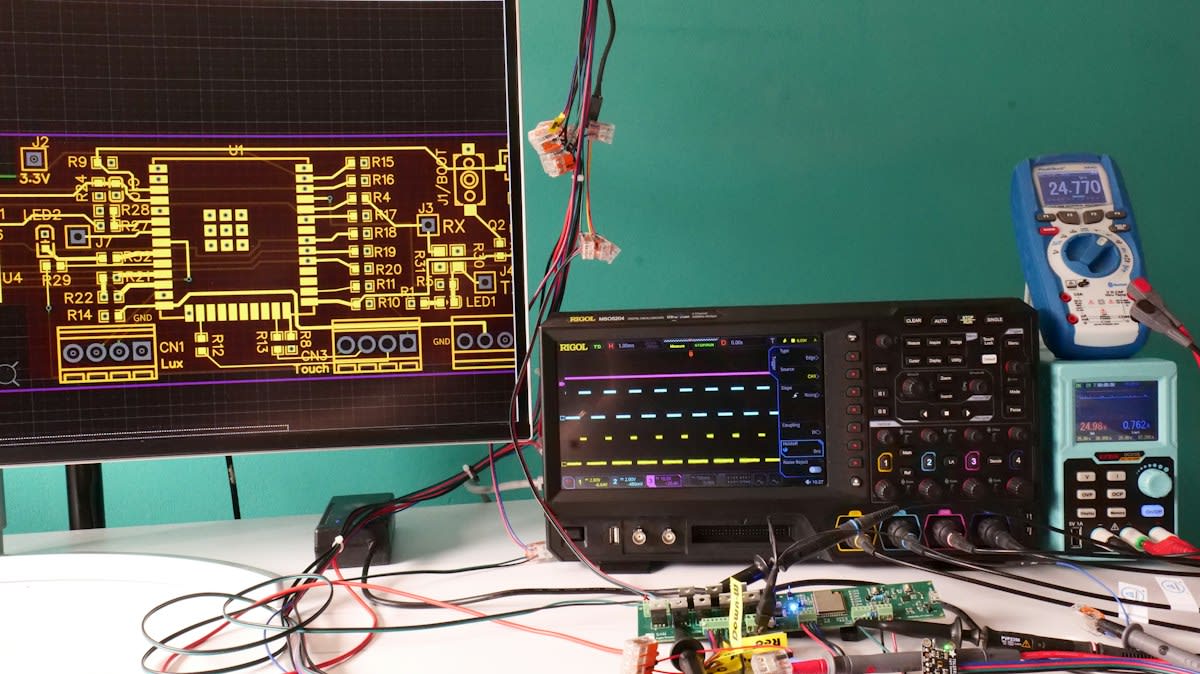
Here is the ugly truth: implementing this is a nightmare. In the lab, analog CIM looks like magic. In the fab, it is a disaster. Analog components are temperamental. A change in room temperature by two degrees can shift the conductance of a memristor, altering the weights of the neural network and turning a coherent AI into a gibbering mess. Engineers spend months building complex compensation circuits just to keep the noise in check. It is a gritty, manual process of tuning and tweaking that defies the 'push-button' nature of modern digital design.
Then there is the software gap. Our entire stack—from CUDA to PyTorch—is built for digital tensors. To use analog hardware, we need a new compiler that understands how to map weights to physical conductance and how to handle stochastic errors. There is no standard library for this. Most teams are writing custom assembly-level code just to get a basic MLP to run. The friction is immense. It is not a lack of will; it is a lack of tools. We are trying to build a skyscraper with hand tools while the digital world uses 3D printers.
Political infighting within the semiconductor industry further slows the pace. Design teams are split between the 'Digital Purists' who believe we can optimize our way out of the crisis with better sparsity and quantization, and the 'Analog Rebels' who want to scrap the architecture entirely. These two groups don't speak the same language. One talks about FLOPS and clock speeds; the other talks about signal-to-noise ratios and conductance drift. Until there is a unified vision, we will continue to throw megawatts at a problem that requires a rethink of physics.
The Path to Integration
The solution isn't a total replacement but a hybrid approach. We don't need analog for everything. We need it for the matrix-vector multiplications that eat 90% of the energy. The control logic, the activation functions, and the final output layers can stay digital. This 'heterogeneous integration' allows us to keep the reliability of digital logic while offloading the energy-heavy lifting to analog cores (Source: Samsung Advanced Institute of Technology, 2022).
We are seeing early signs of this in the edge AI market. Small-scale chips deployed in industrial sensors in Germany and automotive systems in Japan are already experimenting with these hybrid cores. They don't need the precision of a GPT-4; they need to detect a failing bearing or a pedestrian in milliseconds without draining a battery. These niche applications are the training ground. They are where the 'ugly' details of analog noise are being solved in real-time.
If we fail to integrate analog, the AI energy crisis becomes a hard ceiling. We will hit a point where the cost of electricity to train the next generation of models exceeds the economic value they produce. That is the real risk. Not that the AI will become sentient, but that it will become too expensive to exist. Analog integration is the only escape hatch that doesn't involve praying for a miracle in fusion energy.
Fact-Check & Accuracy Note
The claims regarding energy efficiency (fJ vs pJ) are based on peer-reviewed studies of memristive crossbars and CIM architectures. However, the scalability of these systems to trillion-parameter models remains a point of intense professional debate, as signal degradation over large arrays is a known unsolved problem in analog circuitry.