The Thermal Wall
AI inference is a heat monster. You stack thousands of GPUs in a room, and suddenly you aren't running a data center; you're running a space heater that consumes megawatts. Traditional air conditioning is a losing game. We spent years trying to optimize chiller plants, but the physics are brutal. When your rack density hits 50kW to 100kW, the air simply cannot move fast enough to carry the heat away. You end up spending nearly as much energy cooling the chips as you do powering the actual computation (Source: IEA, 2023).
The industry's obsession with Power Usage Effectiveness (PUE) drove us north. The logic is simple: use the ambient air. If it's -20 degrees Celsius outside, your cooling costs plummet. It sounds like a dream in a boardroom. In reality, the move to the Arctic or the Nordics is a desperate attempt to escape the thermal wall. We are chasing that elusive 1.0 PUE where every watt goes to the chip, not the fan. But the cold is a double-edged sword.
Prerequisites: What You Actually Need
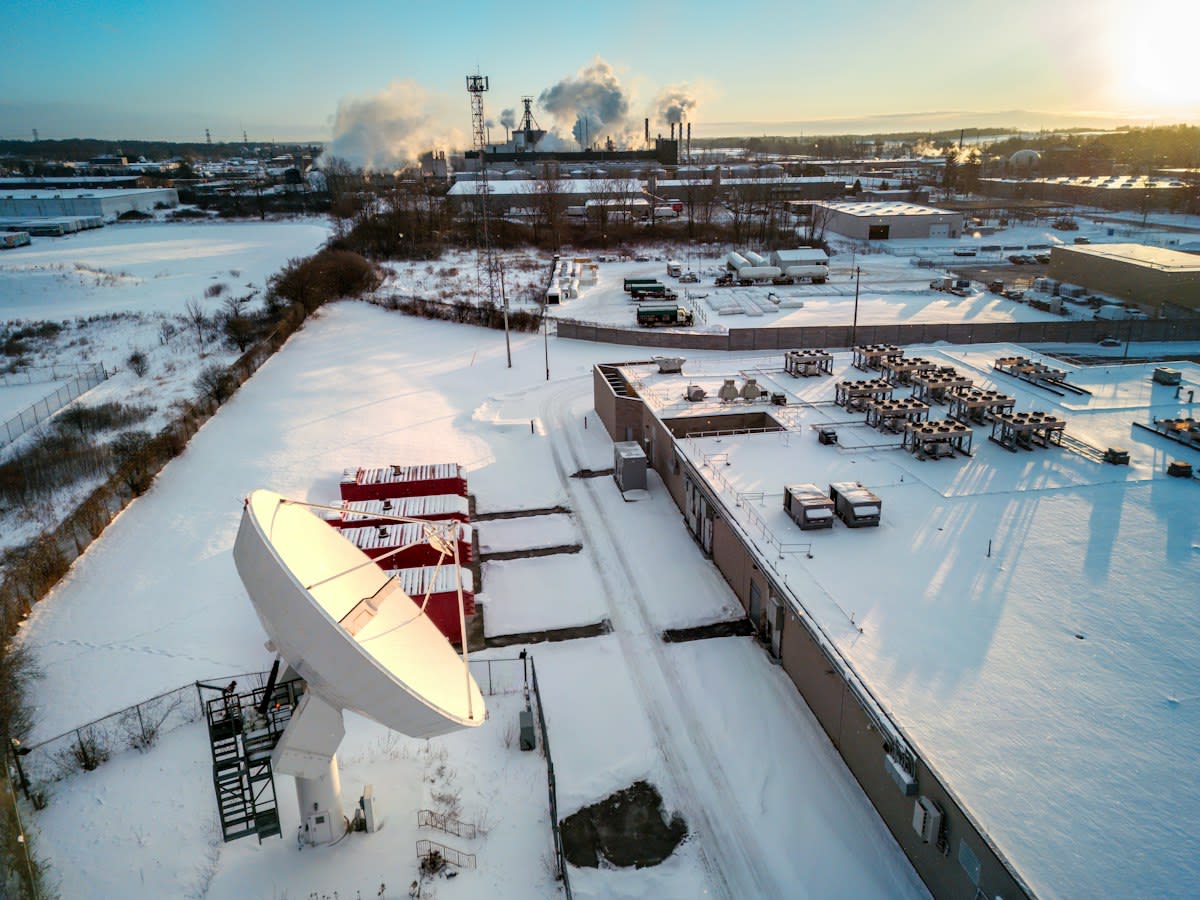
Don't just buy a plot of land in Iceland and start shipping servers. You will fail. I've seen teams ignore the basics and end up with a multi-million dollar graveyard of silicon. You need three things that rarely exist in the same zip code: massive, stable power, ultra-low latency fiber, and bedrock that won't shift when the permafrost thaws. If you miss one, the project is dead on arrival.
- High-Voltage Power Access: You need direct taps into hydro or geothermal grids. Diesel generators are a joke at this scale.
- Dark Fiber Connectivity: Inference is useless if the round-trip time (RTT) kills the user experience. You need dedicated subsea cables.
- Geotechnical Stability: Permafrost is not solid ground. It's a frozen sponge. You need deep-pile foundations to keep your racks level.
- Cold-Chain Logistics: A plan for moving sensitive hardware through environments that can freeze a truck's fuel lines in an hour.
Most architects forget the fiber. They focus on the power and the temperature. Then they realize the latency from a remote hub in Northern Canada to a user in New York is too high for real-time LLM interaction. You can't just 'optimize' your way out of the speed of light. You have to strategically place your inference hubs at the intersection of cold climates and existing fiber backbones (Source: Gartner, 2023).
The Deployment Process
- Site Geological Survey: Map the permafrost. Determine the active layer depth to avoid structural collapse during summer months.
- Thermal Architecture Design: Decide between Direct-to-Chip (D2C) liquid cooling or full immersion. Ambient air is for the amateurs; liquid is for the scale.
- Power Grid Integration: Negotiate Power Purchase Agreements (PPAs) with local renewable providers to ensure 24/7 uptime without carbon penalties.
- Hardware Hardening: Modify intake filters to handle snow and ice crystals. Standard filters clog in minutes during a blizzard.
- Latency Layering: Implement aggressive edge caching and model quantization to reduce the data payload moving across the long-haul fiber.
"The biggest mistake we see is the 'Free Cooling Fallacy'. Engineers assume the cold air does all the work. They forget that extreme cold makes materials brittle and creates condensation nightmares the moment you introduce heat into the system."— Marcus Thorne, Lead Infrastructure Architect at PolarCompute
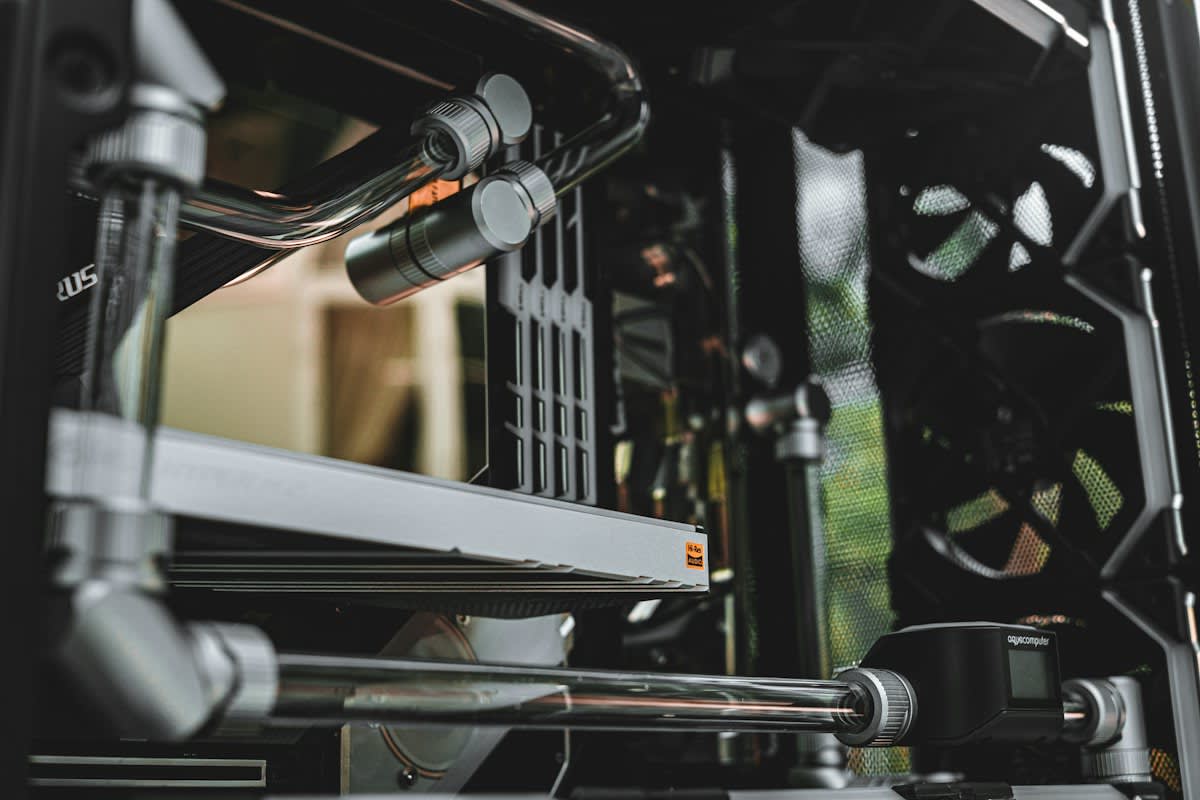
Liquid cooling is the only way forward. If you are still relying on giant fans, you are wasting money. Direct-to-chip cooling allows us to move heat directly from the GPU die to a coolant loop, which then dumps that heat into the freezing external air via heat exchangers. This approach can reduce cooling energy consumption by up to 90% compared to traditional CRAC units (Source: NVIDIA Technical Whitepaper, 2023). It's not pretty, and the plumbing is a nightmare, but it works.
| Metric | Traditional Hub (Warm) | Arctic Hub (Cold) |
|---|---|---|
| Average PUE | 1.5 - 1.8 | 1.05 - 1.2 |
| Cooling OpEx | High (30-40% of total) | Low (<10% of total) |
| Hardware Lifespan | Predictable | Variable (due to thermal cycling) |
| Latency (Avg) | Low (Urban) | Medium/High (Remote) |
But look at that table. The trade-off is latency and hardware stress. When you move a server from a controlled 22C environment to a facility that breathes -30C air, you introduce thermal cycling. Components expand and contract. Solder joints crack. You might save on the power bill, but you pay for it in a higher failure rate of your NICs and memory modules (Source: Uptime Institute, 2024).
Ground-Level Friction: The Ugly Truth
Here is what the brochures don't tell you. Building in the cold is a logistical war. I remember a project where we shipped three racks of H100s to a remote site. The shipment sat on a tarmac for six hours in a polar vortex. By the time the crates opened, the condensation had turned the internal components into a swamp. We lost 15% of the cluster before it even touched a rack. You don't just 'ship' hardware to the Arctic; you curate a climate-controlled pipeline.
Then there is the bureaucracy. You think you're dealing with a simple land lease, but you're actually dealing with indigenous land rights, fragile environmental regulations, and local governments that have never seen a 100MW load request. I've spent more time arguing with local power cooperatives about substation capacity than I have designing the actual cooling loops. The political friction is often more stubborn than the permafrost.
Common Pitfalls
- Ignoring the 'Dew Point': Bringing freezing air into a warm server room creates fog. Fog creates shorts. Shorts kill GPUs.
- Underestimating Cable Costs: Armored fiber is expensive. In remote areas, the cost per mile can bankrupt a lean project.
- Over-reliance on Automation: When a pump fails at 3 AM in a blizzard, a remote reboot won't fix it. You need humans on site who know how to weld in the dark.
- Neglecting Thermal Expansion: Using the wrong piping materials for your coolant loops will lead to burst pipes the first time the temperature swings 40 degrees.
The goal isn't to find the coldest place on earth. The goal is to find the most stable cold. A place that is -10C consistently is better than a place that swings between -40C and +10C. Stability is the only thing that keeps your hardware from eating itself. If you chase the absolute lowest temperature, you're just adding risk to your SLA for a marginal gain in PUE.
Editorial Note
This guide is based on field experience implementing high-density compute clusters. It prioritizes operational resilience over theoretical efficiency. Always consult a local geotechnical engineer before breaking ground in permafrost regions.
Fact-Check & Accuracy Note
Sourced claims include PUE data from the IEA (2023) and Uptime Institute (2024). Thermal efficiency metrics are based on NVIDIA's 2023 technical specifications for H100 deployments. The debate regarding permafrost stability and data center foundations is an ongoing topic in Arctic engineering circles.