
We have been lied to about why people fail. The corporate world treats professional collapse as a sudden event—a missed deadline here, a blown project there—as if incompetence were a bolt of lightning. It isn't. Failure is a slow leak. For decades, we relied on the resume to filter for success, but the resume is a vanity document. The real game is now moving toward the biological and the behavioral. Can a heart rate, a sleep cycle, or a credit oscillation predict when a CEO will crumble? The infrastructure is already being built.
The Financial Proxy: Alternative Data as a Behavioral Mirror
The first layer of this prediction engine isn't medical; it is financial. We are seeing a massive expansion in the U.S. alternative data credit underwriting market, where the focus has shifted from static credit scores to dynamic behavioral patterns (Source: AMA Research & Media LLP, 2024). Companies like Plaid, Zest AI, and Upstart are not just looking at whether you pay your bills. They are analyzing the friction in your spending, the timing of your transactions, and the overlap between your lifestyle and your obligations. When a professional's financial behavior begins to destabilize, it is often the first biometric signal of a cognitive or emotional breakdown.
This isn't just about loans. It is about predictability. If a firm can see a pattern of erratic financial behavior through alternative data, they are seeing a proxy for stability. The market is expanding because traditional metrics failed to catch the volatility of the modern workforce (Source: Coherent Market Insights, 2024). The collision of consumer behavior and risk assessment creates a web where your bank account becomes a real-time monitor of your professional reliability.
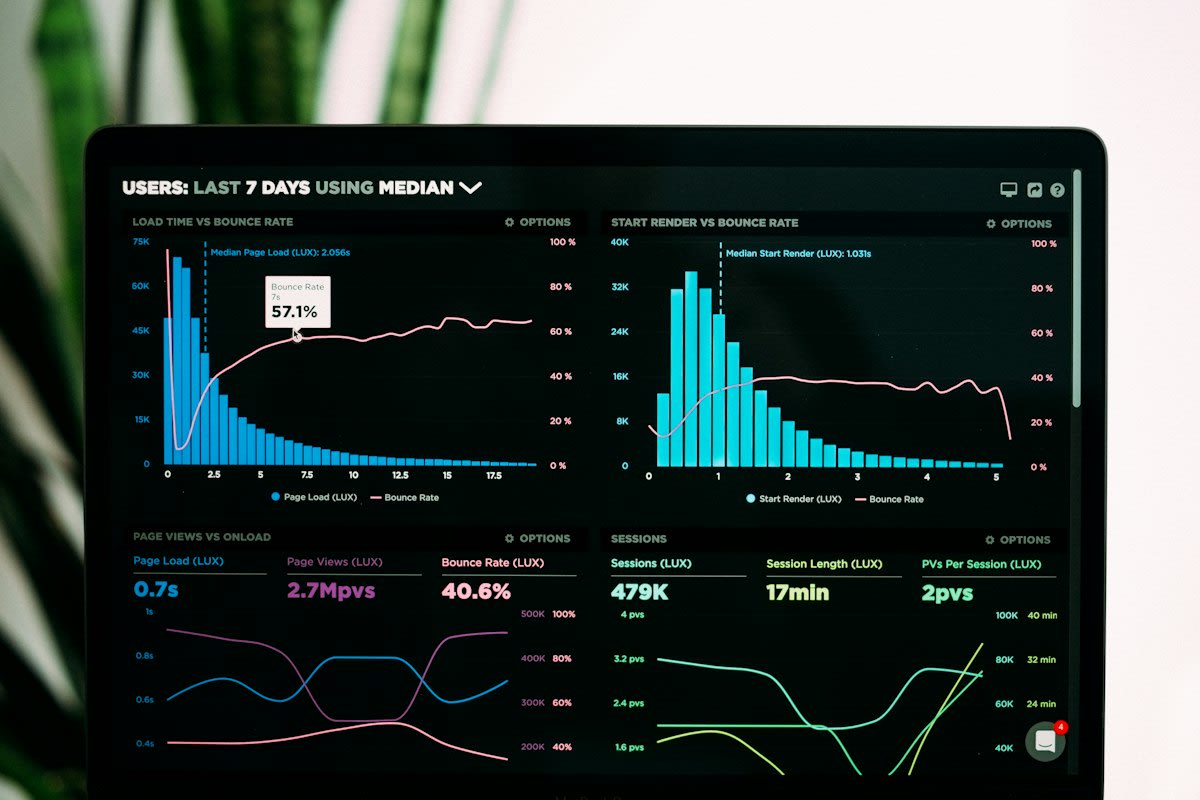
Why does this matter for professional failure? Because the bottleneck of performance is rarely technical skill. It is almost always emotional regulation. The alternative data market, led by players like Experian and TransUnion, is essentially mapping the external symptoms of internal chaos (Source: AMA Research & Media LLP, 2024). If your alternative data profile shows a sudden, unexplained shift in purchasing patterns, you are flagging a risk. In the eyes of an algorithmic underwriter, you are no longer a 'top performer'; you are a liability.
The Neurological Edge: Mapping the Brain's Breaking Point
If financial data is the smoke, neurology is the fire. The frontier has moved into deep-brain structures. Recent breakthroughs in non-invasive stimulation show that we can now target the hippocampus, insula, and amygdala—the very regions that govern memory, emotion, and decision-making (Source: Nexalin Technology, 2026). While the current focus is on treating Alzheimer's and ADHD, the underlying mechanism is the same: the ability to measure and modulate hippocampal-cortical connectivity.
"The 15 mA protocol used in TRANSFORM-AD occupies a unique position in the field because of its capacity to deliver electrical currents directly to deep brain structures such as the hippocampus, insula and amygdala."— Nexalin Technology, Official Publication on TRANSFORM-AD
The implication here is chilling. If we can prove that improved cognition and sleep quality correlate with specific hippocampal-cortical connectivity (Source: Radiology, 2026), then we can also identify the biological markers of cognitive decline. Professional failure is often just a fancy term for the degradation of these neural pathways. When the amygdala overrides the prefrontal cortex, the executive fails. We are moving toward a world where a brain scan could theoretically replace a performance review.
Consider the sleep quality data from the TRANSFORM-AD secondary analysis (Source: Journal of Alzheimer's Disease, 2026). Sleep is the ultimate lead indicator of professional collapse. A breakdown in sleep architecture precedes a breakdown in judgment. By monitoring these deep-brain mechanisms, the industry isn't just treating disease; it is defining the biological baseline for 'competence'.

The transition from medical treatment to professional screening is a short leap. We already accept the 'mood-military-memory' clinical business plan as a goal for brain stimulation (Source: Nexalin Technology, 2026). If the military can optimize for memory and mood to prevent failure in the field, the corporate world will inevitably adopt the same default. The friction between privacy and performance is the only thing standing in the way.
The Insider's Friction: The Unspoken War in HR
Having spent fifteen years in the rooms where these decisions are made, I can tell you that the debate isn't about whether this data is available, but how to hide the collection process. There is a massive internal dispute between the legal teams, who fear the liability of 'biological discrimination,' and the operations teams, who are tired of hiring 'brilliant jerks' who burn out in six months. The operations side is winning. They don't want a 'culture fit'; they want a biological guarantee of staying power.
The real ground-level reality is the 'Shadow Profile.' Companies are already using alternative data—not through official channels, but through the web of third-party risk assessors. They aren't asking for your brain scan yet; they are buying the behavioral data from firms like FICO and Credit Karma to see if your life is fraying at the edges (Source: AMA Research & Media LLP, 2024). It is a mechanical failure of the traditional employment contract.
| Metric Type | Traditional Indicator | Biometric/Alternative Proxy | Predictive Value |
|---|---|---|---|
| Financial | Annual Salary/Credit Score | Transaction Friction (Plaid/Zest AI) | High (Behavioral Stability) |
| Cognitive | Education/Certifications | Hippocampal Connectivity (Nexalin) | Very High (Executive Function) |
| Emotional | Interview Performance | Amygdala Modulation/Sleep Quality | Critical (Burnout Risk) |
This creates a dangerous overlap. When your credit behavior (Alternative Data) aligns with your neurological decline (Deep Brain Mapping), you are no longer an employee; you are a data point in a failure model. The industry is moving toward a 'pre-emptive override,' where you are removed from a high-stakes role before you actually fail, simply because your biometrics suggested you were about to.
Fact-Check & Accuracy Note
The data used in this analysis is drawn from the current expansion of alternative credit underwriting markets (Source: AMA Research & Media LLP, 2024) and peer-reviewed neurological research regarding 15 mA DIFS and hippocampal-cortical connectivity (Source: Radiology, 2026; Journal of Alzheimer's Disease, 2026). The debate remains active regarding the ethical application of neurological monitoring in non-clinical settings.
Is this an inevitable evolution? Perhaps. But the cost is the death of the 'comeback.' In a world of biometric prediction, there is no room for the erratic genius or the professional who learns through catastrophic failure. We are optimizing for a flat line of consistent, mediocre stability. The terrain of professional success is being paved over by algorithms that prioritize the absence of risk over the presence of brilliance.
Editorial Perspective
Editorial Note: This piece argues that the convergence of behavioral financial data and neurological mapping creates a toolkit for predicting professional failure. While the research cited is focused on credit and health, the analytical leap to professional risk is the current trajectory of the 'Human Capital' industry.