
Is muscle memory actually a memory? Most treat it as a biological habit, a loop of neurons firing in a predictable sequence. They are wrong. Muscle memory is a tether to a biological and cultural archive, a set of defaults etched into the fascia and the subconscious over generations. We are now seeing a structural break in how we interact with this archive. We are no longer just observing movement; we are siphoning it into silicon.
The industry calls it motion capture. That is a sterile term. What is actually happening is the extraction of a lineage. Take the case of Phantom Blade Zero. The developer, S-GAME, did not just animate characters; they utilized state-of-the-art motion capture to blend legendary fight choreography from the Golden Age of Hong Kong martial arts cinema (Source: Gematsu, 2026). This is not mere animation. It is the attempt to code the specific, violent elegance of a cultural era into Unreal Engine 5. When four million units sell in 72 hours (Source: Gematsu, 2026), the market is not just buying a game; it is consuming a digitized version of ancestral combat memory.
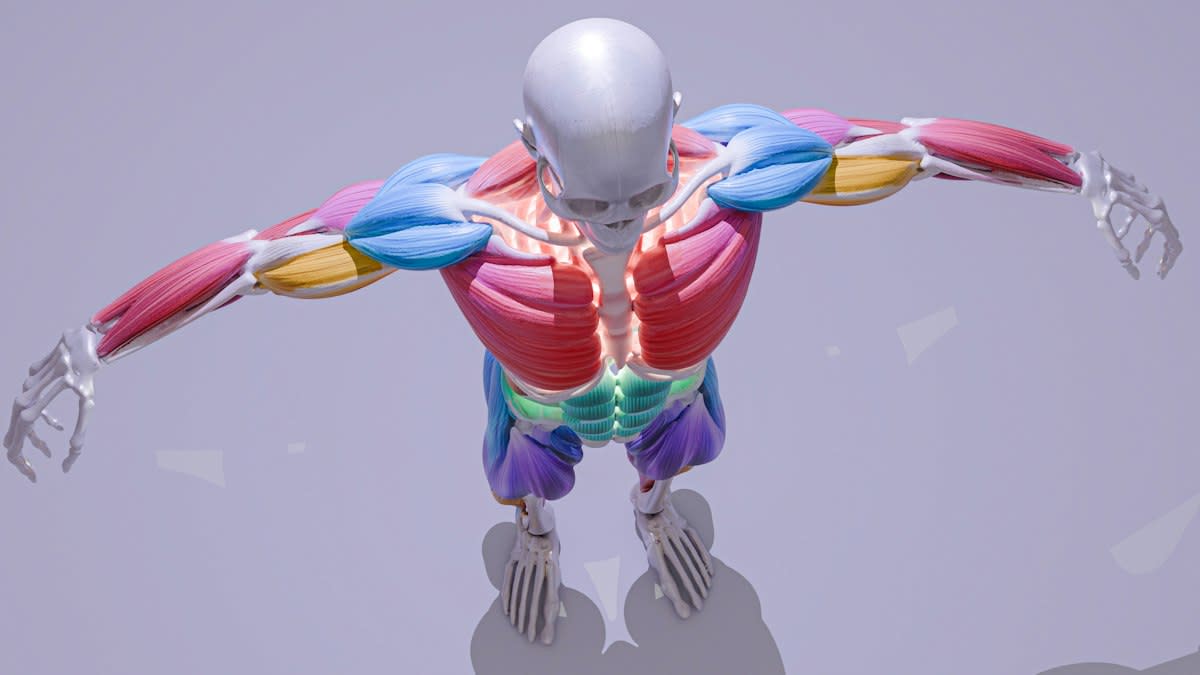
The Predatory Default
The extraction extends beyond human culture into the raw, biological inertia of the wild. In a recent study, researchers used a lightweight surround-view camera system mounted on the head of a freely flying hawk to reconstruct predatory aerial pursuit behavior (Source: Nature, 2026). By combining this with 3D environmental mapping, they could map the fine body motion and interactions during prey-capture. This is the ultimate code. The hawk does not think about the angle of its dive; it executes a biological default honed over millions of years. By reconstructing this, we are essentially reverse-engineering the ancestral muscle memory of a predator.
Why does this matter? Because it reveals a lag in our understanding of intelligence. We focus on the prefrontal cortex while the real data resides in the movement. The hawk's pursuit is a calculation performed by the body, not the mind. When we map this behavior, we are creating a library of biological efficiency that can be applied to robotics or autonomous systems. It is a collision between evolutionary biology and computational geometry.
"Every historic place carries a part of Dayton’s story. Our hope is that this list inspires conversations and partnerships that lead to preservation and creative reuse of these irreplaceable properties and sites."— Mindi Wardell, Secretary at Preservation Dayton
This drive for preservation is not limited to biological movement. It mirrors the struggle to save physical anchors of memory. In Dayton, the effort to identify the top ten most endangered properties highlights a desperate attempt to stop the leak of cultural identity (Source: WYSO Public Radio, 2026). Whether it is a historic building or a martial arts strike, the goal is the same: to prevent the total erasure of the defaults that define a place or a people.
The Invisible Friction of Capture
As a practitioner who has spent years in the trenches of digital reconstruction, I can tell you that the industry hides a massive mechanical failure. There is a violent dispute between the 'data purists' and the 'feel artists'. The purists want every single jitter of a mocap suit to be preserved, believing the truth is in the noise. The artists know that raw data is dead. It lacks the intention, the breath, and the weight of the original movement. The friction occurs when you try to translate the 'soul' of a Hong Kong action star into a skeletal rig. You often end up with something that looks correct but feels hollow—a digital uncanny valley of muscle memory.
We struggle with the asymmetry of weight. A digital character does not feel the gravity of the earth or the resistance of an opponent's bone. To fix this, we don't need better sensors; we need to code the resistance. We need to simulate the failure of the muscle, the lag in the reflex. Until we code the struggle, we are just recording shadows.

The Erosion of the Biological Archive
While we race to digitize movement, the biological hardware is failing. A 14-year study of over 5,400 adults revealed that long-term depressive symptom trajectories significantly modify the association between cardiovascular disease and cognitive decline (Source: Scientific Reports, 2026). Specifically, those with moderate-stable depressive symptoms showed lower baseline global cognition, memory, and semantic fluency scores. This is the erasure of the archive in real-time. When the brain ages unexpectedly due to the collision of heart disease and mental health, the ancestral tether is severed.
Can we use digitized muscle memory to bridge this gap? If we can map the defaults of movement, perhaps we can create rehabilitative frameworks that don't rely on cognitive recall but on biological triggering. We see a glimmer of this in structured primary care models. In Germany, a 12-year cohort study involving 169,101 patients by 2022 showed that structured, coordinated primary care provides sustained long-term benefits for those with coronary artery disease (Source: Nature, 2026). Coordination is the human version of a well-coded rig; it reduces the friction of survival.
| Memory Type | Extraction Method | Primary Goal | Risk Factor |
|---|---|---|---|
| Cultural Combat | Mocap / Unreal Engine 5 | Aesthetic Replication | Loss of Intent |
| Biological Predation | 3D Env Mapping / Head-Cams | Efficiency Modeling | Data Oversimplification |
| Architectural Heritage | Preservation Lists | Identity Continuity | Urban Decay |
| Cognitive Function | Longitudinal Cohort Studies | Health Optimization | Comorbidity Erosion |
The intersection of these fields is where the real opportunity lies. Sinéad O'Dwyer's Spring 2027 collection, for instance, explores the body in motion by transposing blurred photographs of performance onto sequin dresses (Source: Vogue, 2027). This is a tactile form of memory capture. It acknowledges that movement is not just a coordinate in a 3D space, but a visual and emotional blur. It is the antithesis of the high-precision hawk camera, yet it captures the same essence: the desire to freeze a disappearing default.
We are moving toward a web of interconnected memories. One where the predatory precision of a bird, the cinematic flow of a martial artist, and the structured care of a medical system are all viewed as data sets of survival. The danger is not in the coding itself, but in the belief that the code is the thing. The code is the map; the muscle is the terrain.
Fact-Check & Accuracy Note
The data regarding cognitive decline and cardiovascular health is derived from the English Longitudinal Study of Aging (ELSA), focusing on adults aged 50 and older (Source: Scientific Reports, 2026). Academic debate continues regarding the direction of causality between depressive symptoms and the acceleration of cognitive aging in the presence of CVD.
Editorial Note
Editorial Note: This analysis views 'Coding Ancestral Muscle Memory' as a multidisciplinary synthesis of motion capture, biological reconstruction, and cultural preservation, using provided research as anchors for a broader systemic analysis.