Walk into any hyperscale data center and the first thing that hits you is the noise. It is a relentless, industrial roar produced by tens of thousands of cooling fans fighting a losing battle against thermodynamics. Every single AI inference, every database query, and every cloud-based calculation forces countless electrons through silicon channels, scattering heat as an inevitable byproduct of their motion. We have spent decades optimizing the size of the transistor, but we have ignored the inherent inefficiency of the electron's charge.
The scale of this inefficiency is becoming an existential threat to the cloud. Projections from the International Energy Agency (IEA) indicate that global data center power consumption will surpass 1,000 terawatt-hours by 2026. This is not merely a line item on a utility bill; it is a volume of energy that could swallow the entire annual consumption of a mid-sized nation. When the energy required to sustain the computation exceeds the economic value of the output, the current silicon model ceases to be viable.
The Thermal Wall and the Charge Fallacy
Why does silicon generate so much heat? The answer lies in the reliance on the electron's charge. To move a bit of information, we physically push electrons through a medium, creating resistance and thermal energy. This is the 'charge' model, and it has reached its physical limit. No matter how advanced the lithography becomes, the act of moving a particle of matter to represent a 1 or a 0 will always generate heat. We are essentially trying to build a faster car while ignoring the fact that the engine is melting.
Enter spintronics. Instead of focusing on the charge of the electron, researchers are now utilizing its spin—a quantum property that makes the electron behave like a tiny magnet. By manipulating this spin rather than moving the particle itself, information can be processed without the physical displacement of electrons. This effectively removes the primary source of heat in semiconductor technology. If you don't move the electron, you don't create the friction that leads to the roar of the cooling fans.
"A 100,000-strong spin wave network achieves computation without moving electrons, fundamentally avoiding the heat generated by traditional semiconductors."— XenoSpectrum Research Report
The realization of a 100,000-strong spin wave network marks a transition from theoretical physics to practical engineering. This network allows for a level of synchronization—down to 45 nanoseconds—that was previously unthinkable in non-electronic computation. By treating the electron's spin as the primary carrier of information, we can create chips that remain cool even under the heaviest AI workloads. This is not a marginal improvement; it is a complete rewrite of how hardware interacts with energy.
| Feature | Traditional Silicon (Charge) | Spintronics (Spin Wave) |
|---|---|---|
| Information Carrier | Electron Charge/Flow | Electron Spin/Magnetism |
| Primary Waste | High Thermal Emission | Negligible Heat |
| Energy Driver | Voltage Differential | Magnetic Orientation |
| Physical Action | Particle Displacement | State Manipulation |
| Scaling Limit | Thermal Throttling | Quantum Coherence |
While the physics of spintronics solves the heat problem, the industry is currently strangled by the infrastructure required to deploy any new hardware. We are seeing a phenomenon where the most expensive asset on a data center campus is a finished building that simply cannot turn on. This is the result of a massive disconnect between chip capability and grid capacity. The hardware is ready, but the wires are not.
The Gridlock Definition
FERC has defined a 'large load' as peak demand above 50 MW connecting above 69 kV. This designation triggers a complex set of interconnection studies and cost-transparency rules that can delay data center activation for years.
This gridlock forces a strategic rethink. If we cannot increase the amount of power flowing into the building, we must drastically decrease the amount of power each calculation requires. This is why the shift toward light-based and spin-based chips is no longer a luxury for researchers; it is a requirement for survival. A facility that requires 10% of the power of a traditional silicon center can bypass the most restrictive FERC directives and enter the market years ahead of its competitors.
The Lithography Paradox
Despite the rise of spintronics, the world remains tethered to the Dutch giant ASML. The demand for extreme ultraviolet (EUV) and deep ultraviolet (DUV) systems continues to climb because the transition to new physics is not instantaneous. In Q1 2026, ASML reported net sales of EUR 6.29 billion, up from EUR 6.02 billion in Q1 2025. This growth proves that foundry and logic customers are still pouring billions into advanced nodes, trying to squeeze every last drop of performance out of the charge-based model.
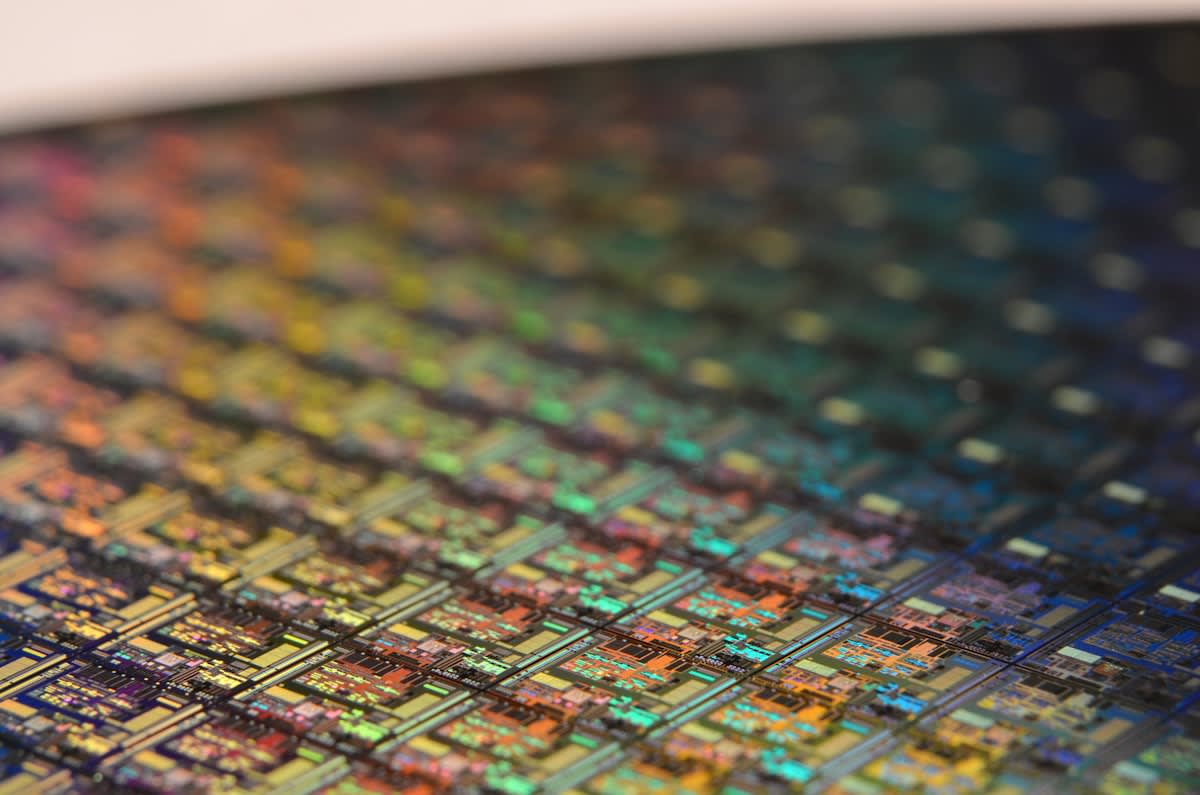
However, this investment creates a paradox. The more we refine EUV lithography to create smaller transistors, the more we concentrate heat in smaller areas. We are creating denser heat maps that require even more aggressive cooling solutions. ASML's success in driving revenue and margins is, in a sense, accelerating the arrival of the thermal wall. The very tools that enable today's AI are making the charge-based model unsustainable.
This pressure is further amplified by the geopolitical chess match between the U.S. and China. China is expected to contribute approximately 20% of ASML's revenue throughout 2026, despite tightening U.S. export controls. This creates a fragmented innovation landscape. While the U.S. uses policy to limit Beijing's access to high-end hardware, it simultaneously creates an incentive for China to leapfrog silicon entirely and invest more heavily in alternative computation methods like spintronics.
Can a geopolitical feud actually accelerate the death of the electron? It is possible. When a nation is blocked from the most advanced EUV tools, it stops trying to optimize the old way and starts inventing the new way. The race for AI supremacy is not just about who has the most H100s, but who first solves the energy equation. The first actor to deploy spin-wave networks at scale will possess a computational advantage that cannot be countered by simply adding more power plants.
The transition will not happen overnight. We will likely see a hybrid era where spintronic interconnects handle the massive data movements between silicon cores, reducing the overall thermal load. This 'quiet replacement' starts at the edges—the memory controllers and the bus lines—before moving into the logic gates themselves. The goal is a data center where the fans finally stop spinning.
Ultimately, the shift to light-based and spin-based computing is a surrender to the laws of physics. We have reached the point where the cost of cooling the electron is higher than the cost of reinventing the chip. The future of the global economy depends on our ability to process information without the friction of motion. Those who continue to bet solely on smaller silicon nodes are ignoring the smoke rising from the server racks.