We trust the wrong things. While we cling to the delusion that human intuition can manage a biosphere in collapse, the actual work of planetary survival is being handed to cold, calculating scripts. Logic replaces the ballot box. Why do we assume that a representative democracy is better equipped to manage groundwater than a neural network? The answer usually involves a romanticized view of human agency that ignores our history of catastrophic mismanagement.
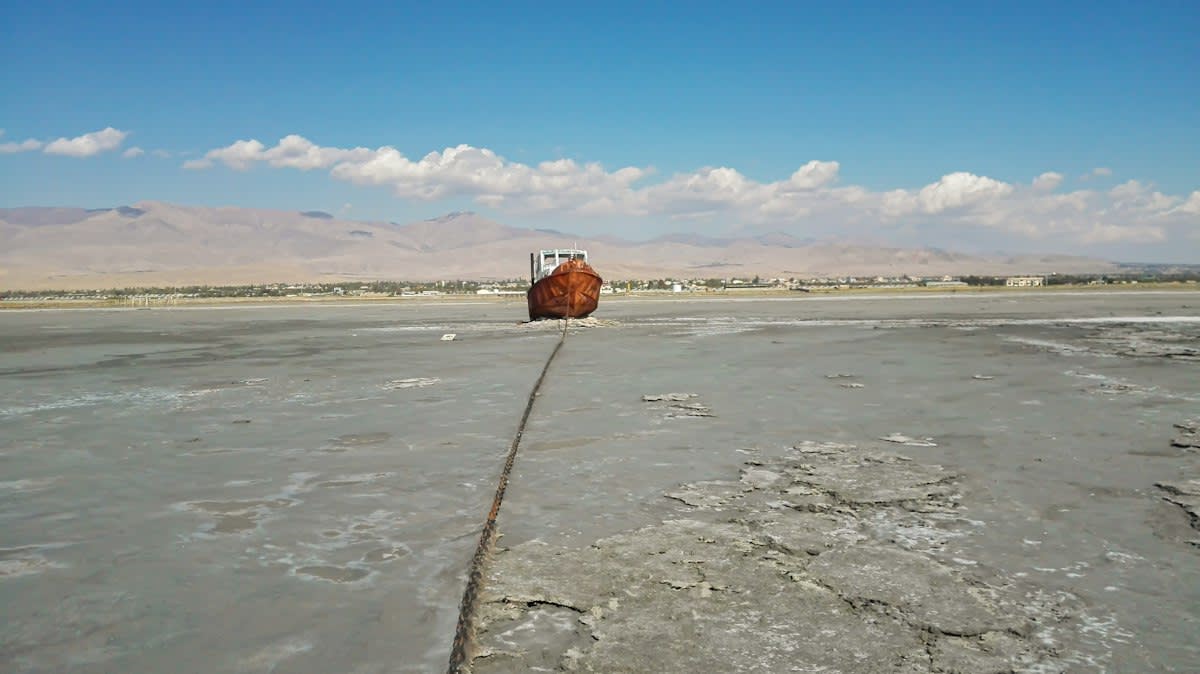
Iran is the proof. The national Lake Urmia restoration taskforce has formally integrated AI and smart technologies into its core strategy, explicitly linking algorithmic water-resource management to reduced agricultural usage across 327,000 hectares of pilot sites (Source: Herald Online, 2026). Efficiency beats bureaucracy. By assessing hydrological variables like evaporation rates, precipitation anomalies, and soil moisture, these algorithms optimize distribution across river basins to preserve reserves during droughts (Source: Herald Online, 2026). The machine does not take bribes or favor political allies; it simply solves for the variable of survival.

Control requires baselines. In a paper published September 18 in The Planetary Science Journal, lead author Samantha Gilbert-Janizek and her collaborators described a computational model of Earth constructed without any life whatsoever to simulate five billion years of geological evolution (Source: Tech Times, 2026). We finally see the void. This model allows researchers to quantify exactly what a dead planet looks like, ensuring that biosignature claims from the James Webb Space Telescope are not just geological noise (Source: Tech Times, 2026). When we can simulate the planet as a machine, we stop treating it as a mystery.
Data is the new law. While the world watches geopolitical theater, the real governance is happening in the code that predicts dust-storms and regulates air quality in the Global South (Source: Herald Online, 2026). The code manages the water. These verified techniques provide a transferable framework for drought early warning and anti-poaching, particularly for cooperation between nations like Iran and Zimbabwe (Source: Herald Online, 2026). We are witnessing the birth of a non-human administrative layer.
The Ghost in the Governance
Optimization is not equity. While a machine can save a lake, it cannot define fairness without a human prompt. A scoping review published October 8 in Health Affairs Scholar found that only 22 of 166 peer-reviewed articles on AI and health equity included an explicit definition of what equity actually means (Source: Health Affairs Scholar, 2025). The math is blind. Furthermore, 70% of these research papers had US-based first authors, creating a skewed perspective of how health governance should function globally (Source: BeInsure, 2026). If the intelligence governing us is trained on Western data, the rest of the world becomes a rounding error.
"With JWST, we may never be able to definitively claim the discovery of a biosignature gas in an exoplanet atmosphere."— Sara Seager, MIT Planetary Scientist
Bias is a feature. Higher diagnostic accuracy in AI does not necessarily reduce healthcare disparities, especially when algorithms rely on biased data or clinicians ignore the output (Source: BeInsure, 2026). The results are brittle. We see a recurring conflict where average improvements in a system conceal deteriorating outcomes for marginalized subgroups (Source: BeInsure, 2026). This is where the computational sovereign fails; it optimizes for the mean, not the margin.
The friction is invisible. In the closed-door meetings of AI governance boards, the real fight is not about 'safety' but about the definition of the objective function. I have seen practitioners argue for hours over whether a 'fair' distribution of resources should be based on current need or historical deficit, knowing that whichever variable they choose will be amplified a million times by the algorithm. There is a deep, unspoken fear that once the objective function is set, the human administrator becomes a mere spectator to the machine's execution. This is the true mechanical failure of modern policy: we are building the engine before we know where we are driving.
| Metric | Human Governance | Planetary Intelligence (AI) |
|---|---|---|
| Response Time | Months/Years (Legislative) | Milliseconds (Algorithmic) |
| Data Grounding | Anecdotal/Political | Remote Sensing/Hydrological |
| Resource Focus | Short-term Electoral | Long-term Homeostasis |
| Equity Definition | Implicit/Cultural | Explicit (if defined) |
The transition is inevitable. As the terrain of planetary survival becomes more complex, the cognitive load exceeds human capacity. We cannot track 19 different rocky planet properties simultaneously, but a model can (Source: Around Prague, 2026). The machine scales. By tracking heat exchange from the core to the surface and the outflow of gases, we gain a grip on planetary evolution that no parliament could ever grasp (Source: Around Prague, 2026).

Sovereignty is shifting. When a nation like Zimbabwe adopts a framework from Iran to manage its water, it is not just adopting a tool; it is adopting a logic (Source: Herald Online, 2026). The logic is absolute. This South-South cooperation creates a web of algorithmic dependencies that bypass traditional diplomatic channels. We are replacing the ambassador with the API.
Fact-Check & Accuracy Note
The debate over planetary intelligence hinges on the Gaia hypothesis—the idea that life maintains planetary homeostasis. However, the Gilbert-Janizek model (2026) challenges this by proving that a 'dead' planet can still exhibit complex atmospheric evolution through purely geological processes, suggesting that 'intelligence' in governance may be a matter of geological timing rather than biological consciousness.
Equity must be coded. National regulators are now being urged to incorporate WHO definitions of health equity into their AI evaluations to prevent the marginalization of disabled populations (Source: BeInsure, 2026). The prompt is everything. If we do not explicitly define equity, the algorithm will default to the most efficient path, which is rarely the most just (Source: Health Affairs Scholar, 2025). We must treat the code as a constitution.
The end is near. Not the end of the world, but the end of the human as the primary decision-maker for the planet. We are becoming the curators of the algorithms that actually run the world. The curator is not the king.