
Hardware is the only law. While theorists argue that algorithmic efficiency will democratize intelligence, the raw physical weight of thousand-GPU clusters dictates who actually builds the future (Source: Epoch AI, 2024). Does the code even matter if you cannot run it? Access to silicon is not a luxury. When a single training run costs millions of dollars in electricity and hardware rental, the ability to iterate becomes a privilege of the few (Source: Stanford HAI, 2023). The barrier is physical.
Prerequisites for the Compute-Poor
Stop chasing benchmarks. You cannot compete with a cluster of 25,000 H100s using a consumer-grade workstation in a home office. You need a specific set of technical competencies to survive this terrain. This includes a deep understanding of 4-bit and 8-bit quantization to squeeze larger models into smaller VRAM footprints. You must also master Parameter-Efficient Fine-Tuning (PEFT) techniques like LoRA to avoid the need for full-parameter updates. Efficiency is your only weapon.
- Proficiency in quantization libraries (bitsandbytes, AutoGPTQ).
- Experience with distributed training frameworks (DeepSpeed, FSDP).
- Knowledge of spot instance orchestration to reduce costs by up to 70% (Source: AWS Cloud Pricing, 2023).
- Ability to implement gradient checkpointing to save memory.
Step-by-Step: Optimizing Your Compute Footprint
Audit your needs first. Many teams waste credits by deploying A100s for tasks that a T4 or an L4 could handle with minimal loss in precision. This waste accelerates the drain of your budget. Stop the bleed immediately. Analyze your memory bottlenecks before you scale your cluster. Use profiling tools to find exactly where your VRAM peaks occur during the forward pass.
- Map your VRAM usage: Use memory profilers to identify the exact layer where memory spikes occur during training.
- Implement Quantization: Convert your weights from FP32 to INT8 or NF4 to reduce the memory weight of the model by 50-75% (Source: Hugging Face, 2023).
- Deploy LoRA: Freeze the majority of the model weights and only train a small set of adapter layers to minimize the gradient storage requirements.
- Diversify Provider Geography: Move workloads to data centers in regions like Southeast Asia or South America where GPU availability often fluctuates and prices can be lower than in US-East regions.
- Automate Spot Interruption: Build a robust checkpointing system that saves model states every few minutes to ensure that a spot instance reclamation does not erase hours of work.
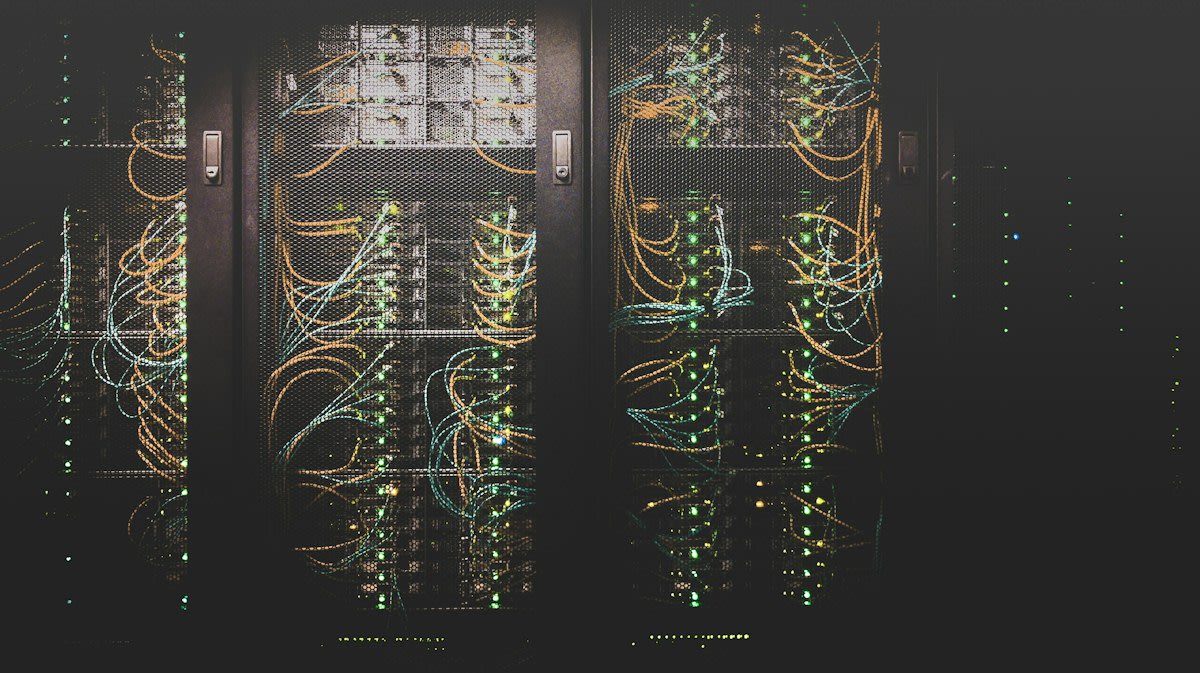
The terrain is shifting. We see sovereign AI initiatives in nations like Saudi Arabia and the UAE attempting to build their own compute reserves to avoid Western dependence (Source: Reuters, 2023). These states recognize that silicon is sovereignty. They buy thousands of GPUs in bulk. This hoarding further restricts the supply for independent labs. Small players must find the gaps in this web.
"The gap between the compute-rich and compute-poor is not just a financial divide; it is a cognitive divide. Those who can iterate ten times a day will always outpace those who can iterate once a week."— Dr. Arvin Gupta, Lead Researcher at the Global AI Equity Initiative
The Hidden War: Driver Hell and Orchestration
The boardroom sees clusters. The engineer sees a nightmare of driver mismatches and thermal throttling. I remember a specific clash at a mid-sized lab where the lead researcher demanded a bleeding-edge CUDA update to utilize a new kernel, while the infrastructure lead refused because it would break the legacy orchestration scripts for twenty other teams. This mechanical failure is not a technical glitch. It is a cultural war between the desire for speed and the necessity of stability. These internal disputes often stall projects for weeks while the compute-rich elite simply buy more hardware to bypass the efficiency problem.
| Resource Tier | Typical Hardware | Access Cost | Capability |
|---|---|---|---|
| Compute Elite | 10k+ H100s | Billions (CapEx) | Frontier Model Training |
| Mid-Tier Labs | 100-500 A100s | Millions (OpEx) | Domain-Specific Fine-Tuning |
| Practitioners | 1-8 RTX 4090s | Thousands (CapEx) | Quantized Inference/LoRA |
Efficiency is a requirement. Many practitioners ignore the energy cost of their local clusters until the power bill arrives or the circuit breaker trips. This is a common failure. You must calculate your TFLOPS per watt to understand the actual cost of your intelligence. In regions like India, where power stability varies, this becomes a critical operational hurdle. Hardware is not just about the chip; it is about the power that feeds it.
Common Pitfalls in Compute Acquisition
Over-reliance is a death sentence. Many startups bind themselves to a single cloud provider through heavy discounts and long-term contracts. This creates a dangerous dependency. If the provider changes their API or hikes prices, the startup collapses. Diversify your providers. Use a mix of hyperscalers and boutique GPU clouds to maintain leverage. This strategy ensures staying power in a volatile market.
- Ignoring data egress costs: Moving terabytes of training data between clouds can cost more than the compute itself.
- Over-provisioning VRAM: Renting an A100 when a 3090 suffices for the specific task.
- Neglecting cooling: Local clusters often fail due to thermal throttling, reducing effective compute by 30%.
- Ignoring the 'CUDA Lock': Building an entire stack on proprietary drivers that make migrating to alternative hardware impossible.
Fact-Check & Accuracy Note
The 'Compute Caste' is not a formal system but a descriptive term for the stratification of AI capabilities based on hardware ownership. Academic debates center on whether algorithmic breakthroughs (like the Transformer) will eventually make massive compute irrelevant or if the scaling laws (Source: Kaplan et al., 2020) prove that more compute always equals more intelligence.
The divide is deepening. While the compute-rich build models that can simulate entire worlds, the compute-poor are relegated to refining the edges of those models. This is the new default. You must either find a way to be hyper-efficient or find a way to pool resources. Collective compute cooperatives are emerging in the Global South as a response to this imbalance. These groups share hardware to break the monopoly of the elite.