
Code is not memory. While we imagine digital archives as eternal vaults, the reality is a fragile web of decaying formats that often fail the very languages they intend to save. We are losing the race. Do we actually preserve meaning or just images of letters? (Source: JSTOR, 2026). This question haunts the current shift from simple digitization to active preservation.
The OCR Collision
Pixels lack nuance. Designing Optical Character Recognition (OCR) systems for India requires a brutal balancing act between linguistic diversity, document heterogeneity, and actual deployment constraints (Source: Hugging Face, 2026). The struggle is real. By training over base LLMs like TinyLlama1.1B, InternLM2-7B, and Mixtral8x7B, researchers are attempting to build a spectrum of multilingual capabilities that can actually read the past. This is a desperate suture for broken records.
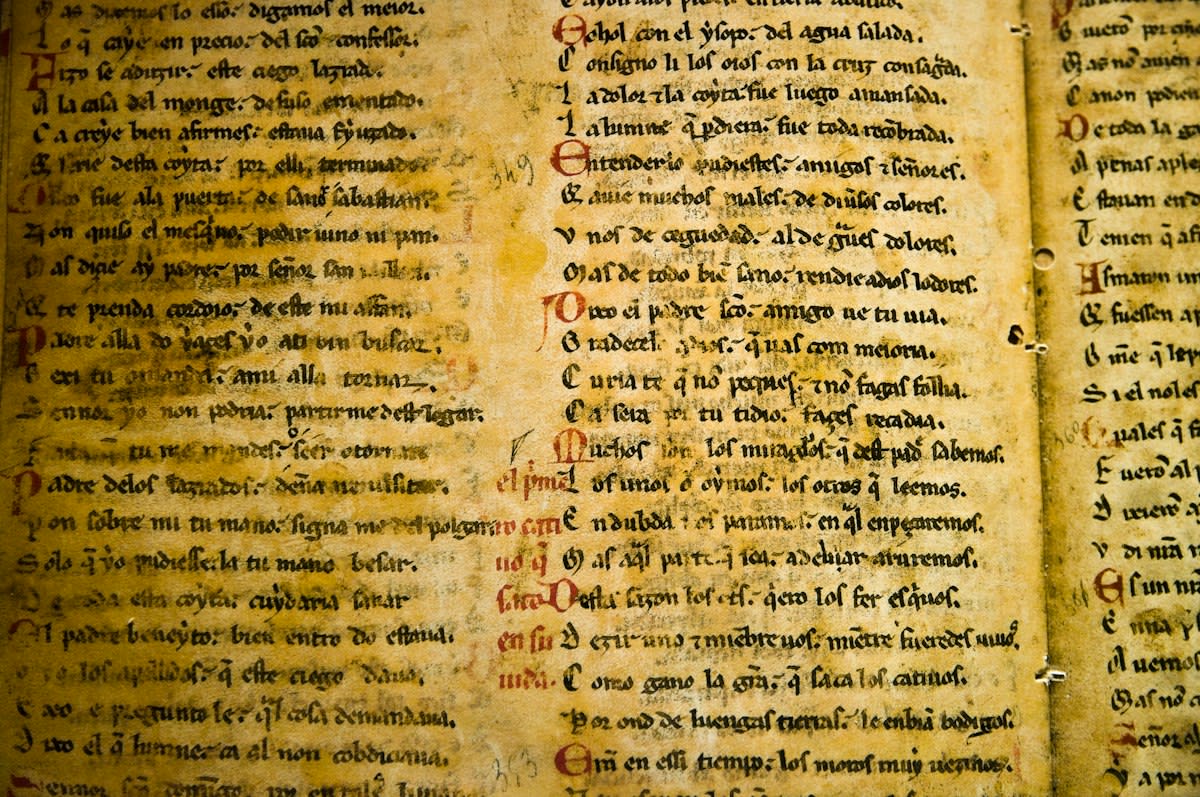
Models often fail. The Chitrapathak series demonstrates that pairing a generic vision encoder with a strong multilingual language model can work, but only if the training is end-to-end (Source: Hugging Face, 2026). Accuracy remains elusive. The emergence of dots.ocr suggests that jointly learning three core tasks within a unified framework provides the most robust performance across diverse layouts. We are seeing a hard turn toward unified paradigms.
The Flattening Effect
AI erases difference. Across both open- and closed-source models, LLMs flatten cross-cultural diversity by aligning more closely with question-asking patterns expressed in Western countries (Source: ACL Anthology, 2026). This is cultural erasure. When the model defaults to a Western cognitive map, the unique logic of a dead or dying language vanishes into a generic average. We are automating the loss of nuance.
"Preservation is the quiet half of digitization — opening the doors matters little if the files behind them cannot outlast the formats they were made in."— Portico, via JSTOR (2026)
Recovery is possible. New fine-tuning strategies have successfully narrowed the human-model alignment gap by 43% overall, proving that the flattening effect is not an inevitable law of scaling (Source: ACL Anthology, 2026). The gap is closing. This shift suggests that the quality of training data outweighs its sheer quantity when attempting to preserve non-Western linguistic structures. Precision beats volume.
The data wars rage. Within the community, a sharp dispute exists between those who prioritize data difficulty and those who demand data coverage. Some practitioners argue that pushing a model with 'hard' examples forces better reasoning, but recent findings suggest that coverage-based selection consistently achieves better downstream performance than all other methods (Source: arXiv, 2026). This is an invisible friction. The obsession with difficulty often harms rather than helps when the goal is linguistic diversity.
Analog Anchors in a Digital Storm
Stone outlasts silicon. In Yemen, women archaeologists and heritage specialists are working to protect ancient sites and museums amid the devastation of civil war and looting (Source: Northwestern University, 2025-26). Their work is visceral. While the world looks to the cloud, these practitioners are fighting to keep the physical source material from turning into dust. The physical is the final backup.
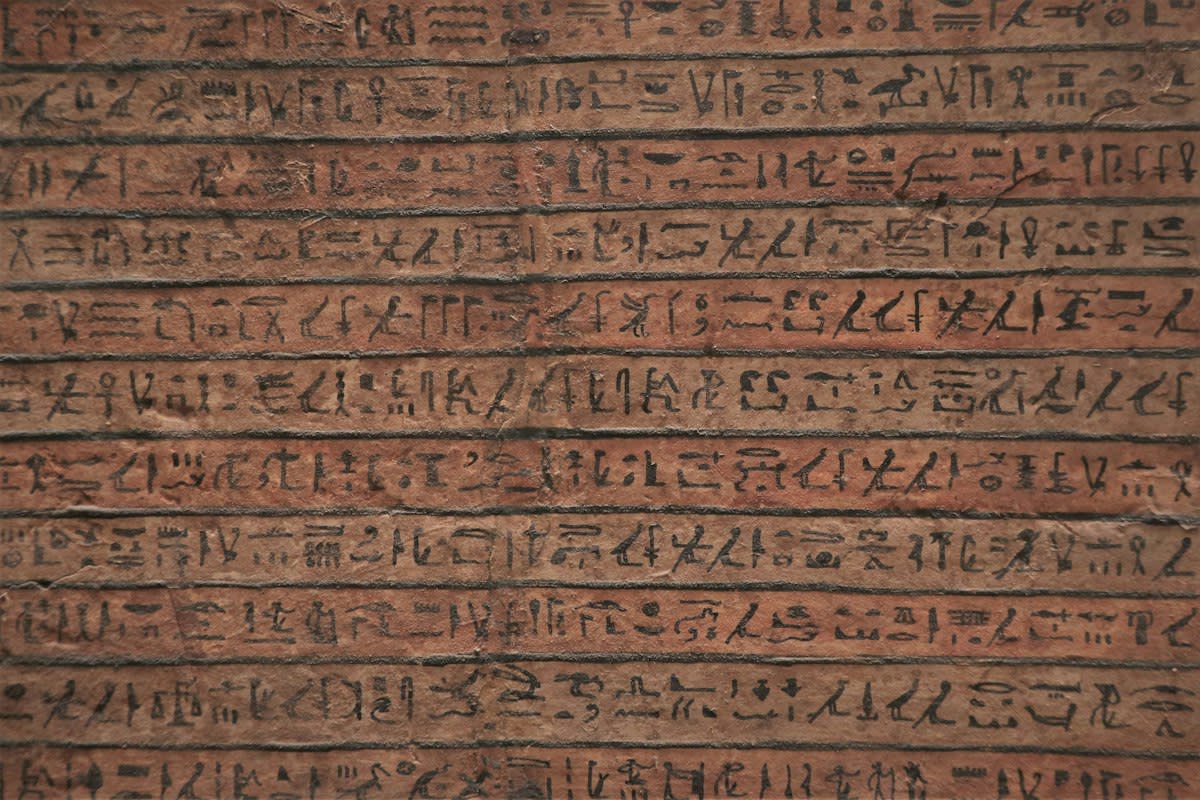
Systems must evolve. The Filmoteka Narodowa - Instytut Audiowizualny (FINA) in Poland has moved from fragmented, document-based workflows to an integrated, data-driven environment (Source: FINA, 2026). This change is critical. By connecting analogue and digital objects within one system, they can now trace preservation events and identify patterns that were previously invisible. They have replaced silos with a web.
"Moving from fragmented, document-based workflows to an integrated, data-driven environment has allowed FINA to connect analogue and digital objects, preservation events, processes, people and responsibilities within one system."— Elżbieta Wysocka, Researcher at FINA
Formats are brittle. The transition at FINA highlights a broader trend: the realization that the CMS/MAM must make the work of the institution itself visible to ensure long-term survival (Source: FINA, 2026). Documentation is a lifeline. Without a clear trace of who did what and why, the digital file becomes a dead object in a dead format. We are building ghosts.
The Delta: 2025 vs 2026
The strategy changed. Twelve months ago, the industry focus was on scaling parameter size to 'brute force' multilingualism. Now, the focus has shifted to coverage-based data selection and the mitigation of Western-centric alignment (Source: arXiv, 2026; ACL Anthology, 2026). The approach is surgical. We have moved from asking 'how big is the model?' to 'how representative is the data?'
| Metric | Previous Approach (2025) | Current Trend (2026) |
|---|---|---|
| Data Selection | Difficulty-based sampling | Coverage-based selection |
| Cultural Alignment | Implicit Western Default | Targeted Gap Reduction (43%) |
| OCR Architecture | Modular Vision + Language | Unified End-to-End VLMs |
| Archive Workflow | Document-centric silos | Integrated Data-driven CMS/MAM |
Efficiency is rising. Compact models like Mistral-7B are now matching zero-shot performance of larger models when trained on high-quality, filtered datasets (Source: ACL Anthology, 2026). Size is a distraction. The real victory lies in the curation of the training set, not the number of billions of parameters. Quality is the new currency.
Fact-Check & Accuracy Note
The claims regarding the 43% reduction in the human-model alignment gap are based on findings from the 15th International Joint Conference on Natural Language Processing (Source: ACL Anthology, 2026). There is ongoing academic debate regarding whether this reduction is universal across all non-Western languages or limited to specific linguistic families. The effectiveness of coverage over difficulty in LLM fine-tuning is a recent postulate from research published in November 2026 (Source: arXiv, 2026).
Hope is mechanical. By combining data-driven knowledge distillation with rigorous filtering, we can preserve the 'spirit' of a language without the baggage of AI hallucinations (Source: ACL Anthology, 2026). The fray continues. As we build these digital monasteries, we must ensure they are not just mirrors of the West, but true repositories of human diversity. The clock is ticking.