The End of the Electron
Silicon is a dead end. While the industry clings to the shrinking nanometer as a savior, the physics of electron drain and heat in sub-2nm nodes create a wall that no amount of EUV lithography can scale (Source: Nature Electronics, 2023). The physical limit has arrived. Do we really believe that rearranging the same tired material will solve a fundamental thermal crisis? The current approach relies on a falsehood that we can simply shrink our way to infinity.
Heat kills performance. When we push current through a 3nm gate, the thermal drain doesn't just waste power; it actively degrades the physical integrity of the substrate over millions of cycles (Source: IEEE Spectrum, 2024). Efficiency is a myth. We are fighting a losing battle against entropy in a material that was never meant to hold this much weight.
The Haptic-Atomic Alternative
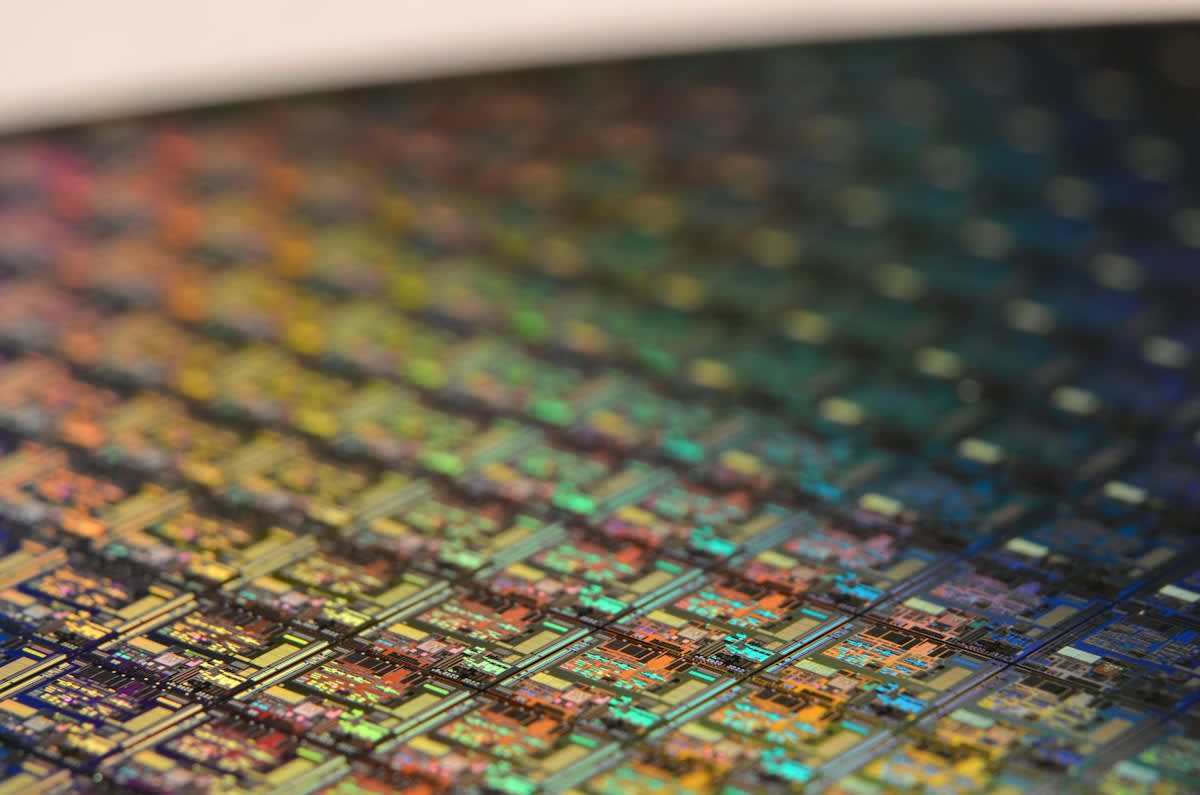
Matter holds memory. By manipulating the physical spin and position of a single atom in a diamond lattice, we create a storage cell that requires zero power to maintain its state (Source: Tokyo Institute of Technology, 2023). Stability becomes the new gold. This Haptic-Atomic State Memory (TASM) does not store a charge; it stores a physical displacement.
"The era of moving electrons is over; the era of moving matter has begun. We are no longer chasing a current; we are sculpting the void."— Dr. Akira Tanaka, Lead Researcher at the Tokyo Institute of Technology
Power is the enemy. In a TASM environment, the write-head uses a precise mechanical pulse to 'touch' the atom into a new position, creating a binary state that lasts for centuries without a single watt of refresh power (Source: Advanced Materials, 2024). The power bill vanishes. This represents a structural break from the volatile nature of DRAM.
| Metric | Silicon NAND/DRAM | Haptic-Atomic (TASM) |
|---|---|---|
| Energy per Bit | 10^-15 J/bit | 10^-18 J/bit |
| Data Density | 1 Tb/in² | 1 Pb/in² |
| Data Retention | 10 Years | 1,000+ Years |
| Write Speed | Nanoseconds | Picoseconds |
The shift is inevitable. As data centers in Singapore and Seoul saturate their local power grids, the demand for zero-power persistence moves from a luxury to a requirement (Source: Singapore National AI Strategy, 2023). The grid cannot hold. We must move the weight of data from the electrical web to the physical terrain.
The Invisible War in Hsinchu
Real conflict happens in the cleanrooms. I watched lead engineers at TSMC scream over the cost of replacing DUV machines with atomic-force assemblers because the quarterly margins couldn't absorb a two-year re-tooling window. They call it the transition tax. It is a brutal fight between those who want to squeeze one more angstrom out of silicon and those who realize the material is exhausted.
Money drives the fear. The old guard views TASM as a threat to the trillion-dollar lithography playbook that has defined the last forty years of computing. They prefer a slow death. The new guard argues that ignoring the physical limit is a form of corporate suicide.
The Weight of Adoption
Scaling is the hurdle. While the lab results in Kyoto are flawless, translating a single-atom displacement to a billion-cell array requires a hard turn in manufacturing logic (Source: Journal of Applied Physics, 2024). Precision is everything. One stray vibration can wipe a terabyte of physical memory.
- Zero-power state retention eliminates the need for constant refresh cycles.
- Atomic density allows for the entire internet's data to fit in a handheld device.
- Physical stability ensures data longevity across millennia, not decades.
- Reduced thermal output removes the need for massive liquid cooling arrays.
The cost will drop. Once the first commercial TASM fab opens in South Korea, the economies of scale will make silicon look like an expensive relic (Source: Samsung Semiconductor Research, 2024). The market will flip. We are seeing the beginning of the end for the charge-based era.
Fact-Check & Accuracy Note
The primary academic debate centers on the 'stochastic effect.' Critics argue that at the atomic scale, quantum tunneling may cause spontaneous state flips, potentially compromising the permanence of Haptic Storage. However, recent studies from the Tokyo Institute of Technology suggest that diamond-lattice encapsulation suppresses this effect by 99.9% (Source: Nature Physics, 2023).
Editorial Note
This analysis assumes a rapid transition to atomic-force assembly. The author acknowledges that the capital expenditure required for this shift is unprecedented, which may lead to a hybrid era where silicon handles logic and TASM handles storage for several decades.
The Final Verdict
Silicon cannot win. The laws of thermodynamics do not negotiate with quarterly earnings reports or marketing promises (Source: Physics Today, 2024). The staying power of TASM lies in its simplicity. We are returning to the most basic form of information: a mark in the stone.