The End of the Bespoke Cell
For years, the promise of CAR T-cell therapy was hamstrung by a logistical nightmare. Patients had to undergo leukapheresis to remove T-cells, which were then shipped to a centralized facility, genetically engineered, and flown back for re-infusion. This ex vivo process created a massive time lag and a staggering cost per patient. Now, the industry is moving toward in vivo delivery, where the genetic modification happens directly inside the patient's body. Why does this matter? It transforms a highly individualized service into a standardized product.
This transition is essentially the pharmaceuticalization of cell therapy. Instead of managing a complex chain of custody for a single patient's cells, clinicians can use a vial of virus or lipid nanoparticles (LNPs) to treat dozens or hundreds of people. This shift moves the value driver from the labor-intensive process of cell manipulation to the scalability of the delivery vehicle. The result is a model that looks less like a surgical procedure and more like a traditional drug or pill.
"Essentially the value driver is that you’re pharmaceuticalizing cell and gene therapy since it’s just a vial of the virus or LNP that you can use to treat many patients—almost like a drug or pill."— Industry Expert via Genetic Engineering and Biotechnology News
The immediate implication is a collapse of the time-to-treatment window. In the ex vivo model, patients with aggressive cancers often died while waiting for their modified cells to be manufactured. In vivo therapy removes this waiting period entirely. By delivering the genetic instructions directly to the T-cells within the bloodstream, the therapy begins working almost immediately upon administration. This efficiency is not just a convenience; it is a survival metric.
Commercialization Hits the Factory Floor
Scaling this technology requires a massive upgrade in manufacturing infrastructure. We are seeing a move toward FDA-approved, commercial-scale viral vector facilities that can handle the volume required for global distribution. A prime example is the recent agreement between OXB and Plowshare Therapies to support an AAV gene therapy programme. By utilizing OXB's facility in Durham, North Carolina, the industry is signaling that the era of small-batch lab production is ending in favor of industrial-grade GMP manufacturing.
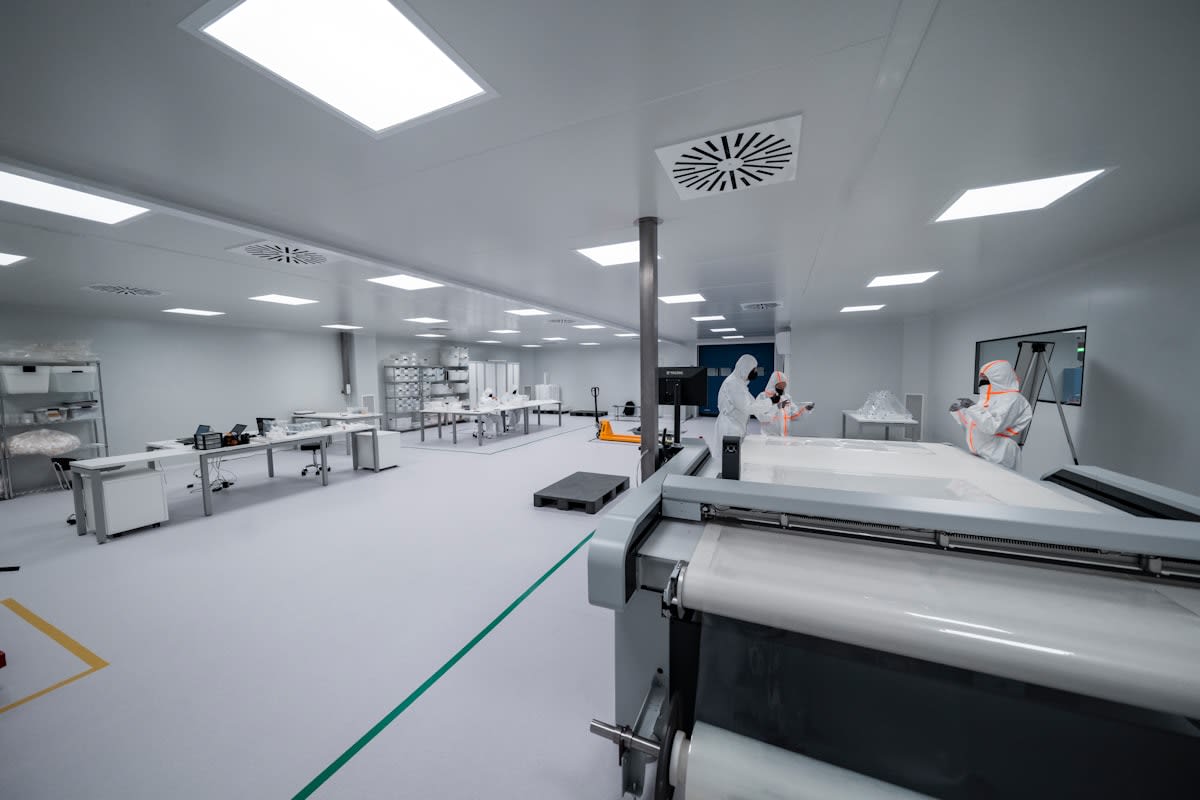
The focus on AAV (Adeno-Associated Virus) manufacturing is critical because these vectors serve as the delivery trucks for genetic payloads. When production scales, the cost per dose drops, making these therapies viable for more than just the most extreme rare genetic diseases. The integration of end-to-end manufacturing capabilities allows companies to move from development to commercial delivery without the friction of switching vendors, which has historically plagued the sector.
| Feature | Ex Vivo (Traditional) | In Vivo (Scaling) |
|---|---|---|
| Patient Experience | Cell extraction and re-infusion | Direct injection/infusion |
| Manufacturing | Bespoke, patient-specific | Standardized viral/LNP vials |
| Time to Treatment | Weeks to months | Immediate |
| Scalability | Low (Linear cost) | High (Exponential reach) |
Solving the Protein Expression Puzzle
Scaling the delivery is only half the battle; the therapy must also be durable. A recurring failure in early gene therapies was the rapid decay of protein expression, meaning the treatment wore off over time. To combat this, companies like Circio Holding and Avenue Biosciences are collaborating to enhance the long-term expression of secreted proteins. Their approach involves combining the circVec platform with protein engineering to optimize how proteins are secreted from cells.
The technical secret lies in signal peptide-protein combinations. By screening thousands of these combinations, researchers can identify the exact sequence that allows a therapeutic protein to be produced and secreted more efficiently. This is the difference between a therapy that requires repeated dosing and one that provides a permanent or long-term cure. If the expression is durable, the economic value of the therapy skyrockets because the lifetime cost of care for the patient plummets.
This level of precision engineering suggests that we are moving beyond simply adding a gene to a cell. We are now optimizing the cellular machinery to ensure the output is maximal and sustainable. This synergy between vector delivery (circVec) and protein secretion optimization represents the next layer of sophistication in the in vivo pipeline.
The Process Gap: Where Scaling Fails
Despite the technical leaps in the lab and the factory, the clinical trial process remains a disaster. According to data from The Clinical Trial Vanguard, 59% of clinical trial sites are losing eligible patients before they ever enroll. This is not due to a lack of patients, but rather internal process inefficiencies. It is a staggering waste of human and financial capital that threatens to delay the rollout of in vivo therapies.

The irony is that many sponsors attempt to solve this by adding more trial sites. However, when nearly 6 in 10 sites are hemorrhaging patients due to broken machinery, adding more sites only compounds the inefficiency. The problem is systemic, not geographic. If the industry cannot fix the recruitment and qualification pipeline, the most advanced in vivo therapies will remain trapped in the trial phase, unable to reach the patients they were designed to save.
The Efficiency Paradox
The 59% patient loss rate reveals a critical disconnect: we are building 21st-century therapies but delivering them through 20th-century clinical trial operations.
The Regulatory Standoff
Finally, the FDA faces a complex decision on how to categorize and approve these new treatments. In the United States, in vivo CAR Ts are classified as gene therapy products, not cell therapies. This distinction is crucial for regulatory pathways. Because several ex vivo CAR T-cell therapies are already approved, the FDA must determine if these new in vivo versions are superior or merely non-inferior.
This creates a high bar for approval. Companies may be forced to run head-to-head studies against established ex vivo treatments or utilize external controls to prove their value. While the in vivo approach is clearly superior from a logistics and scaling perspective, the FDA requires clinical proof that the efficacy is not compromised by the lack of external cell manipulation. This regulatory friction is the final hurdle before in vivo therapy becomes the global standard.
When these hurdles are cleared, the result will be a total restructuring of the healthcare economy. We will move from a world where gene therapy is a rare, million-dollar miracle for the few to a world where it is a scalable, pharmaceutical product for the many. The machinery is being built in North Carolina and the UK; the proteins are being optimized in the lab; now the industry just needs to fix the process of getting patients into the clinic.