
For three decades, the gold standard of software engineering has been the optimization of the interface. We obsessed over click-through rates, the placement of the 'Buy' button, and the intuitiveness of the hamburger menu. But this entire paradigm rests on a flawed assumption: that the human must be the primary operator of the software. We are now entering an era where the interface is an obstacle, not an asset. Large Action Models (LAMs) are effectively decoupling human intent from the mechanical act of navigation, rendering the traditional application interface a legacy layer that exists primarily for the AI to interact with, rather than the user.
The delta between where we stood in early 2024 and where we are now is staggering. Twelve months ago, the industry was enamored with Large Language Models (LLMs) that could synthesize information or write a decent email. Today, the focus has shifted violently toward agentic AI capable of executing complex, multi-step workflows across fragmented environments. We have moved from 'chatbots' to 'do-bots.' The emergence of systems capable of interpreting visual barcodes and making content-dependent decisions in real-time proves that the AI is no longer just reading the screen—it is operating the system (Source: ACL Anthology, 2026).
The Rise of the Subgoal-Aware Agent
The technical breakthrough enabling this shift is the move toward subgoal-aware memory architectures. Traditional automation relied on rigid scripts; if a button moved three pixels to the left, the script broke. Modern GUI agents now utilize memory graphs to maintain a natural-language summary of a subgoal's intent and track the visual changes—the 'effects'—resulting from their actions (Source: arXiv, 2026). This allows the agent to navigate a mobile app or a web page not by looking for a specific coordinate, but by understanding the state change required to reach the next objective.
The sheer complexity of these tasks is becoming evident in new industry benchmarks. In SPA-Bench, a single user goal can now require more than 30 distinct GUI actions across multiple screens (Source: arXiv, 2026). When an agent can handle a 30-step sequence—ordering a specific item, navigating settings, and confirming a delivery—the human's role shifts from 'operator' to 'supervisor.' The interface remains, but the human no longer needs to touch it. The GUI has effectively become a backend API that the LAM consumes visually.

"The field is gradually shifting from research prototypes to deployed infrastructure, where the dominant evaluation paradigm that focuses on task performance may be insufficient in capturing the true computational and environmental cost of these autonomous actions."— Research Analysis, Measuring Energy Costs of Multilingual LLM Inference (Source: ACL Anthology, 2026)
This transition isn't limited to consumer apps. We are seeing this 'interface obsolescence' bleed into heavy industry. In manufacturing, LLM-based agents are now being deployed for the process planning of fiber composite structures (Source: Preprints.org, 2024) and the optimization of job shop scheduling (Source: Preprints.org, 2026). Even more tangible is the development of SortingBot, which combines LLMs with 3D vision to handle multi-category material sorting (Source: Preprints.org, 2024). In these contexts, the 'interface' isn't a screen—it's the physical layout of the factory floor, and the LAM is optimizing it in real-time.
From a practitioner's perspective, this creates an invisible but intense friction within product teams. I've seen the internal debates: UI/UX designers are fighting to maintain 'user journeys' while backend engineers are pushing for 'headless' architectures that prioritize agent accessibility over human aesthetics. The real tension lies in the realization that the more 'intuitive' we make a UI for a human, the more redundant it becomes for an agent. Engineers are starting to ask: why build a beautiful dashboard when the customer will only ever see the final result delivered by an AI agent?
The Computational Tax of Autonomy
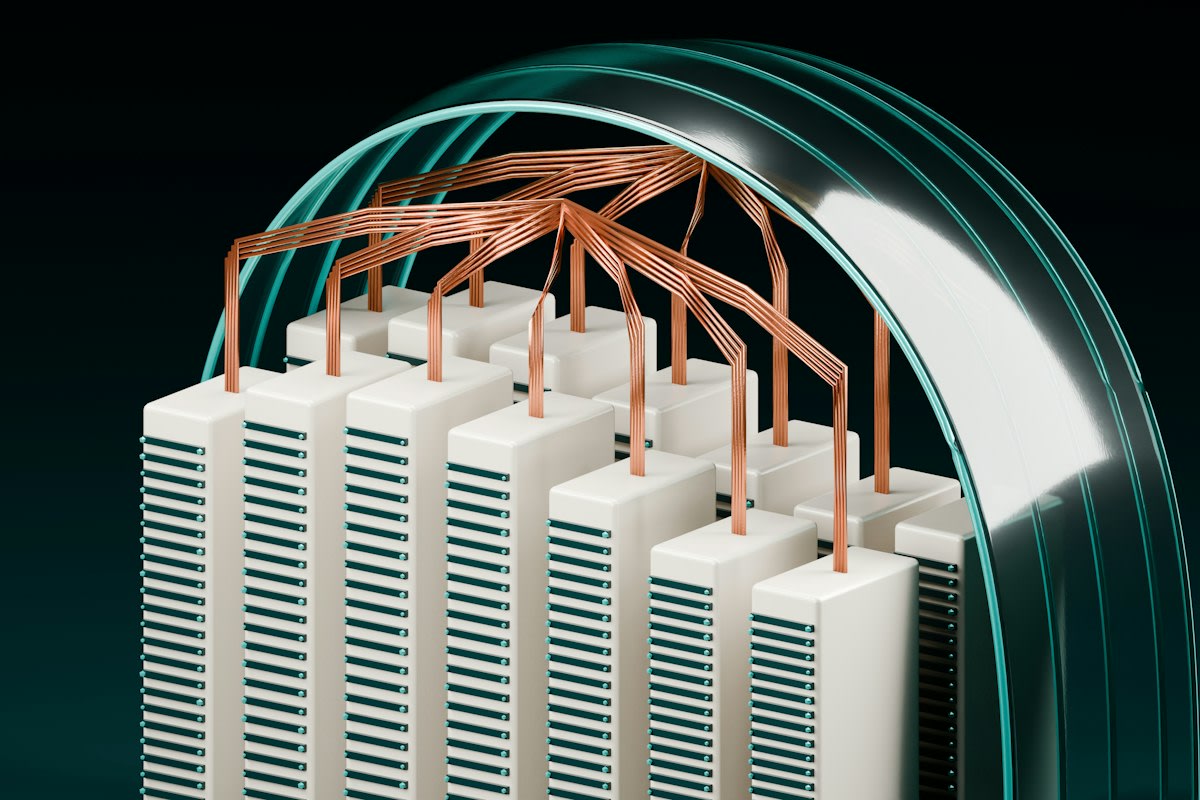
However, this leap in capability comes with a massive energy bill. The transition from simple inference (asking a question) to agentic loops (performing 30+ actions) exponentially increases the computational load. This has triggered a surge in global data center demand, with trends indicating a critical need for more efficient infrastructure to support the energy costs of multilingual LLM inference (Source: CBRE, 2025). The industry is now racing toward 'FrugalGPT' models that attempt to reduce costs without sacrificing the precision required for complex GUI navigation (Source: ACL Anthology, 2024).
| Feature | Traditional GUI Paradigm | LAM-Driven Agentic Paradigm |
|---|---|---|
| Primary User | Human Operator | Autonomous AI Agent |
| Navigation Method | Manual Clicks/Taps | Subgoal-Aware Memory Graphs |
| Complexity Limit | Cognitive Load of Human | Token Window & Compute Budget |
| Success Metric | Conversion Rate/Usability | Task Completion Rate (e.g., SPA-Bench) |
| Infrastructure Focus | Frontend Aesthetics | Data Center Power & Latency |
The financial implications are already rippling through the hardware sector. While software is evolving, the physical layer is scrambling to keep up. Companies like Lam Research are seeing massive volatility and growth as the demand for the semiconductors powering these agents spikes, with recent board authorizations for multi-billion dollar stock repurchases signaling strong confidence in the underlying hardware cycle (Source: SEC Filings, 2024).
Is the interface truly dead? Not entirely, but its purpose has fundamentally changed. The GUI is transitioning from a steering wheel to a diagnostic panel. We will still need screens to verify that the AI didn't hallucinate a purchase or misconfigure a manufacturing line, but the act of 'using' the software is being outsourced. The future of software isn't a better app; it's an agent that makes the app unnecessary.
Fact-Check & Accuracy Note
Key claims regarding GUI agent benchmarks (SPA-Bench) and memory graphs are sourced from arXiv (2026). Manufacturing applications regarding fiber composites and sorting bots are sourced from Preprints.org (2024-2026). Energy and data center trends are attributed to CBRE (2025) and McKinsey (2024). The debate over 'Headless UX' remains an industry-wide discussion among practitioners and is not a settled academic fact.
Editorial Note
Editorial Note: This analysis views the shift toward LAMs as an opportunity for efficiency rather than a crisis for designers. The 'obsolescence' mentioned refers to the interaction model, not the existence of software itself.