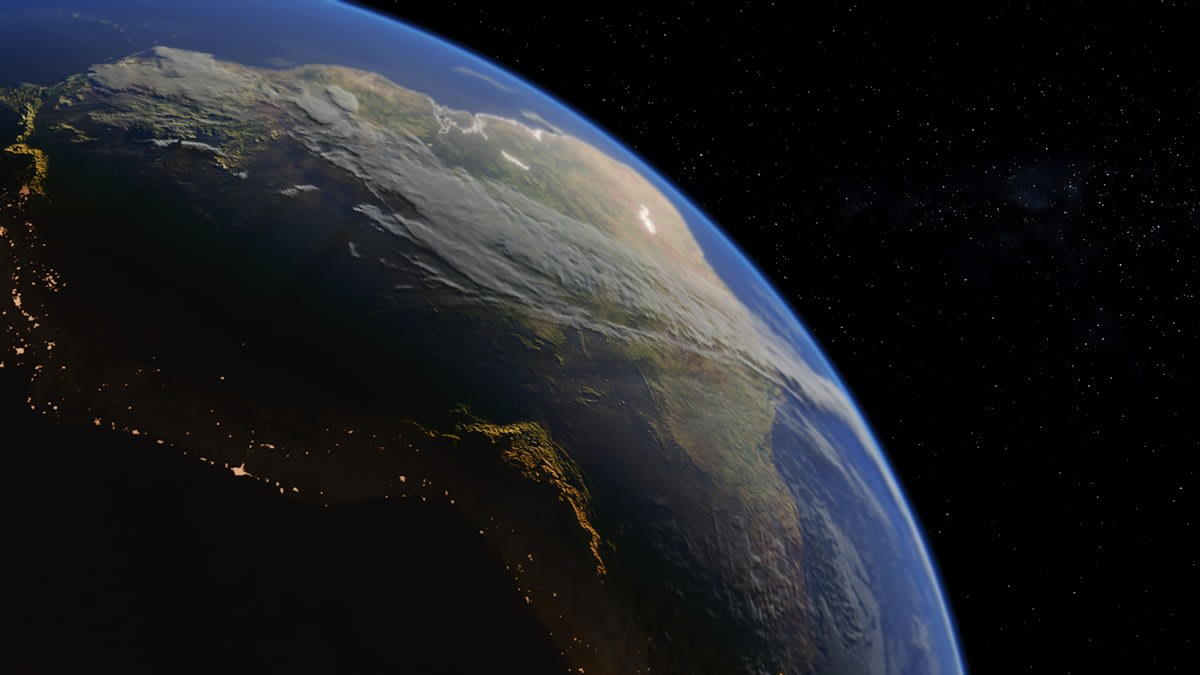
Wall Street is currently treating Low Earth Orbit (LEO) as a frictionless superhighway. In early July 2026, analysts from eighteen major banks released outlooks for SpaceX that read more like science fiction than financial audits. With median estimates hitting $225 per share, the projections suggest a valuation climb from $1 trillion to $3 trillion by the end of 2027. This staggering growth is predicated on the assumption that the orbital environment is a scalable commodity, a blank canvas where the only limit to growth is the launch cadence of a Falcon 9. But this valuation ignores a fundamental physical constraint: the orbit is filling up, and the cost of congestion is not yet on the balance sheet.
Why does this matter for the broader economy? Because the satellite industry has entered a phase of reckless expansion where regulatory approval is decoupled from systemic risk. We are seeing a pattern where companies secure narrow permissions for single-satellite tests while planning constellations of tens of thousands. This delta between the 'demonstration' and the 'deployment' creates a dangerous blind spot for investors and regulators alike, who are pricing in success without accounting for the cumulative wreckage of a crowded LEO.
The Mirror Trap and Regulatory Myopia
Consider the case of Reflect Orbital. This California startup recently received FCC authorization to launch a test satellite equipped with a 59-foot-wide steerable reflector. On the surface, it is a limited technology demonstration. However, the actual roadmap involves a constellation of tens of thousands of these mirrors designed to provide sunlight on demand. The FCC's narrow review process allows the company to bypass a comprehensive discussion on the environmental and operational impacts of such a massive network. When you multiply a 59-foot reflector by 50,000 units, you aren't just adding satellites; you are altering the thermal and visual profile of the orbital plane.
The Authorization Gap
The 'it's only one satellite' argument is a convenient fiction. It allows companies to secure a foothold in orbit without addressing the catastrophic complexity of managing the tens of thousands of assets they actually intend to deploy.
The risks here are not merely astronomical; they are operational. A constellation of 50,000 mirrors introduces unprecedented challenges in heat generation and orbital traffic management. If a single mirror fails or loses propulsion, it becomes a high-visibility piece of kinetic debris. In a congested environment, the probability of a collision event increases exponentially, not linearly. We are essentially building a glass ceiling around the planet, and the financial markets are treating it as a real estate boom.
The Solar Blind Spot
While we worry about satellites hitting each other, we are ignoring the sun. New research suggests that the scientific community has fundamentally underestimated the impact of extreme solar storms. For years, researchers operated under the assumption that there was a physical ceiling to how Earth responds to the strongest solar winds. However, recent findings indicate that this perceived limit may be an artifact of how we measure solar wind rather than a true physical boundary. If the upper limit is higher than previously thought, the risk to our orbital infrastructure is far more severe than current insurance models suggest.
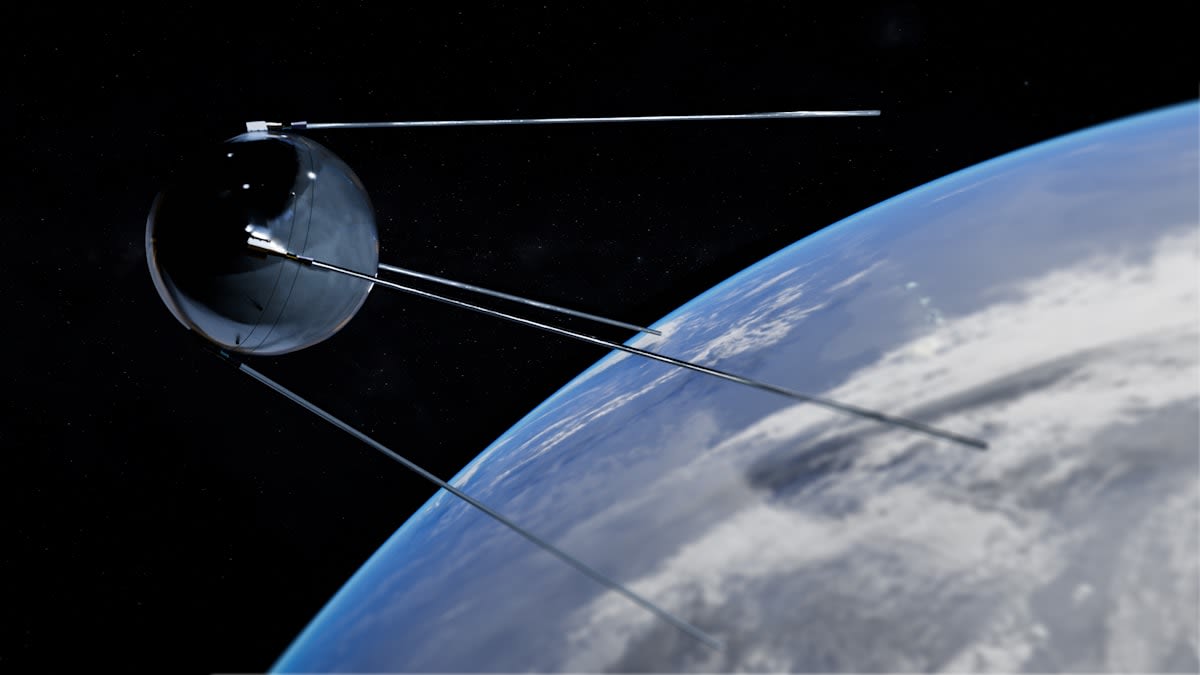
A 'once-in-a-thousand-year' geomagnetic storm is no longer a theoretical curiosity; it is a systemic risk. In a sparsely populated orbit, a solar storm might disable a few satellites. In a congested orbit filled with tens of thousands of assets from SpaceX, Reflect Orbital, and military networks, a massive solar event could trigger a cascade of failures. If thousands of satellites lose attitude control or propulsion simultaneously, they become unguided projectiles. This is the nightmare scenario: a solar-induced Kessler Syndrome where the economy of space is wiped out in a single weekend.
"Scientists may need to rethink how they estimate the severity of the rarest events—an increasingly important challenge as modern society grows more dependent on satellites and other vulnerable technologies."— Space.com Research Analysis
Does the industry have a plan for this? No. Most LEO operators are focused on launch cadence and subscriber acquisition. The assumption is that the 'rare event' is too improbable to price in. But when you increase the number of assets in orbit by a factor of a thousand, the probability of a catastrophic interaction with space weather increases proportionally. We are placing the backbone of global communications on a foundation of optimism and flawed measurement data.
The Illusion of the Military Mesh
The US government is not immune to this fragility. On July 16, 2026, a Falcon 9 launched 21 more satellites for the Pentagon's first operational LEO data network. This push brought the constellation to 63 satellites—exactly half of its planned size. While the launch signals that the Space Development Agency (SDA) is moving forward, it masks a critical technical failure: the optical laser mesh intended to let these satellites communicate at the speed of light remains dark and unproven.
The deployment was frozen for nine months specifically because engineers had to work through hardware and software faults on the spacecraft already in orbit. This tells us that the 'technical soundness' of these constellations is often a projection rather than a reality. We are launching hardware into an environment where it cannot be repaired, relying on a laser mesh that hasn't been switched on, and doing so in an orbit that is becoming increasingly crowded. The Pentagon is essentially betting on a network that is 50% complete and 0% proven in its primary communication mode.
| Asset Type | Projected Volume | Primary Systemic Risk | Technical Status |
|---|---|---|---|
| Commercial Broadband | Tens of Thousands | Orbital Congestion/Kessler | Operational |
| Sunlight Mirrors | 50,000 (Planned) | Thermal Load/Debris | Test Phase |
| Military Data-Relay | 126 (Planned) | Laser Mesh Failure | 50% Deployed |
| Global Infrastructure | N/A | Once-in-1000yr Solar Storm | Underestimated |
This technical instability creates a precarious dependency. When the military and commercial sectors both rely on the same LEO corridors, a failure in one—such as a software glitch in the SDA's laser mesh or a collision involving a Reflect Orbital mirror—creates a ripple effect. The 'superhighway to the stars' is actually a single-lane road with no shoulders and a high probability of a pile-up.

The Math of the Crash
The financial crash will not be a sudden event but a quiet realization. It begins when the cost of insurance for LEO assets spikes because solar storm risks are recalculated. It accelerates when the first 'mirror constellation' creates a debris cloud that renders specific orbital shells unusable. Finally, it peaks when the valuation gap—the distance between a $3 trillion SpaceX target and the actual utility of a degraded orbit—becomes impossible to ignore.
We are currently witnessing a gold rush where the miners are ignoring the fact that the mine is collapsing. The reliance on 'technical approval' for individual satellites, while ignoring the cumulative impact of 50,000 mirrors, is a failure of strategic foresight. If the optical laser meshes remain dark and the solar storms hit harder than our measurements suggest, the satellite economy will not just dip—it will evaporate.
Can the industry pivot? Only if it stops treating orbit as an infinite resource. The current trajectory is one of additive growth without subtractive management. Until there is a mechanism to penalize orbital crowding and a realistic accounting of solar volatility, the $3 trillion valuation of the LEO economy is nothing more than a speculative bubble floating in a vacuum.