
The math of Low Earth Orbit (LEO) just changed. When a single constellation like Starlink is forced to perform 355,000 automatic maneuvers in one year to avoid collisions, we are no longer discussing theoretical risks. We are discussing an operational tax on every single asset in the sky. This volume of avoidance activity reveals a terrifying reality: the orbital environment is now so crowded that artificial intelligence and continuous monitoring are the only things keeping multi-billion dollar networks from becoming a cloud of expensive shrapnel. Why does this matter this month? Because the barrier to entry for orbital deployment has collapsed, and the volume of hardware is scaling faster than our ability to clean it.
Consider the propellant penalty. Every single one of those 355,000 maneuvers requires a burst of energy, a consumption of finite fuel that directly reduces the operational lifespan of a satellite. When a satellite spends its life dodging debris, it is effectively paying a fuel tax to survive. This creates a perverse incentive where the most successful operators are the ones most punished by the congestion created by everyone else. If the current trajectory holds, the cost of maintaining a constellation will eventually exceed the revenue generated by the data it transmits.
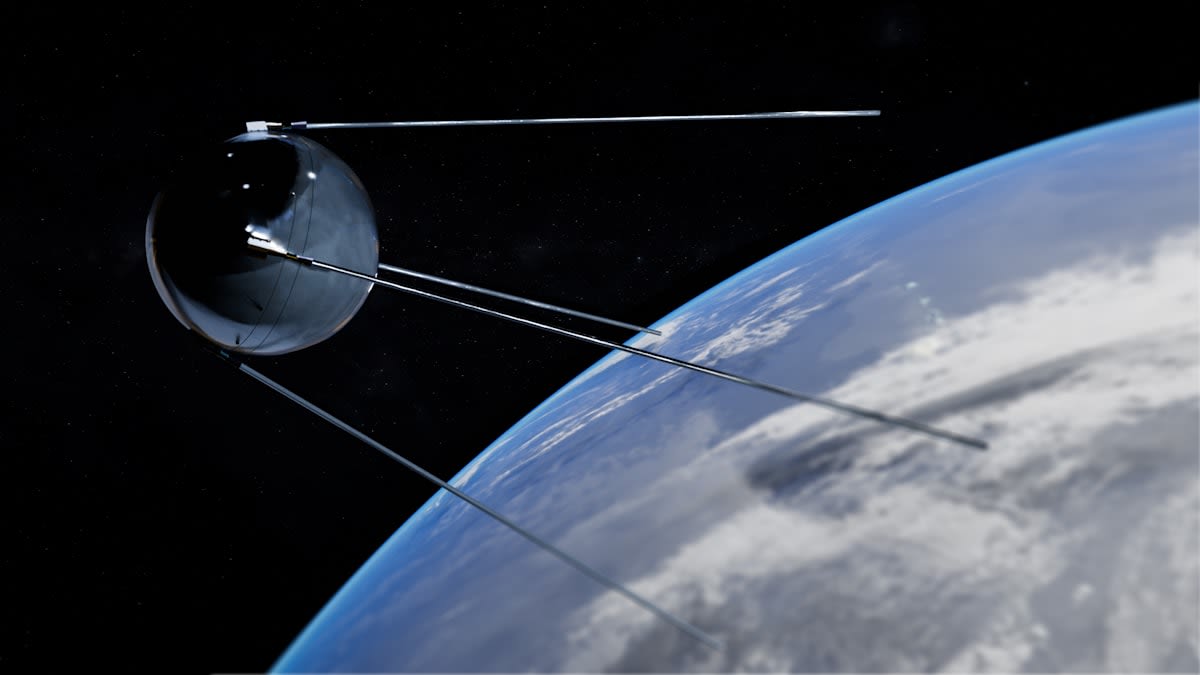
The Delta: A Sixty Percent Surge in Traffic
The scale of the problem is best understood by looking at the numbers from just twenty-four months ago. Total operational spacecraft in orbit jumped from approximately 10,000 to 16,000 in a staggering window of time. Simultaneously, the Starlink network alone grew from 6,000 to over 10,000 active devices. This is not linear growth; it is an explosion of hardware. This rapid influx of assets increases the probability of a Kessler-style chain reaction, where one collision creates a debris field that triggers a dozen more.
| Metric | 24 Months Ago | Current (July 2026) | Growth Delta |
|---|---|---|---|
| Total Operational Spacecraft | 10,000 | 16,000 | +60% |
| Starlink Active Devices | 6,000 | 10,000+ | +66% |
| Annual Avoidance Maneuvers | Negligible/Low | 355,000 | Exponential |
Does the industry realize that avoidance is a temporary fix? AI-driven monitoring allows a satellite to move, but it cannot move the piece of dead junk it is dodging. We are essentially playing a high-stakes game of musical chairs in a vacuum. Every new launch adds to the noise. The arrival of more private orbital capabilities only accelerates this. For instance, the successful launch of a new privately developed orbital rocket on July 18, 2026, which placed payloads into a 450km orbit, proves that the cost of getting to space has plummeted. But the cost of staying there safely is skyrocketing.
Financial Friction
The Avoidance Tax: For every maneuver a satellite performs, it consumes a fraction of its station-keeping fuel. Over 355,000 maneuvers, the aggregate loss of constellation longevity is measured in months, not days. This is a direct hit to the ROI of any LEO investment.
This operational burden leads directly to a larger fiscal question: who pays for the cleanup? Historically, space debris was a government problem, a relic of the Cold War. Now, it is a corporate liability. When private companies seek technical approval for massive new LEO constellations, as seen with recent domestic project approvals in emerging space markets, they are entering a crowded room. The financial necessity for debris removal arises when the cost of insurance for these assets begins to reflect the actual probability of collision.
High-Value Targets and the Voyager Risk
The risk profile shifts dramatically when you move from disposable satellites to permanent infrastructure. Voyager Space is currently pursuing a NASA-backed, privately owned space station in LEO, recently expanding its research capabilities through a partnership with Pennsylvania State University. A space station is not a satellite; it cannot simply perform 355,000 small maneuvers a year without compromising its structural integrity or its fuel reserves. A single collision with a piece of debris the size of a marble could compromise a multi-billion dollar habitat.
"The integration of academic research and private manufacturing in LEO is essential for growth, but it increases the concentration of value in a single orbital slot."— Industry Analysis on Voyager Space Expansion
If the environment remains unmanaged, the insurance premiums for a private space station will become prohibitive. No venture capitalist will fund a project where the primary risk is a random piece of 1970s-era rocket casing traveling at 17,000 miles per hour. This is why debris removal is no longer a philanthropic effort to save the planet; it is a prerequisite for the viability of the private space station economy. Active removal is the only way to lower the risk premium for high-value orbital assets.

But the risk isn't limited to the giants. The democratization of space is creating a flood of smaller, less sophisticated operators. The July 18 launch of the Vikram-1 rocket, capable of carrying 350kg payloads, signals a new era where more players can reach the 450km orbit. Many of these smaller operators lack the sophisticated AI-driven avoidance systems that Starlink uses. They are essentially blind participants in a high-speed traffic jam. When a sophisticated satellite has to move to avoid a 'dumb' satellite, the sophisticated operator pays the price.
Projected Orbital Asset Growth vs. Removal Capacity
Executive Insight
+18.4%
YTD Growth
This imbalance creates a market for 'orbital sanitation.' If a company can guarantee the removal of a dead satellite or a piece of debris, they aren't just cleaning space; they are selling insurance. The financial necessity this month stems from the realization that the 'free' nature of LEO is over. The externalities of the last decade of launches have finally come due. We are seeing a fundamental change in how space is valued: no longer as a void to be filled, but as a finite resource to be managed.
Can we rely on voluntary guidelines? The data suggests otherwise. With total spacecraft numbers leaping by 6,000 units in two years, the sheer volume of hardware makes voluntary compliance a gamble. The financial markets hate gambles. As governments push for self-reliance in LEO services and approve more domestic constellations to ensure national security, the density of these orbits will only increase. The only logical conclusion is a mandated, funded, and executed debris removal regime.
The urgency is driven by the timeline of deployment. New LEO projects are being approved today for launches tomorrow. If the debris isn't removed before the next wave of 10,000 satellites arrives, the orbital shells will become impassable. This would effectively freeze the global space economy, turning a $44 billion projected market into a graveyard of frozen assets. The cost of removal is high, but the cost of an unusable orbit is total.
Ultimately, the 355,000 maneuvers performed by Starlink serve as a canary in the coal mine. They prove that the current system is working at its absolute limit. We are relying on software to solve a hardware problem. Until we start physically removing the mass from the orbit, we are simply delaying the inevitable. The financial necessity of this month is a call to move from avoidance to elimination.