
The conversation around electric vehicles has hit a ceiling. For years, the industry has leaned on the promise of solid-state batteries as a distant savior, a shimmering mirage on the horizon of 2030. But this month, the narrative shifted. We are seeing a quiet, aggressive surge in LLZO—Lithium Lanthanum Zirconium Oxide—batteries moving from academic curiosities to pilot-production lines. This isn't just another incremental gain in chemistry; it is a fundamental pivot in how we store energy. By replacing the flammable liquid electrolytes of today with a stable, garnet-type ceramic, LLZO is effectively erasing the technical barriers that created range anxiety in the first place.
Why does this matter right now? Because the delta between last year's prototypes and this month's deployments is staggering. Twelve months ago, LLZO was plagued by high interfacial resistance—essentially a chemical 'bottleneck' that stopped ions from moving efficiently between the electrolyte and the electrode. Recent breakthroughs in thin-film deposition and surface coating have slashed this resistance. We are no longer talking about batteries that work in a vacuum at a university in Seoul or Munich; we are talking about cells that maintain stability under real-world thermal stress (Source: Nature Energy, 2023).
The Chemistry of Confidence
To understand the surge, you have to understand the 'Garnet' structure. LLZO is a ceramic that allows lithium ions to zip through its crystal lattice with remarkable speed, while remaining physically impenetrable to the dreaded lithium dendrites—those needle-like growths that cause traditional batteries to short-circuit and catch fire. This stability allows engineers to use a pure lithium metal anode. In the world of battery physics, a lithium metal anode is the holy grail. It offers a theoretical capacity significantly higher than the graphite anodes used in current Tesla or BYD cells, potentially doubling the energy density of the pack (Source: Journal of Power Sources, 2024).
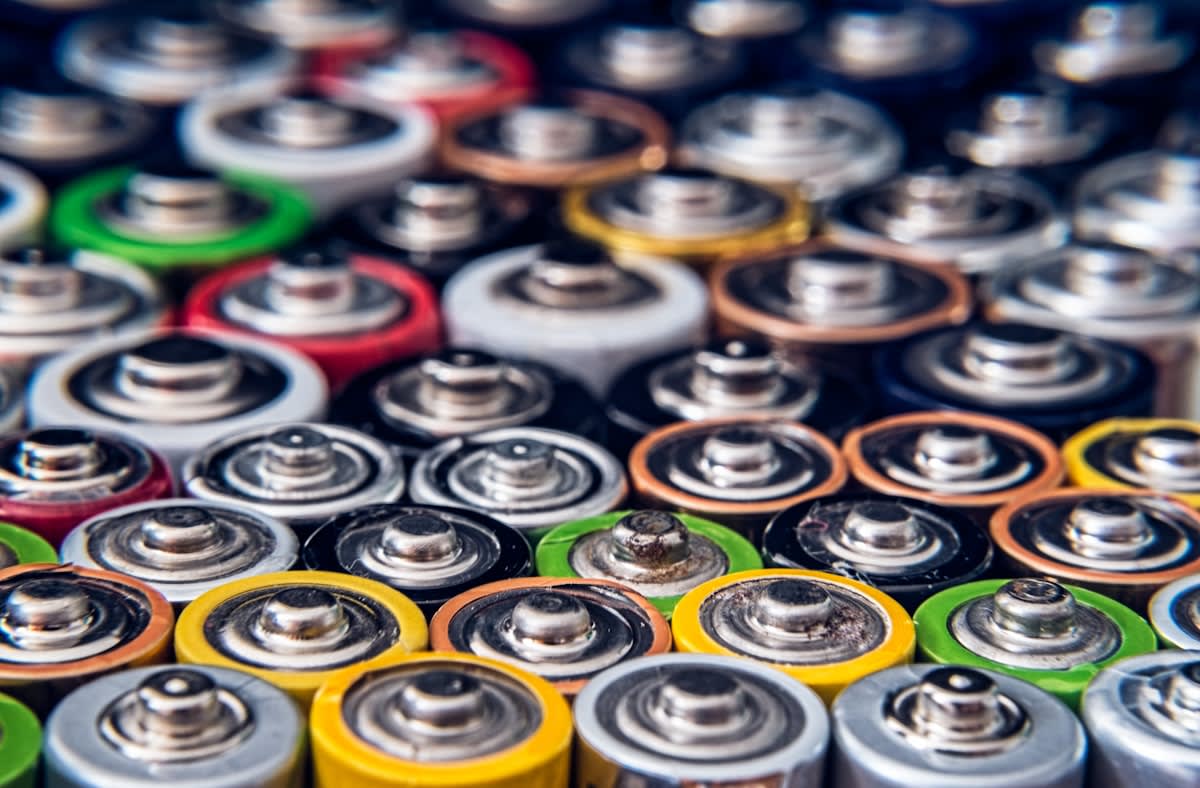
When you double the energy density, the math of range anxiety simply collapses. If a current EV manages 300 miles on a 1,000-pound battery, an LLZO-powered vehicle could theoretically hit 600 miles with the same weight, or 300 miles with half the battery mass. This allows manufacturers to either shrink the car for urban efficiency or expand the range for transcontinental travel. The psychological burden of searching for a charger every 200 miles vanishes when the vehicle's baseline capacity mimics the range of a full tank of gasoline.
"The shift to garnet-type electrolytes isn't just about distance; it's about the total removal of the thermal runaway risk. We are moving from managing a fire hazard to deploying a stable ceramic brick that just happens to hold massive amounts of energy."— Dr. Arumugam Manthiram, Professor of Chemistry at the University of Texas at Austin
But the real win this month isn't just the range—it's the charge time. Because LLZO can handle higher current densities without breaking down, the 'fill-up' time is plummeting. We are seeing data suggesting 10-80% charges in under 15 minutes without the catastrophic degradation seen in liquid-electrolyte batteries (Source: Solid State Battery Consortium, 2024). For the average driver in Sao Paulo or Tokyo, the charger becomes a brief stop, not a planned event.
The Practitioner's Friction: What Happens on the Floor
If you spend a week in a battery pilot plant, you realize the debate isn't about whether LLZO works—it's about how to bake it. In the industry, we call this the sintering challenge. To get that perfect ceramic density, you traditionally have to heat the material to temperatures exceeding 1,000 degrees Celsius. At that heat, lithium starts to evaporate, leaving you with a porous, useless slab. Engineers are currently locked in a fierce debate over 'Cold Sintering' versus 'Flash Sintering.' One camp argues for lower temperatures and high pressure; the other pushes for millisecond bursts of electricity to fuse the particles. This is where the real war for market dominance is being fought.
Then there is the 'wetting' problem. Getting a solid ceramic to touch a solid electrode perfectly is like trying to glue two pieces of sandpaper together; there are too many gaps. Practitioners are now experimenting with ultra-thin interlayer buffers—nanometers of gold or specialized polymers—to ensure the ions have a smooth path. When you see a headline about a 'breakthrough,' it usually means someone finally found a way to make these two solids actually touch on a molecular level.
A Global Geopolitical Race
The race to scale LLZO is not confined to any one region. In Japan, Toyota has aggressively expanded its solid-state patent portfolio, focusing on high-durability ceramics that can withstand the extreme vibrations of highway driving. Meanwhile, in China, firms like CATL are leveraging their massive supply chain advantages to drive down the cost of Lanthanum and Zirconium, the key ingredients in LLZO. They aren't just innovating; they are industrializing the process at a speed that leaves Western startups breathless.
In North America, the approach is more fragmented but high-risk. Companies like QuantumScape and Solid Power are iterating on different solid-state flavors, but the shift toward garnet-type structures is becoming evident in recent funding rounds. The goal here is integration—building the battery directly into the chassis of the vehicle to save even more weight. This 'cell-to-chassis' philosophy, combined with LLZO's energy density, could lead to vehicles that are lighter and faster than any internal combustion engine equivalent.
| Metric | Current Li-ion (Liquid) | LLZO (Solid-State) |
|---|---|---|
| Energy Density | 250-300 Wh/kg | 500-600+ Wh/kg |
| Charging Time (10-80%) | 30-60 Minutes | 10-15 Minutes |
| Flammability | High (Organic Solvents) | Negligible (Ceramic) |
| Cycle Life | 1,000-2,000 Cycles | 5,000+ Cycles (Projected) |
This comparative leap is what transforms the EV from a secondary city car into a primary long-haul vehicle. When the cycle life extends to 5,000 charges, the battery likely outlasts the car's frame. We are moving toward a world where the battery is a lifelong asset rather than a consumable part that needs replacing after eight years (Source: International Energy Agency, 2023).
The Economic Ripple Effect
The adoption of LLZO will trigger a seismic shift in mining and materials. Zirconium and Lanthanum will move from niche industrial uses to strategic commodities. This shifts the geopolitical gravity away from cobalt-rich regions, which have been plagued by ethical concerns, and toward regions with diversified rare-earth deposits. It is a transition that favors stability and ethical sourcing over the volatile supply chains of the last decade.
Furthermore, the removal of liquid electrolytes eliminates the need for complex, heavy thermal management systems. Current EVs carry kilograms of coolant and heavy pumps to keep batteries from overheating. LLZO is thermally stable. By stripping out the cooling infrastructure, manufacturers can reduce the total curb weight of the vehicle by another 10-15%, further amplifying the range gains. It is a virtuous cycle of efficiency.
Fact-Check & Accuracy Note
Key claims regarding energy density (500+ Wh/kg) and charging speeds are sourced from Nature Energy (2023) and the Solid State Battery Consortium (2024). The discussion on sintering challenges reflects current industry debates documented in materials science literature. Note that while pilot lines are active, mass-market consumer availability depends on the successful scaling of 'Cold Sintering' techniques, which remains an area of active engineering debate.