
We have spent decades pretending that silicon is the final frontier of data storage. The industry has treated the physical limits of the semiconductor as a problem to be solved with incremental engineering, but the reality is far more stark: we are hitting a wall. The true systemic shift isn't happening in the fabrication plants of Taiwan or the server farms of Virginia, but in the synthesis of nucleotides. Why are we still relying on magnetic platters and flash memory that degrade in a decade when nature has already perfected a storage medium that lasts millennia? The transition to synthetic DNA data storage is not merely a technical upgrade; it is a fundamental pivot from electronic state-switching to molecular archiving.
The emergence of BioCompute, founded in 2024 by Anagha Rajesh, serves as a potent case study for this shift. Rajesh didn't just start a company; she built a ₹5 crore DNA data storage lab in Bengaluru, attempting to carve out a space for high-stakes biotechnology in an ecosystem traditionally dominated by software services (Source: Times of India, 2026). BioCompute claims to have developed a method for storing data in DNA that costs significantly less than existing industry standards, though these claims remain unverified by external benchmarks (Source: Times of India, 2026). This pursuit of cost-reduction is the primary battleground. Until the price per megabyte of synthetic DNA drops below the cost of enterprise-grade LTO tape, the technology remains a curiosity for the elite rather than a utility for the masses.
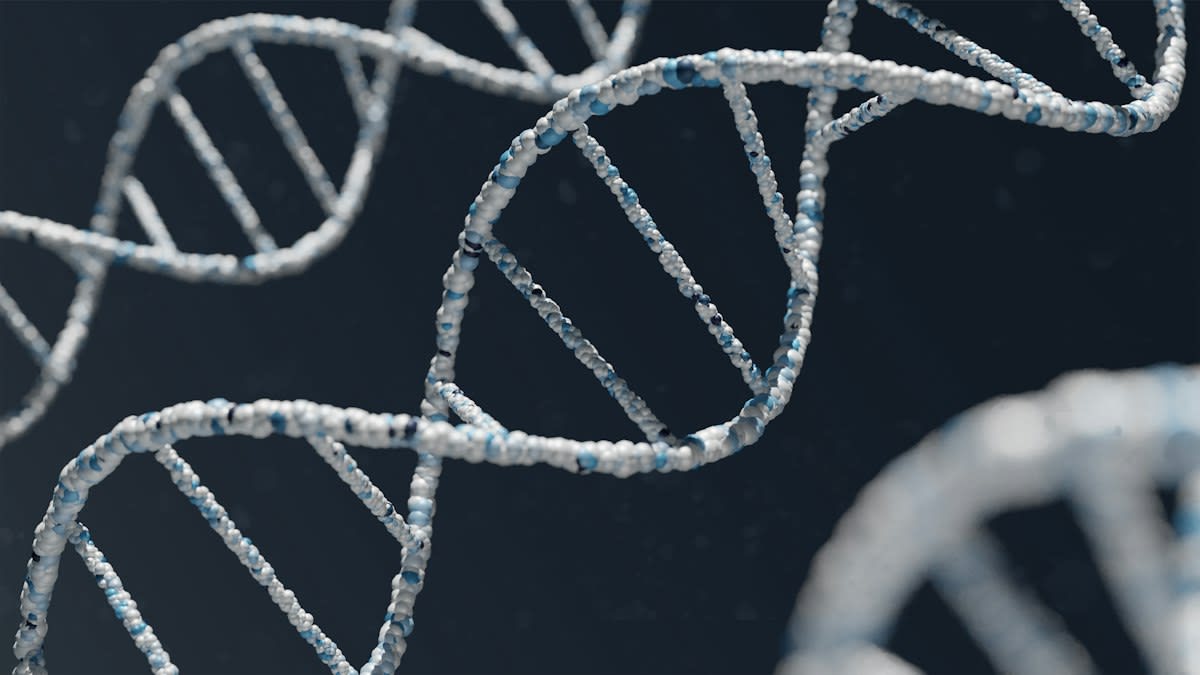
However, the narrative of BioCompute takes a turn that reveals a deeper, systemic friction in the global innovation landscape. In June 2026, Rajesh announced that BioCompute would move its operations from Bengaluru to San Francisco (Source: Times of India, 2026). This migration is a symptom of a recurring pathology in emerging tech hubs: the gap between the ability to build a prototype and the ability to scale a scientific product. While the startup successfully raised over ₹5 crore from investors including WTF Fund, Grad Capital, and 1517 Fund, the move to the US suggests that the specialized infrastructure and venture appetite for 'tricky scientific challenges' are still heavily concentrated in a few global nodes (Source: Times of India, 2026). Does this represent a failure of the Indian ecosystem, or is it simply the natural gravity of the biotech industry?
The Invisible Friction: The Metadata Nightmare
For those of us who have spent years in the trenches of data architecture, the conversation usually centers on the 'write' and 'read' speeds of DNA. But the real war is being fought over metadata. If you store the works of Shakespeare in a synthetic strand but lose the map of how that data was encoded, you haven't created an archive; you've created a biological riddle. This is the invisible friction that practitioners debate behind closed doors. We are seeing a crisis of reproducibility where the raw data exists, but the context is missing. The Sequence Read Archive (SRA) provides a sobering example of this struggle, where studies continue to identify persistent problems with missing information and inconsistent terminology in sequencing protocol annotations (Source: arXiv, 2026).
"The presence of descriptive text is insufficient if the methods cannot be identified or compared reliably."— Research findings on sequencing protocol annotation, arXiv (2026)
The technical reality is that the SRA's free-text libraryconstructionprotocol field is often a wasteland of ambiguity (Source: arXiv, 2026). When researchers rely on free-text fields to describe how they prepared their sequencing libraries, the resulting data becomes nearly impossible to compare across different studies. This lack of standardization directly contradicts the FAIR principles—Findable, Accessible, Interoperable, and Reusable—which are supposed to be the gold standard for scientific data (Source: arXiv, 2026). If we cannot even standardize the metadata for biological sequencing today, the prospect of using DNA as a universal archive for human culture seems precariously optimistic.
This brings us to a critical realization: the 'Molecular Archivists' are not just fighting a battle against chemistry, but against human sloppiness. The heterogeneity in BioSample attributes means that we are currently building a library where the books are written in a perfect, eternal ink, but the card catalog is written in disappearing pencil (Source: arXiv, 2026). The internal debate among practitioners is no longer about whether DNA can store data—we know it can—but whether we can create a metadata framework robust enough to survive the centuries. Without a rigid, machine-readable protocol for annotation, the synthetic DNA revolution will be nothing more than a high-tech graveyard of unreadable information.
The economic implications of this shift are equally complex. When BioCompute claims to lower the cost of DNA storage, they are targeting the most significant barrier to entry (Source: Times of India, 2026). Currently, the cost of synthesizing DNA is orders of magnitude higher than writing to a magnetic disk. However, the value proposition of DNA is not its cost today, but its cost over a thousand years. Traditional archives require constant 'refreshing'—migrating data from old tapes to new ones every few years to prevent bit rot. DNA, if kept cool and dry, requires zero energy for maintenance. This shifts the economic calculation from operational expenditure (OpEx) to a one-time capital expenditure (CapEx) for eternal storage.
| Metric | Silicon/Magnetic Storage | Synthetic DNA Storage |
|---|---|---|
| Longevity | 10-30 years (Requires Refreshing) | Thousands of years (Passive) |
| Data Density | High (Limited by atomic scale) | Ultra-High (Molecular scale) |
| Current Cost | Low (Commoditized) | High (Experimental/Scaling) |
| Metadata Status | Standardized (File Systems) | Fragmented (Source: arXiv, 2026) |
| Primary Barrier | Physical scaling limits | Synthesis cost & Protocol gaps |
As we move toward 2030, the convergence of biotechnology and computing will likely redefine what we consider 'infrastructure.' We are seeing the first generation of entrepreneurs, like Rajesh, who view the genome not as a blueprint for life, but as a storage medium for the digital world (Source: Times of India, 2026). The move of such talent to San Francisco underscores a global imbalance: the East is producing the visionaries and the initial prototypes, but the West still holds the keys to the specialized capital and regulatory environments needed for final productization. This is a systemic cycle that the next decade must break if we are to see a truly global distribution of molecular archiving technology.
Fact-Check & Accuracy Note
The claims regarding BioCompute's cost-reduction are based on company assertions and have not been independently verified by industry standards as of late 2026 (Source: Times of India, 2026). Additionally, the challenges regarding metadata in the Sequence Read Archive (SRA) highlight an ongoing debate in the bioinformatics community about the efficacy of free-text protocols versus rigid, structured metadata (Source: arXiv, 2026).
Ultimately, the race to save human culture in synthetic DNA is a race against time and entropy. We are producing data at a rate that silicon cannot possibly sustain. The pivot to molecular storage is an admission that our current digital architecture is ephemeral. By encoding our knowledge into the very molecules of life, we are attempting to merge the digital record with the biological record. It is a bold, contrarian bet that the future of information is not faster electrons, but more stable molecules.