
The orbital economy just hit a wall, and that wall is made of radio waves. For decades, the industry relied on radio frequency (RF) to move data from space to Earth, but the sheer volume of telemetry and high-resolution imagery now being generated in orbit has turned these links into narrow straws. We are seeing a cluster of events this July that suggest the industry has finally pivoted toward a laser-centric future. When you look at the simultaneous scaling of ground stations and the production of terabit-scale transceivers, it becomes clear that the bottleneck is not just being squeezed—it is being removed entirely.
The most immediate indicator of this shift is the sudden influx of capital into ground-layer infrastructure. On July 13, 2026, the deep-tech firm QOSMIC secured $3.33 million in funding from Accel and Prosus specifically to build optical ground stations. This is not merely a venture capital play; it is a strategic bet on the orbital data economy. QOSMIC has already field-validated its full optical stack at TRL6, meaning the technology has moved past the laboratory and into a representative environment. By co-designing optical terminals with orbital data center company TakeMe2Space, they are treating the ground layer as a high-capacity highway rather than a series of isolated receiving points.
"As computing moves into orbit, every satellite and every orbital data center becomes a node that needs a high-capacity link to Earth, and optical is the only technology that scales to what is coming."— Shreyaans Jain, Co-founder and CEO of QOSMIC
Hardware Scaling in the Heart of Texas
While ground stations provide the destination, the hardware on the satellites must evolve to feed them. Applied Optoelectronics (AAOI) has just signaled a massive industrial ramp-up in Pearland, Texas. On July 14, 2026, the company began constructing a 400,000 square foot expansion of its manufacturing campus. This isn't about incremental gains; it is about the mass production of 800G and 1.6T optical transceivers. These components are the engines that will power AI and cloud infrastructure in orbit, allowing satellites to process and transmit data at speeds that were unthinkable just a few years ago.
Why does the jump to 1.6T matter? In the previous cycle, satellite operators were fighting for every megabit of RF spectrum, dealing with interference and regulatory congestion. By moving to optical transceivers, the industry moves into a spectrum that is virtually unlimited. The Pearland expansion suggests that the demand for these high-capacity links is no longer niche. It is becoming a baseline requirement for any operator intending to run AI workloads in space, transforming satellites from simple relays into distributed edge computing nodes.
| Metric | Traditional RF Links | Modern Optical Links |
|---|---|---|
| Typical Throughput | Mbps to low Gbps | 800G to 1.6T |
| Spectrum Availability | Highly Congested/Regulated | Virtually Unlimited |
| Hardware Scale | Mature/Static | Rapidly Expanding (e.g., AAOI Texas) |
| Primary Constraint | Bandwidth Bottleneck | Atmospheric Interference |
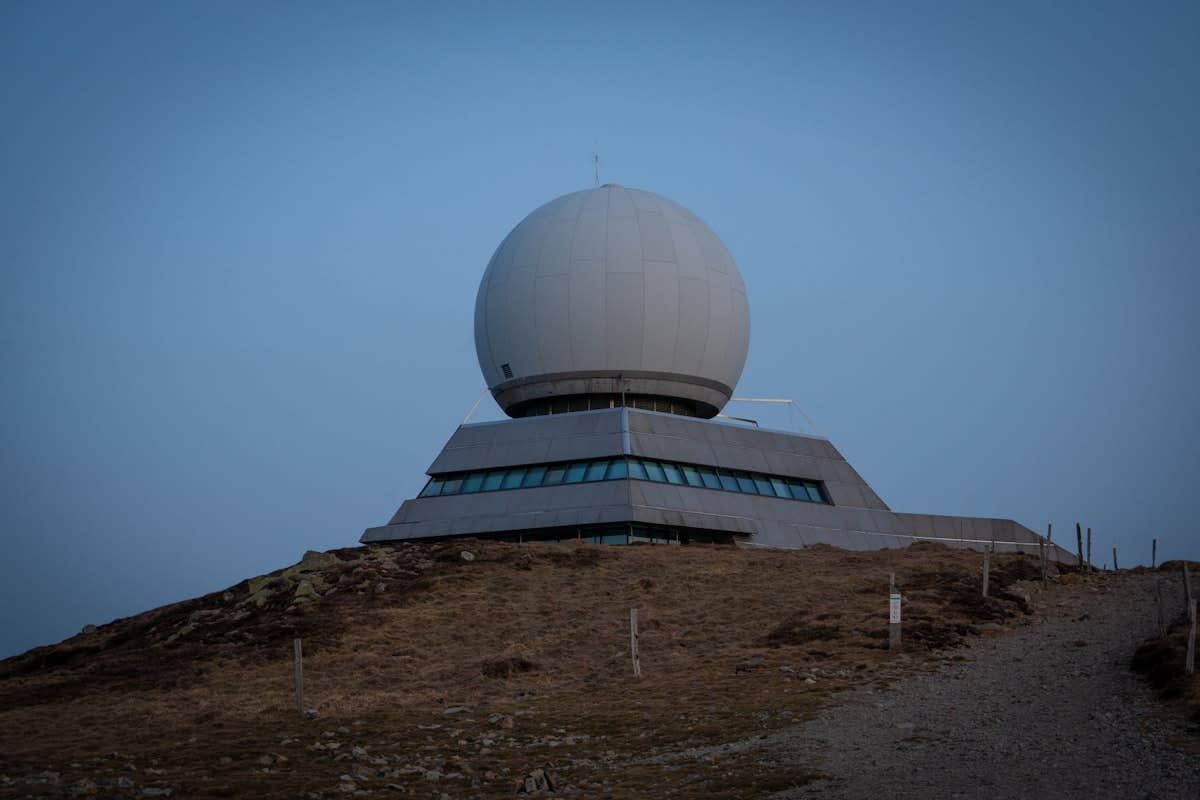
The shift toward optical is not just happening in low Earth orbit. The scale of this transition is being tested at the most extreme distances imaginable. NASA's Deep Space Optical Communications (DSOC) project recently published operational results through an IEEE study on July 14, 2026. The project utilized a ground laser transmitter (GLT) located at the Table Mountain Facility at JPL's Optical Communications Telescope Laboratory in Southern California. By successfully testing communications over distances comparable to Mars, NASA has proven that laser-based links are reliable enough for the next generation of deep space exploration.
This validation changes the math for the lunar and Martian economies. If you cannot move high-definition data back to Earth, your orbital assets are effectively blind. The DSOC results demonstrate that the ground laser transmitter can maintain a stable link across millions of miles, effectively removing the distance penalty that has plagued deep space missions for decades. We are moving from a world of delayed, low-resolution packets to a world of near-real-time deep space telemetry.
The Convergence of Power and Data
As we solve the data bottleneck, a new set of complementary technologies is emerging to support this high-energy infrastructure. On July 13, 2026, Reflect Orbital received FCC clearance to fly Eärendil-1, an in-space mirror designed to provide on-demand sunlight. Simultaneously, Pulse Space announced a $40 million contract from the Space Force to develop laser systems capable of beaming power to other satellites. When you connect these dots, a larger picture emerges: the orbit is being wired for both high-capacity data and wireless power.
Can you imagine a satellite that doesn't need massive solar arrays because it receives power via laser, and doesn't need a massive RF antenna because it transmits via 1.6T optical links? This is the direction the industry is heading. The $40 million investment from the Space Force indicates that the military sees laser power beaming as a critical component of orbital resilience. The data bottleneck was the first hurdle; the energy bottleneck is the second.
Infrastructure Is Finally Catching Up To Ambition
To understand the delta here, we have to look back twelve months. A year ago, optical communication was largely the domain of experimental government projects and a few brave startups. The conversation was about whether laser links could even work through cloud cover or maintain a lock on a moving target. Today, the conversation has shifted to industrial scale. We are no longer asking if it works; we are building 400,000 square foot factories in Texas to mass-produce the components.
The difference between 2025 and July 2026 is the move from TRL4 (laboratory validation) to TRL6 (field validation) and industrialization. The QOSMIC funding and the AAOI expansion represent the transition from a scientific curiosity to a commercial utility. The orbital data economy cannot exist without a reliable ground layer, and for the first time, that layer is being built with the same urgency as the satellites themselves.
The Leap in Orbital Link Capacity
Executive Insight
+18.4%
YTD Growth
This shift creates a new competitive landscape. Operators who cling to RF-only architectures will find themselves unable to compete with the data-rich environments provided by optical-native constellations. The ability to beam terabits of data per second allows for real-time AI processing in orbit, reducing the latency of decision-making from hours to milliseconds. The bottleneck hasn't just been widened; the entire architecture of how we interact with space has been rewritten.
The Bottom Line
The convergence of 1.6T transceivers, TRL6 ground stations, and deep-space validation suggests that the 'Optical Age' of space is no longer a prediction—it is the current operational reality.