
The current state of low Earth orbit is no longer a matter of cautious management; it is a high-stakes game of dodgeball played at 17,500 miles per hour. As of July 2026, the scale of this activity has reached a tipping point. SpaceX's Starlink satellites alone have performed over 355,000 collision avoidance maneuvers within the past year. This means that every single satellite in the constellation is now forced to dodge debris or other spacecraft on an almost weekly basis just to survive.
"I think we're heading towards a situation where there will be a collision involving an operational satellite in the constellation."— Hugh Lewis, Professor of Astronautics at the University of Birmingham
The danger lies in the aggregate risk. Hugh Lewis points out that even if a maneuver has a residual probability of failure of one in a million, the sheer volume of these actions creates an inescapable danger. When you execute a million maneuvers, that one-in-a-million risk becomes a statistical likelihood. We are seeing a transition where the safety of the constellation depends not on the perfection of a single move, but on a volume of maneuvers that eventually guarantees a failure.
The Scaling Problem
SpaceX has applied to the FCC to expand its constellation to 100,000 satellites, exponentially increasing the number of potential collision points in an already crowded corridor.
This trajectory suggests a looming deadline for orbital stability. Experts project that SpaceX will hit the milestone of one million cumulative avoidance maneuvers by June 2027. This is not a gradual increase; it is an acceleration that outpaces the development of debris removal technology. The delta between the 355,000 maneuvers seen last year and the million projected for 2027 reveals a growth curve that the current regulatory environment is wholly unprepared to handle.
| Metric | Current State (2026) | Projection (June 2027) |
|---|---|---|
| Annual Avoidance Maneuvers | 355,000 | 1,000,000+ (Cumulative) |
| Constellation Target | Existing Fleet | 100,000 Satellites |
| Maneuver Frequency | Almost Weekly | Daily/Continuous |
The Geostationary Blind Spot
While much of the public focus remains on low Earth orbit, a more insidious threat is emerging at 22,000 miles. Researchers from the University of Warwick in the U.K. have discovered a debris cloud in the geostationary orbit that acts as a potential minefield for the world's most expensive satellites. This region, critical for global communications and weather monitoring, is filled with previously unseen bits of space junk that could trigger a chain reaction of destruction.
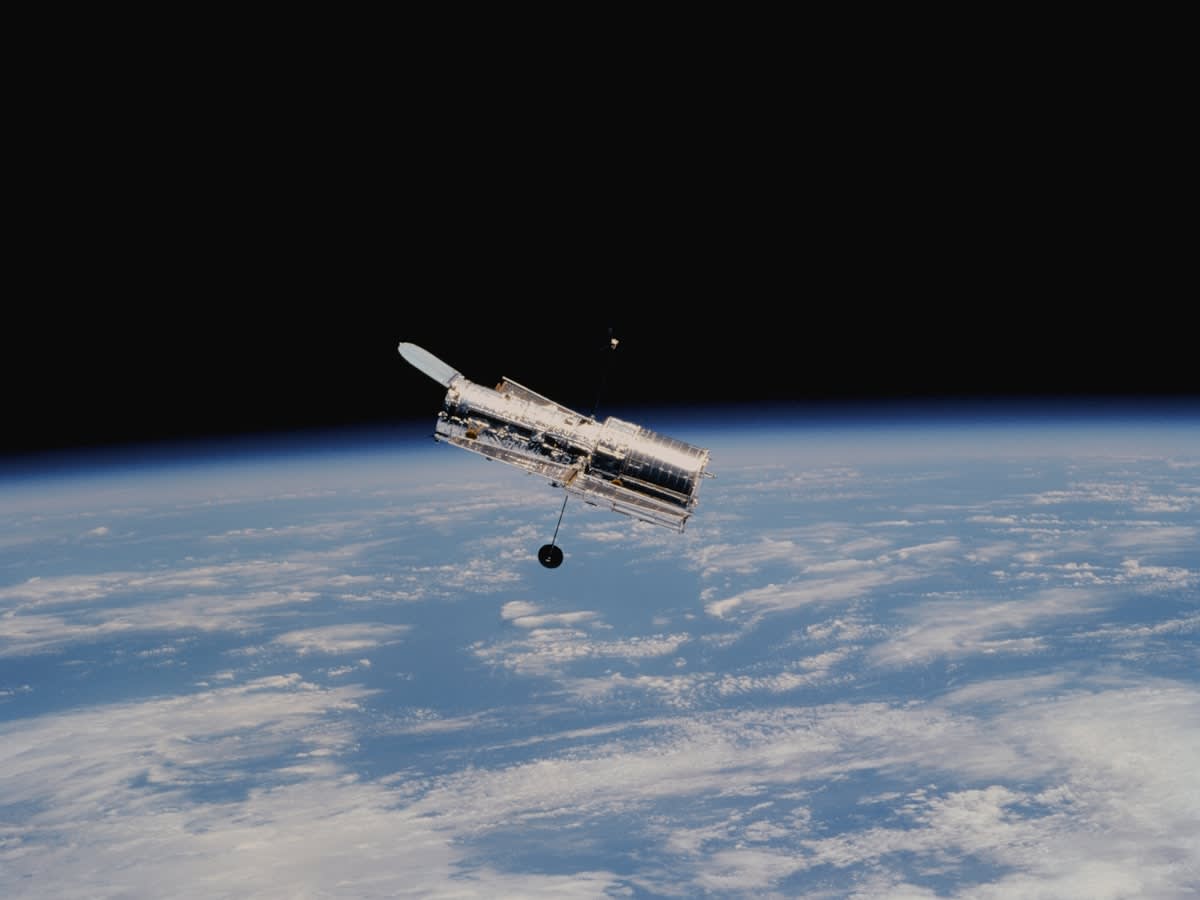
The discovery was made possible through a method called blind stacking, which Ben Cooke, a research fellow at the University of Warwick, describes as a powerful tool for improving the sensitivity of astronomical datasets. This technique allowed researchers to see debris that was previously invisible to standard tracking systems. The fact that such significant amounts of junk remained undetected until now suggests that our current maps of space are dangerously incomplete.
"The debris in geosynchronous orbit is a potential minefield."— Stuart Eves, Space Consultant at SJE Space
If a collision occurs in the geostationary belt, the results would be catastrophic due to the high value of the assets located there. Unlike the smaller, replaceable satellites of a mega-constellation, geostationary satellites are often massive, multi-billion dollar investments. A single fragment of junk could disable a primary communications node, creating a cloud of secondary debris that threatens every other asset in that specific orbital plane.
The British Strategic Response
Recognizing the volatility of the orbital environment, the British government is moving toward a more aggressive stance on space sustainability. Speaking at the Spacetide conference in Tokyo, Rebecca Evernden, director of the U.K. Space Agency, announced a new space strategy. This whole-of-government approach aims to provide clear guidance for civil, commercial, and national security activities to prevent the orbital commons from becoming unusable.
- Satellite communications infrastructure
- Launch capabilities and efficiency
- Space domain awareness (SDA)
- Space sustainability and in-space servicing/manufacturing
The emphasis on space domain awareness is a direct response to the findings from the University of Warwick. We cannot manage what we cannot see. By focusing on the ability to track smaller fragments and predicting their paths with higher precision, the U.K. hopes to mitigate the risks that mega-constellations introduce. The goal is to move from reactive dodging to proactive traffic management.
This strategic focus is already attracting industry players. Astroscale, a leader in debris removal, specifically targeted the U.K. for its operations because of the government's commitment to sustainability. The ability to physically remove dead satellites and fragments is the only long-term solution to the Kessler Syndrome, where a single collision creates a cascade of debris that renders space flight impossible.
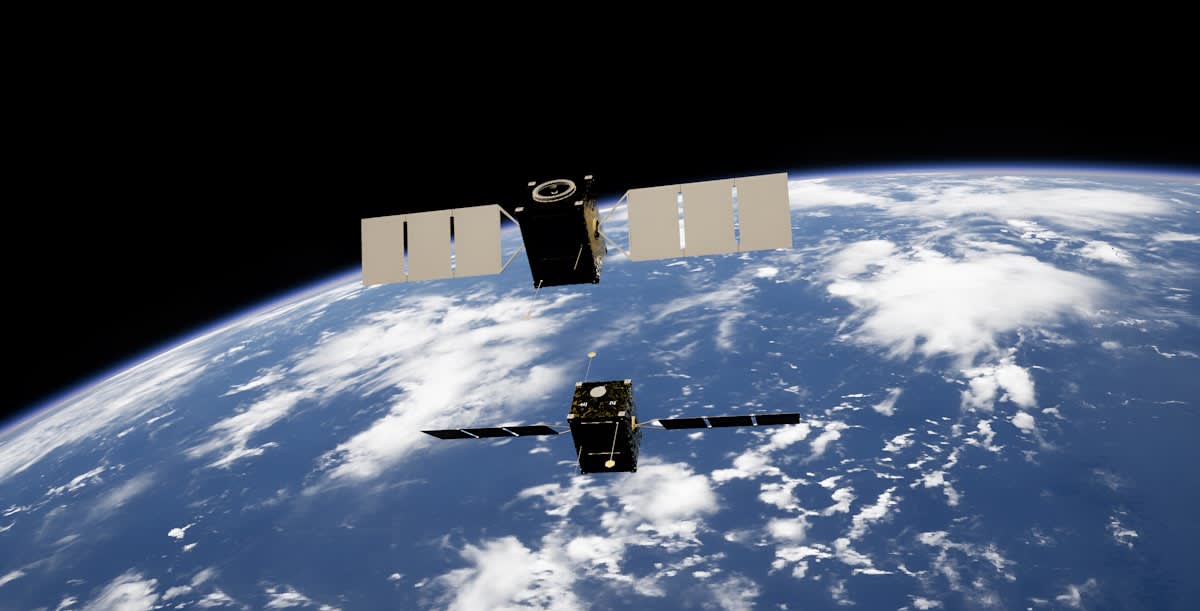
The tension between commercial expansion and orbital safety is now a primary geopolitical friction point. While the FCC continues to process applications for tens of thousands of new satellites, the physical reality of the orbit is reaching its limit. The transition from a few hundred satellites to hundreds of thousands changes the nature of the risk from an occasional anomaly to a daily operational hazard. We are no longer asking if a collision will happen, but when the first operational satellite in a mega-constellation will be lost.
Projected Growth in Avoidance Maneuvers
Executive Insight
+18.4%
YTD Growth
Ultimately, the reliance on automated collision avoidance is a temporary bandage. The math provided by the University of Birmingham suggests that the aggregate risk is an equation that cannot be solved with more maneuvers. Without a coordinated international effort to limit the number of satellites and actively remove existing junk, the very infrastructure that enables the modern internet and global security will be the cause of its own destruction.