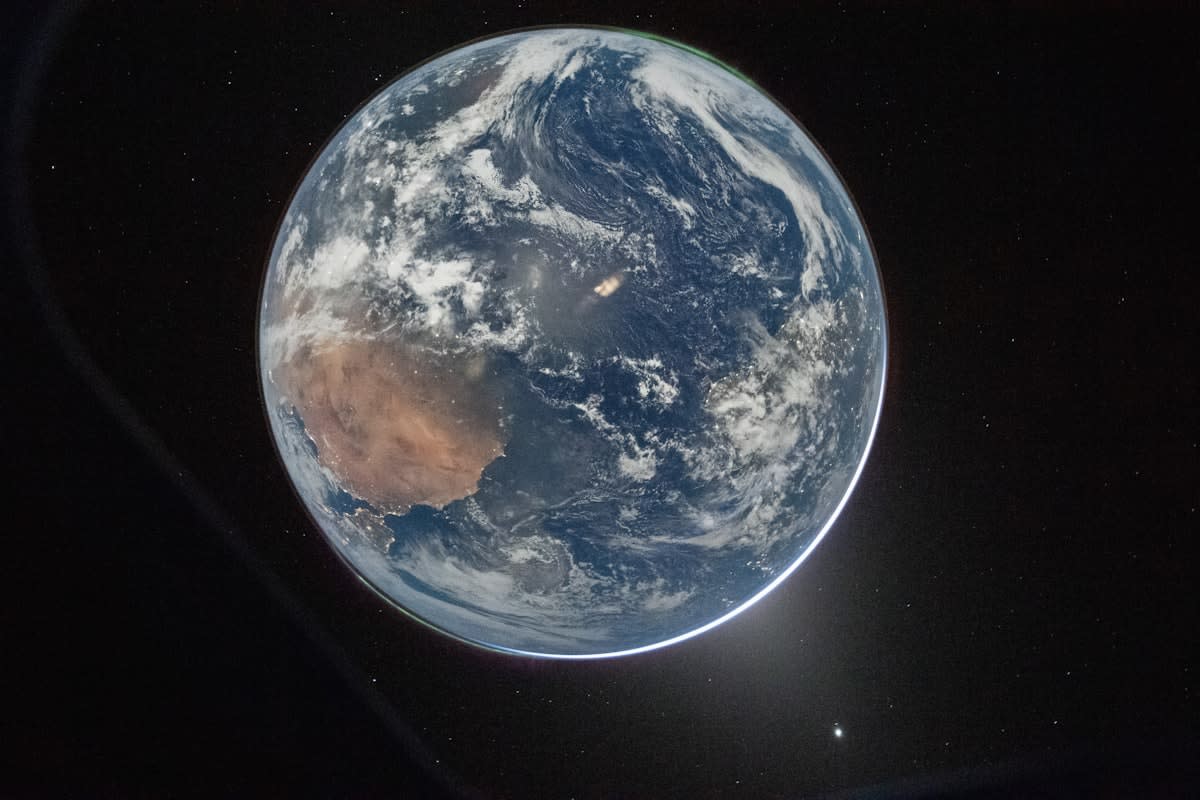
The economics of reaching space have undergone a violent correction. For decades, the cost of exiting Earth's gravity well was a prohibitive tax paid primarily by superpowers, ensuring that every object placed in orbit was a high-value, meticulously planned asset. This scarcity acted as a natural filter for orbital safety; when a launch costs hundreds of millions of dollars, the risk of creating debris is managed with an almost religious fervor. Today, that filter has evaporated. The arrival of rapid reusability has turned the orbital plane from a curated gallery into a crowded parking lot.
Why does a drop in price lead to a rise in systemic risk? The answer lies in the decoupling of launch capability from orbital management. We have optimized the delivery mechanism while ignoring the destination's carrying capacity. When the cost of entry is negligible, the incentive to build long-lasting, highly reliable hardware vanishes. Companies now favor a disposable hardware cycle, launching thousands of cheap satellites designed to fail and burn up within five years, rather than investing in the robust engineering required for decadal stability. This creates a high-velocity churn of hardware in an environment where there is no garbage collection.

This shift in logic transforms the nature of orbital failure. In the legacy era, a satellite failure was a financial catastrophe for a single nation or corporation. In the current regime, a failure is merely a line item in a massive constellation's operational budget. However, the physics of the vacuum do not care about corporate balance sheets. A dead satellite in a crowded shell is not just a lost asset; it is a kinetic projectile moving at 17,500 miles per hour. The more we lower the cost of entry, the more we encourage the deployment of assets that are too cheap to be properly decommissioned.
| Launch Vehicle | Era | Approx. Cost per kg (USD) | Safety Philosophy |
|---|---|---|---|
| Space Shuttle | 1981-2011 | 54,500 | Maximum Reliability / High Cost |
| Falcon 9 | 2010-Present | 2,700 | Iterative Testing / Medium Cost |
| Starship (Projected) | Future | <100 | Mass Deployment / Low Cost |
The data reveals a precipitous drop in the financial barrier to entry, but it hides a corresponding spike in orbital density. When the cost per kilogram drops from fifty thousand dollars to under a hundred, the volume of material we can push into Low Earth Orbit (LEO) increases by orders of magnitude. This is not a linear growth curve; it is an exponential flood. We are effectively treating the orbital environment as an infinite resource, ignoring the fact that usable shells for communication and observation are finite. Once a specific altitude becomes too cluttered with debris, it becomes unusable for everyone, regardless of their launch budget.
The Regulatory Vacuum of the New Space Age
Our legal frameworks for space are relics of a Cold War that ended before the first reusable booster landed. The Outer Space Treaty of 1967 was designed to prevent nuclear weapons in orbit, not to manage the traffic of thirty thousand small-sats. There is no international body with the authority to assign orbital slots or enforce decommissioning timelines. Instead, we rely on a patchwork of national licenses that often prioritize domestic industrial growth over global orbital health. This creates a race to the bottom where the most aggressive actor sets the standard for risk.
"We are currently operating on a trust-based system in an environment where a single mistake can trigger a chain reaction that closes the door to space for generations."— Orbital Dynamics Specialist
Consider the geopolitical implications in regions like Kazakhstan or the growing space hubs in Brazil and the UAE. As launch access becomes a commodity, more nations are deploying their own constellations without the legacy of long-term orbital stewardship. The lack of a centralized traffic management system means that collision avoidance is currently a series of frantic emails and automated alerts between a handful of operators. This is an unsustainable way to manage a global commons. What happens when two autonomous constellations from different jurisdictions have a disagreeing avoidance maneuver?
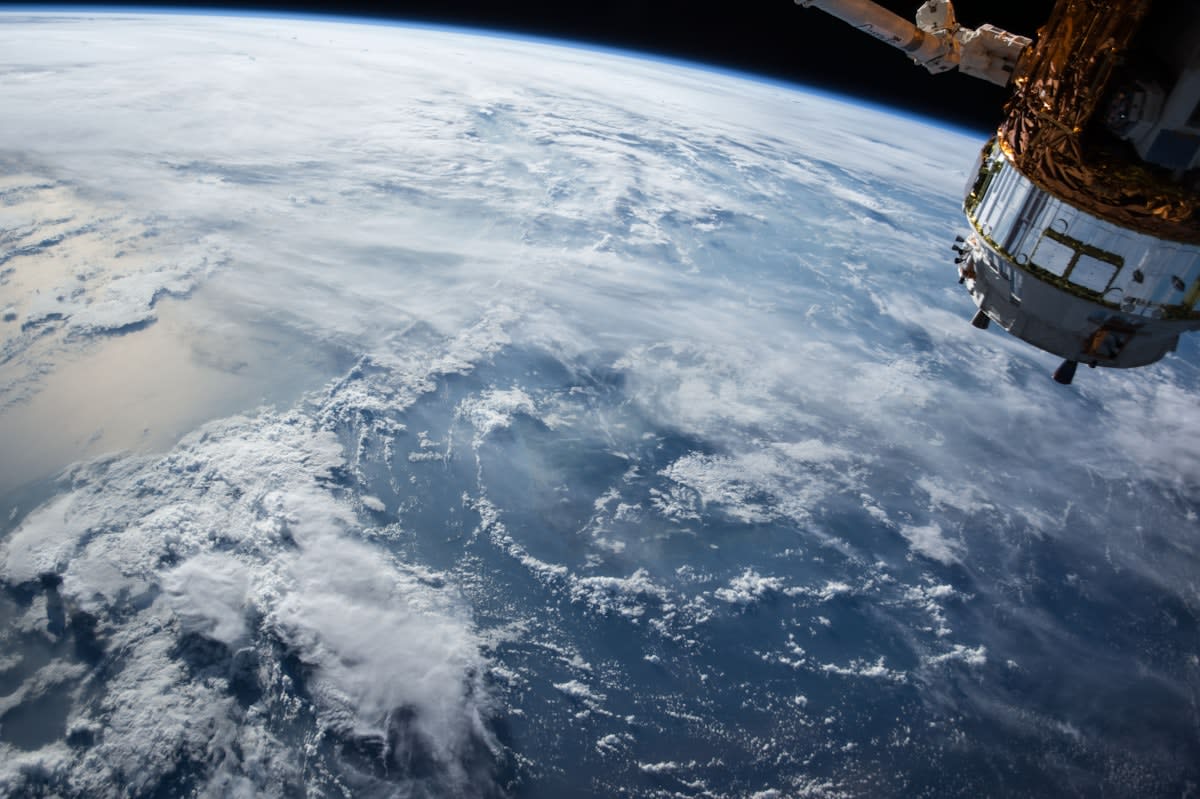
The danger is the Kessler Syndrome, a theoretical tipping point where the density of objects in LEO is high enough that a single collision creates a cloud of debris that triggers further collisions. This is no longer a distant academic worry. We have already seen the debris clouds from decommissioned satellites and anti-satellite tests. By making launch so cheap, we have accelerated the timeline toward this tipping point. The economic incentive is to launch more, faster, and cheaper, but the physical reality is that every single piece of debris increases the risk for every other asset in that shell.
The Orbital Commons
The tragedy of the commons is playing out in real-time at 500 kilometers above the surface. Individual companies benefit from launching more satellites, but the collective cost is a degraded orbital environment.
The insurance industry is the only entity currently attempting to quantify this risk, yet they are fighting a losing battle. Underwriting a satellite launch used to be about the probability of the rocket exploding. Now, it is about the probability of the satellite being shredded by a piece of paint floating at orbital velocity. As the environment becomes more unpredictable, premiums will either skyrocket—effectively re-introducing a cost barrier—or the industry will move toward a model of accepted loss, where satellites are treated as consumables with a high expected failure rate.
Growth of Active Satellites in LEO
Executive Insight
+18.4%
YTD Growth
This data illustrates the terrifying delta between our ability to launch and our ability to manage. The vertical spike in the last four years corresponds exactly with the collapse of launch costs and the rise of mega-constellations. We are adding thousands of objects to the environment every year, yet the number of active debris-removal missions remains in the single digits. The market is optimizing for the 'up' part of the journey, while the 'down' part—the responsible removal of assets—remains an unfunded externality.
The Fallacy of the Disposable Satellite
There is a prevailing belief in the aerospace sector that building satellites to be 'disposable' is a safety feature. The argument is that if a satellite is designed to burn up quickly in the atmosphere, it reduces the long-term debris load. However, this ignores the short-term volatility. A satellite that is designed for a five-year lifespan often lacks the fuel reserves or the propulsion precision required for a guaranteed controlled reentry. If the propulsion system fails on a 'cheap' satellite, it becomes a permanent hazard for the remainder of its orbital decay, which can take years.
Furthermore, the 'fail fast' mentality of modern tech development is fundamentally incompatible with orbital mechanics. In software, a bug leads to a crash and a reboot. In orbit, a bug in a collision avoidance algorithm leads to a kinetic event that creates ten thousand new pieces of trackable debris. We are applying the logic of the app store to the physics of the vacuum. This intellectual arrogance assumes that we can iterate our way out of a physical catastrophe, but orbital debris is a cumulative problem that does not reset with a new version release.
To fix this, we must move beyond the obsession with the cost per kilogram. The real metric of success should be the sustainability per orbit. This would involve taxing the launch of every satellite to fund a global orbital cleanup fund, or requiring a 'deposit' that is only returned once the satellite is successfully de-orbited. Without a financial penalty for polluting the orbital commons, the market will continue to reward the most reckless actors.
The collapse of launch costs is a marvel of engineering and a victory for accessibility. It allows for global internet, better climate monitoring, and the potential for interplanetary expansion. But if we continue to treat the space around our planet as a free dumping ground, we will find that the cost of entry is no longer the barrier. The barrier will be a wall of shrapnel that prevents anyone from leaving the planet at all. We are currently building the ladder to the stars, but we are doing it by burning the ground we stand on.