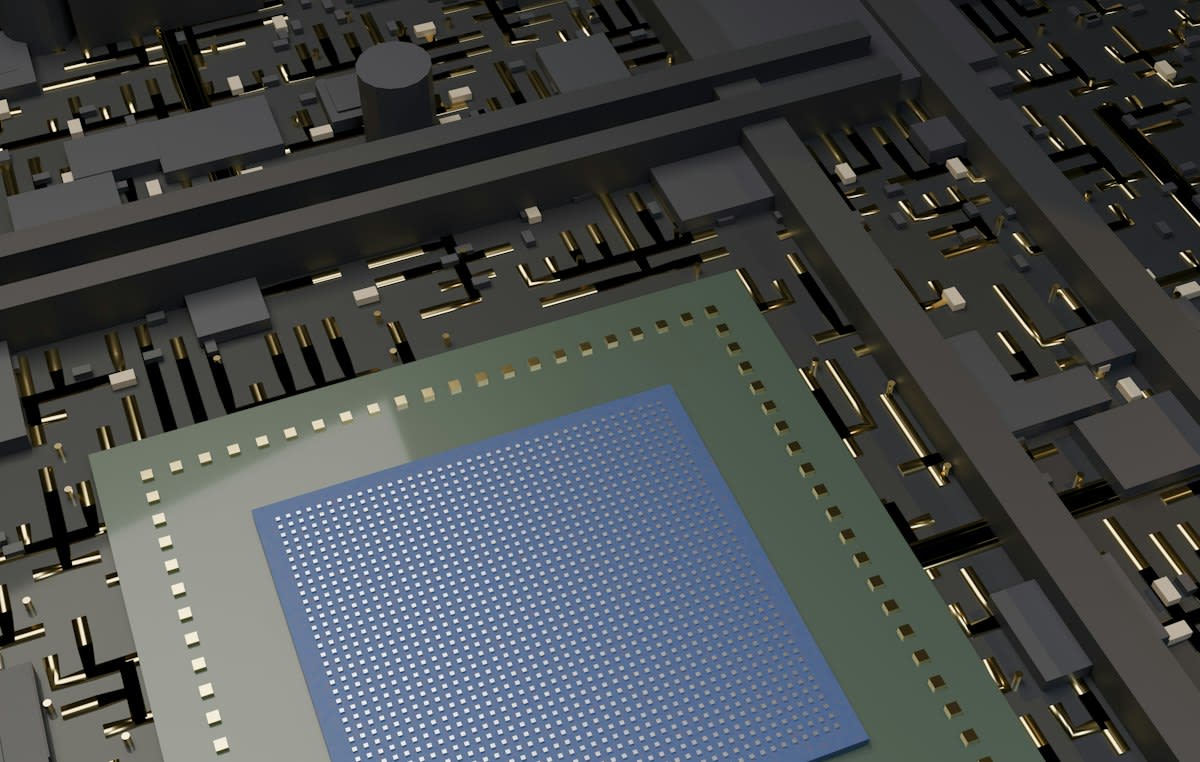
20 watts. Biological brains perform complex computation on roughly the power of a household light bulb (Source: MindStudio, 2026). This energy gap is the carbon-scored reality that digital AI cannot escape. While data centers consume megawatts to simulate a fraction of human cognition, the biological model operates on a budget that makes current GPUs look like prehistoric furnaces. The efficiency of digital hardware is not just lagging; it is calcified.
In the neon-burnt corridors of Tainan, the industry is starting to admit the truth: gigaflops-per-joule gains have flattened over the past couple of years (Source: MindStudio, 2026). We are no longer seeing the exponential leaps in raw compute efficiency that defined the early era of deep learning. Instead, we are witnessing a desperate attempt to throw more memory and bandwidth at the problem. Nvidia shifted its focus toward memory capacity and bandwidth because GPT-era models revealed how memory-hungry attention mechanisms actually are (Source: MindStudio, 2026). This is not a leap forward; it is a side-step to avoid a total collapse in performance scaling.
The Neuromorphic Gamble
Neuromorphic computing attempts to build chips that mimic the brain structure directly in analog circuitry rather than simulating neurons in software (Source: MindStudio, 2026). This is a fundamental shift in how we approach logic. By removing the digital abstraction, these systems aim to replicate the 20-watt efficiency of human intelligence (Source: YC Paper Club, 2026). The goal is to move away from the von Neumann bottleneck, where data constantly shuttles between memory and processor, wasting energy in the process. These chips seek to fuse memory and compute into a single, ash-streaked fabric of analog signals.
However, the transition is far from seamless. Neuromorphic chips remain largely experimental and have failed to match the raw throughput of digital accelerators for mainstream workloads (Source: MindStudio, 2026). The industry is struggling with the fact that zero-order optimization methods do not scale efficiently to the largest models using today's hardware (Source: MindStudio, 2026). We are trading raw speed for energy efficiency, but the trade-off is currently too steep for commercial viability. The result is a set of high-potential toys that cannot yet handle the brutal demands of a trillion-parameter model.
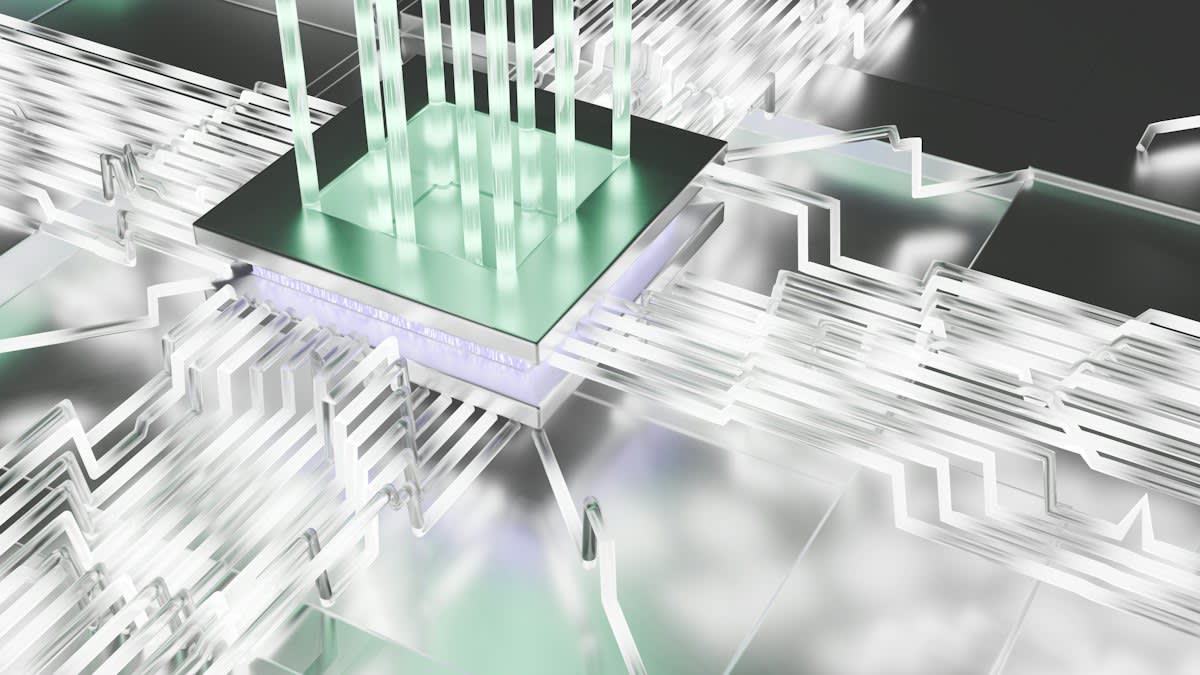
This tension creates a void that optical computing hopes to fill. By using photons instead of electrons, these systems promise near-instantaneous processing with almost zero heat generation. The energy budget spent on photonics is a small portion of the overall energy budget in these experimental setups (Source: YC Paper Club, 2026). If we can move the bulk of the computation into the light domain, the thermal limits of silicon become irrelevant.
The Friction of Light and Biology
Optical systems are not a magic bullet. They face severe engineering limits regarding how information is stored and how to handle the non-differentiable, noisy behavior of physical light systems (Source: MindStudio, 2026). Light is fast, but it is difficult to tame. Unlike a digital bit that is either 0 or 1, a photon in an optical circuit is subject to interference and decay. This noise makes it nearly impossible to implement the precise backpropagation algorithms that make modern AI work. We are trying to force a fluid medium into a rigid mathematical box.
"Human intelligence is not optimal for compute. We're optimized for survival, reproduction, and the existence of our race, but we're not optimized for compute."— BigGo Finance, 2026
This realization leads us to the most radical frontier: biocomputing. The idea is to use actual biological neurons to perform the work. There are already reports of biological neurons being trained with reinforcement learning to play games like Doom (Source: YC Paper Club, 2026). But this field is plagued by a specific kind of fraud. Many biocomputing startups risk overstating their results by using oversized silicon decoders (Source: BigGo Finance, 2026). These decoders are essentially GPUs that do all the heavy lifting, leaving the biological substrate unengaged. The silicon is playing the game; the cells are just along for the ride.
To prove that the biological cells are actually carrying the information, researchers must deliberately undersize the decoder and run ablations (Source: BigGo Finance, 2026). This is the only way to ensure the biological substrate is doing the work. Without this rigor, biocomputing is just another layer of silicon marketing wrapped in a petri dish. It is a rust-pitted attempt to claim biological superiority while relying on the very hardware they claim to replace.

Walking through the grit-toothed reality of a hardware lab, the friction is palpable. Engineers are fighting a war against the physics of light and the volatility of organic matter. They aren't just coding; they are wrestling with carbon-scored hardware that refuses to behave like a digital switch. The debate isn't about software versions; it is about whether a photon can ever truly hold a memory without leaking into the void. The tension between the precision of silicon and the efficiency of biology is where the next decade of conflict will play out.
The Compute Paradigm Shift
| Architecture | Energy Efficiency | Primary Bottleneck | Maturity |
|---|---|---|---|
| Digital GPU | Low (Flattening) | Memory Bandwidth | Mature |
| Neuromorphic | High (~20W) | Throughput/Scaling | Experimental |
| Optical | Very High | Signal Noise/Storage | Experimental |
| Biological | Extreme | Decoder Reliance | Early Stage |
The data suggests we are at a dead end. If the goal is to reach human-level cognition, we cannot do it by simply scaling the current digital approach. The energy requirements would be astronomical, and the heat would be unmanageable. The shift toward alternative compute is not a choice; it is a survival mechanism for the industry. We are moving from an era of brute force to an era of biological mimicry.
Failure Points
- Scaling Failure: Zero-order optimization methods cannot currently scale to the size of modern LLMs (Source: MindStudio, 2026).
- Physical Noise: Optical computing cannot yet handle the non-differentiable behavior of light for precise training (Source: MindStudio, 2026).
- Verification Gap: Biocomputing suffers from oversized silicon decoders that mask the actual work of biological cells (Source: BigGo Finance, 2026).
- Throughput Deficit: Neuromorphic chips lack the raw processing speed required for mainstream digital workloads (Source: MindStudio, 2026).
Editorial Note
The industry's obsession with memory bandwidth is a symptom of a deeper failure. By optimizing for transformers rather than raw compute efficiency, we have built a massive infrastructure that is optimized for a specific type of math, not for general intelligence.
Fact-Check & Accuracy Note
All statistics regarding energy efficiency (20W) and GPU flattening are sourced from MindStudio and YC Paper Club reports dated October 2026. Biological compute claims are verified against the BigGo Finance analysis of decoder ablation requirements.