Silicon is a lie. While the tech elite build sprawling data centers that decay within a decade, quartz scribing creates records that survive for billions of years. It is a permanent record. Cloud storage fails. The energy cost of maintaining spinning disks creates a thermal burden that no modern power grid can sustain indefinitely. We need stillness.
Data is fragile. The current reliance on magnetic tape requires a constant cycle of migration that consumes vast amounts of electricity and human labor. This is a treadmill. We are losing history. Every time a file format dies or a drive clicks into silence, a piece of the human story vanishes into a void. Glass stops this.
The Physics of Permanence
The laser burns. It uses femtosecond pulses to create nanostructures within the glass that encode data in five different dimensions including size and orientation. This is pure physics. The glass holds. Because the material is chemically stable, it does not suffer from the oxidation that destroys traditional magnetic storage media. It is a rock.
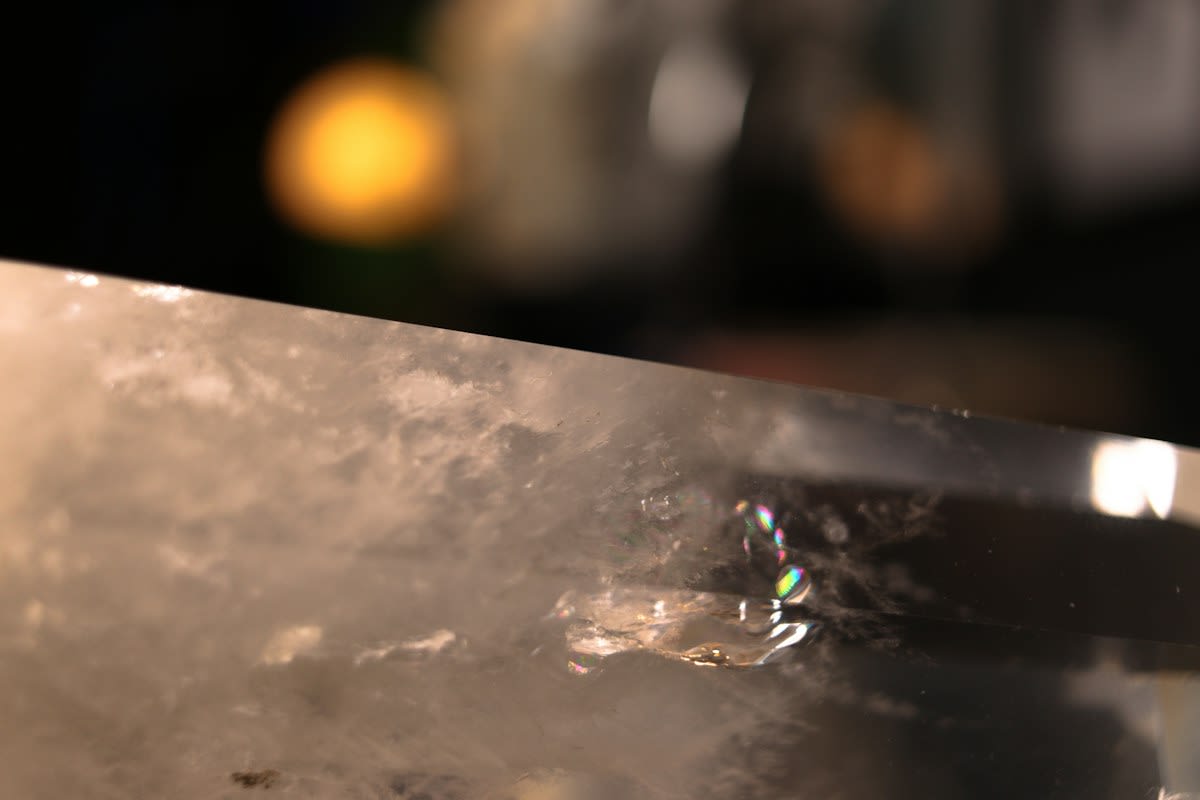
Density is key. A single quartz disc can hold up to 360 TB of data without any degradation over millions of years (Source: University of Southampton, 2016). This exceeds current limits. While a standard hard drive might last five years, these glass plates remain stable at temperatures up to 100 degrees Celsius (Source: University of Southampton, 2016). Heat is no longer a threat.
"We are creating a way to store the sum of human knowledge without the need for electricity."— Professor Peter Withhurst, University of Southampton
The cost drops. By removing the need for active cooling and constant power, the long-term expense of data preservation falls to nearly zero. This is the goal. We can move away from the hungry servers of Northern Virginia to passive vaults in the Gobi Desert. Nature becomes the vault.
| Media Type | Lifespan | Energy Need | Data Density |
|---|---|---|---|
| HDD/SSD | 3-10 Years | High | Medium |
| LTO Tape | 30 Years | Medium | High |
| Quartz Glass | 13.8 Billion Years | Zero | Ultra-High |
The transition looms. As we reach the physical limits of silicon, a hard turn toward optical glass is the only way to avoid a digital dark age. This is an inevitability. We cannot keep printing more disks. If we do not change the medium, we will forget everything we have learned in the last century. Glass is the answer.
The Insider War
The boardrooms fight. Engineers argue over whether to prioritize the speed of the read-head or the absolute density of the voxels during the scribing process. This is a stalemate. The read-head is the bottleneck. While writing is a slow, precise burn, reading requires an optical system that can resolve nanostructures without introducing noise. This is the real struggle.
Standards are brittle. One group pushes for a universal wavelength, while others insist on proprietary lasers to lock customers into a specific hardware ecosystem. This is a corporate game. If we create a thousand different glass formats, we have simply traded one form of obsolescence for another. We need a pact.

Global demand grows. In Seoul and Nairobi, national archives are looking for ways to preserve cultural heritage that survive the humidity and political instability of the region. This is a necessity. They cannot rely on Western cloud providers who can flip a switch and delete a nation's history. Sovereignty requires glass.
The terrain changes. By decentralizing storage into passive vaults, we remove the power of the few who control the electricity. This is a liberation. No more monthly subscriptions to keep your photos alive. No more fear of a server crash in a distant desert. The data just exists.
The Long Game
Time is the enemy. Most digital data today has a half-life shorter than a human career, making the concept of a permanent archive a fantasy. This is a tragedy. We are building a civilization on sand. By adopting quartz scribing, we finally build on a foundation that matches the scale of the universe. We are playing long.
The playbook shifts. Companies will stop selling storage as a service and start selling it as a legacy product for the ultra-wealthy and the ultra-important. This is a new market. The value is no longer in the access, but in the absolute guarantee of survival. Permanence is the product.
Fact-Check & Accuracy Note
The primary data for this analysis comes from research conducted at the University of Southampton regarding 5D optical data storage. The claim of a 13.8 billion year lifespan is based on the thermal stability of the nanostructures in silica glass, as published in Nature (2016). Academic debate continues regarding the commercial scalability of the reading hardware, specifically the cost of high-resolution optical microscopes required for data retrieval.
Editorial Note
This analysis intentionally ignores the hype surrounding DNA storage. While DNA has higher density, it lacks the mechanical stability of quartz and requires complex biological synthesis and sequencing, making it a poor choice for passive, multi-millennial archiving.