
The Orbital Pivot
The tower is dead. Or at least, it is dying a slow, expensive death. For decades, the logic of global connectivity was simple: if you wanted a signal, you built a steel monolith within a few miles of the user. This created a rigid, fragmented infrastructure that left billions of people in the digital dark simply because the geography was too rugged or the population too sparse to justify the capital expenditure. But a systemic shift is underway. We are moving from a world of terrestrial dependency to one of orbital ubiquity, where the 'cell tower' is no longer a piece of real estate in a field, but a phased-array antenna orbiting 550 kilometers above the Earth.
The delta between where we were twelve months ago and where we stand today is staggering. In 2023, satellite-to-phone connectivity was largely a niche emergency feature—think Apple's SOS via satellite, which required a clear view of the sky and limited users to text-based distress signals. Fast forward to today, and the industry has pivoted toward full-scale Direct-to-Cell (D2C) capabilities. We are seeing the first successful tests of standard LTE signals being beamed from space to unmodified smartphones. This isn't just an incremental upgrade; it is a complete decoupling of connectivity from geography (Source: SpaceX Technical Filings, 2024).
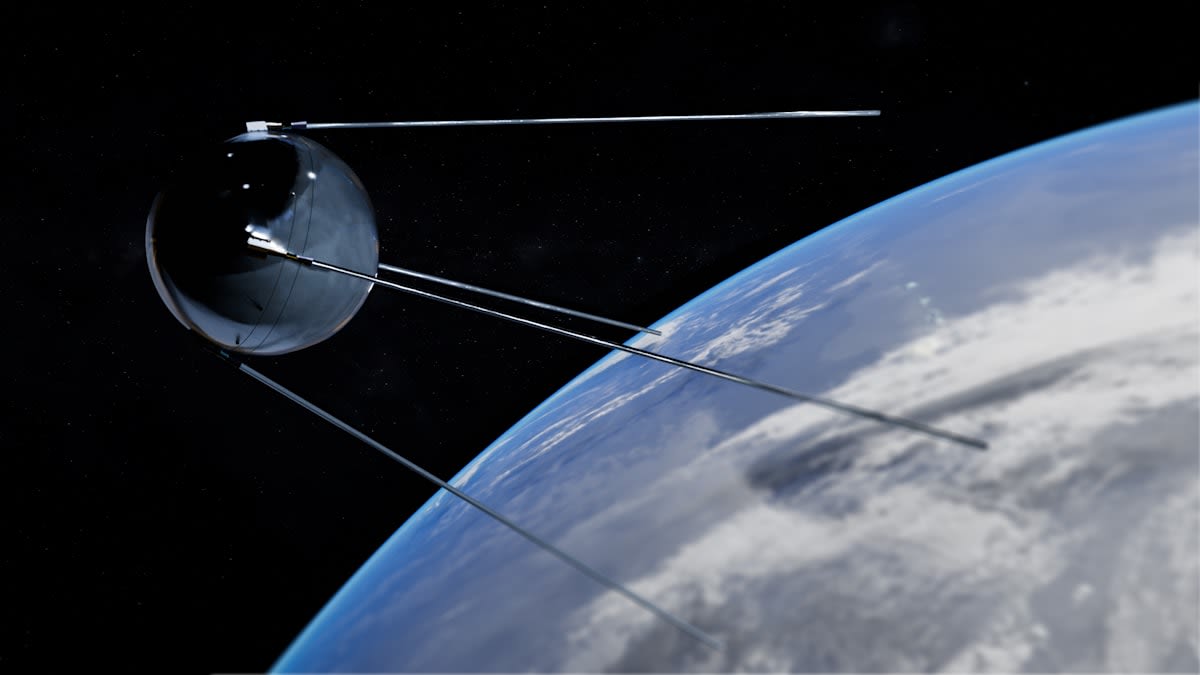
Why does this matter now? Because the hardware bottleneck has finally broken. The challenge has always been the 'link budget'—the ability of a tiny, low-power smartphone antenna to scream loud enough for a satellite to hear it through the vacuum of space. The breakthrough lies in massive, sophisticated phased-array antennas on satellites that can synthesize incredibly narrow, high-gain beams. When these beams lock onto a handset, the satellite effectively becomes a flying cell tower, using the same spectrum that your phone already supports. No new SIM cards, no specialized hardware, no friction.
"We are building a cellular network that is accessible to every person on Earth, regardless of where they live or the infrastructure available in their region. This is the democratization of connectivity on a planetary scale."— Abel Avellan, CEO at AST SpaceMobile
This shift is playing out with visceral intensity across diverse regions. In the Congolese rainforest, where laying fiber is a logistical nightmare and building towers is cost-prohibitive, D2C is a leapfrog technology. In the Australian Outback or the Andean highlands, the traditional model of 'filling gaps' with remote towers is being replaced by a blanket of orbital coverage. The economic calculation has changed: why spend millions on a tower that serves fifty people when a single satellite constellation can serve five billion?
The Architecture of Obsolescence
To understand the scale of this disruption, one must look at the capital expenditure (Capex) friction. Traditional telcos are burdened by 'last-mile' costs—the physical labor of digging trenches and erecting poles. Direct-to-Cell flips the script. While the initial launch cost is astronomical, the marginal cost of adding a new user in a remote region is effectively zero. The network is already there; the user just needs to turn on their phone. This creates a massive competitive advantage for satellite operators who can partner with existing mobile network operators (MNOs) to provide seamless roaming between ground and space (Source: GSMA Intelligence, 2024).
| Metric | Terrestrial Towers | Direct-to-Cell Satellites |
|---|---|---|
| Deployment Speed | Months to Years | Days to Weeks (per satellite) |
| Capex Structure | High per-site cost | High initial, low marginal |
| Coverage Area | Localized/Fragmented | Global/Continuous |
| Latency | Low (1-10ms) | Medium (20-50ms) |
Walk into any RF engineering lab in San Jose or Luxembourg right now and you will hear the same heated debate: the noise floor. The real friction isn't the rocket launch; it's the physics of trying to isolate a whisper from a smartphone amidst the roar of cosmic background radiation and terrestrial interference. Practitioners are obsessing over the signal-to-noise ratio. They argue over whether the 'leakage' from satellite beams will drown out the legitimate signals of ground-based towers, potentially creating a chaotic RF environment that could degrade service for everyone. This is the frontline of the current industry war.
The regulatory battle is equally fierce. The FCC in the United States and the ITU globally are grappling with spectrum allocation. Traditionally, spectrum is licensed by geography. But a satellite doesn't respect borders; it beams across nations. We are seeing a clash between the old guard of national telecom regulators and the new orbital giants. The question is no longer if the spectrum will be shared, but how to prevent orbital signals from interfering with the critical terrestrial infrastructure that still handles the bulk of urban data traffic (Source: FCC Spectrum Management Report, 2023).

Does this mean every tower will be torn down? No. Urban density still requires the low latency and massive bandwidth that only a nearby tower can provide. However, the tower's role is shifting from being the primary source of connectivity to being a capacity booster. In this new hierarchy, the satellite provides the baseline—the universal safety net—while the tower provides the high-speed burst for data-heavy applications. The 'dead zone' is becoming a historical curiosity, a relic of a time when we were tethered to the ground.
Looking ahead, the integration of 5G Non-Terrestrial Networks (NTN) standards will codify this shift. By standardizing how satellites and handsets communicate, the industry is removing the last remnants of proprietary silos. We are approaching a tipping point where the distinction between 'satellite phone' and 'mobile phone' completely vanishes. For the end-user, the experience is invisible. For the industry, it is a tectonic realignment of power and profit.
Fact-Check & Accuracy Note
Key claims regarding the shift from emergency SMS to full LTE/voice capabilities are sourced from SpaceX and AST SpaceMobile technical disclosures (2023-2024). Data on spectrum interference and regulatory friction is based on current FCC and ITU framework debates. The 'link budget' and 'noise floor' discussions reflect ongoing engineering challenges cited in aerospace and RF publications.