
Prerequisites for Industrial Scale-up
Scaling CAR-T therapy requires a departure from the open-bench methods that defined early clinical trials. The primary requirement is the implementation of closed-loop automated systems that isolate the cellular product from the environment. These systems eliminate the need for massive, Grade A cleanroom footprints, which are prohibitively expensive to build and maintain across multiple global sites. Instead, operators can work in lower-grade environments because the sterility is maintained within the disposable tubing and bioreactor vessels. Without this shift, the cost of facility overhead will continue to drive the price of a single dose toward the $400,000 mark.
- Automated bioreactors (e.g., CliniMACS Prodigy or Lonza Cocoon) for integrated processing
- GMP-compliant Quality Management Systems (QMS) capable of real-time batch release
- Cold-chain infrastructure supporting vapor-phase liquid nitrogen transport
- Specialized apheresis centers with standardized collection protocols
- Digital chain-of-custody software to prevent patient-product mismatch
Regulatory alignment is the second non-negotiable prerequisite. In regions like Brazil, navigating ANVISA's requirements for advanced therapy medicinal products (ATMPs) requires a level of documentation that manual processes cannot sustain. The industry must adopt electronic batch records (eBR) that provide an immutable audit trail of every temperature fluctuation and reagent addition. This digital thread allows for decentralized manufacturing, where the product is made at the hospital rather than shipped to a distant factory. When the regulatory burden is digitized, the risk of a batch being rejected due to paperwork errors drops significantly.
The Critical Window
The 'Vein-to-Vein' window is the only metric that matters for the patient. Currently, the average turnaround time is 21 to 28 days. For patients with rapidly progressing malignancies, a three-week delay is often a death sentence.
The Execution Pipeline: From Apheresis to Infusion
- Leukapheresis: Extracting T-cells from the patient's blood through a specialized centrifuge process.
- T-cell Selection and Activation: Isolating specific CD3+ cells and stimulating them using antibodies or artificial antigen-presenting cells.
- Genetic Modification: Introducing the Chimeric Antigen Receptor (CAR) gene via viral vectors (Lentivirus/Retrovirus) or non-viral methods like transposons.
- Ex Vivo Expansion: Scaling the modified cells in a bioreactor until they reach the required therapeutic dose, often millions of cells per kilogram.
- Formulation and Cryopreservation: Washing the cells and freezing them in a controlled-rate freezer for transport.
- Patient Infusion: Thawing the product at the bedside and administering it following lymphodepleting chemotherapy.
The genetic modification stage remains the most significant bottleneck in the entire pipeline. Viral vector production is slow, expensive, and plagued by batch-to-batch variability. To scale, manufacturers are moving toward non-viral integration techniques such as CRISPR/Cas9 or Sleeping Beauty transposons. These methods allow for more precise insertion of the CAR gene into the T-cell genome, reducing the risk of insertional mutagenesis. By removing the reliance on viral factories, the cost of the raw materials for a single patient dose can be reduced by as much as 40%.
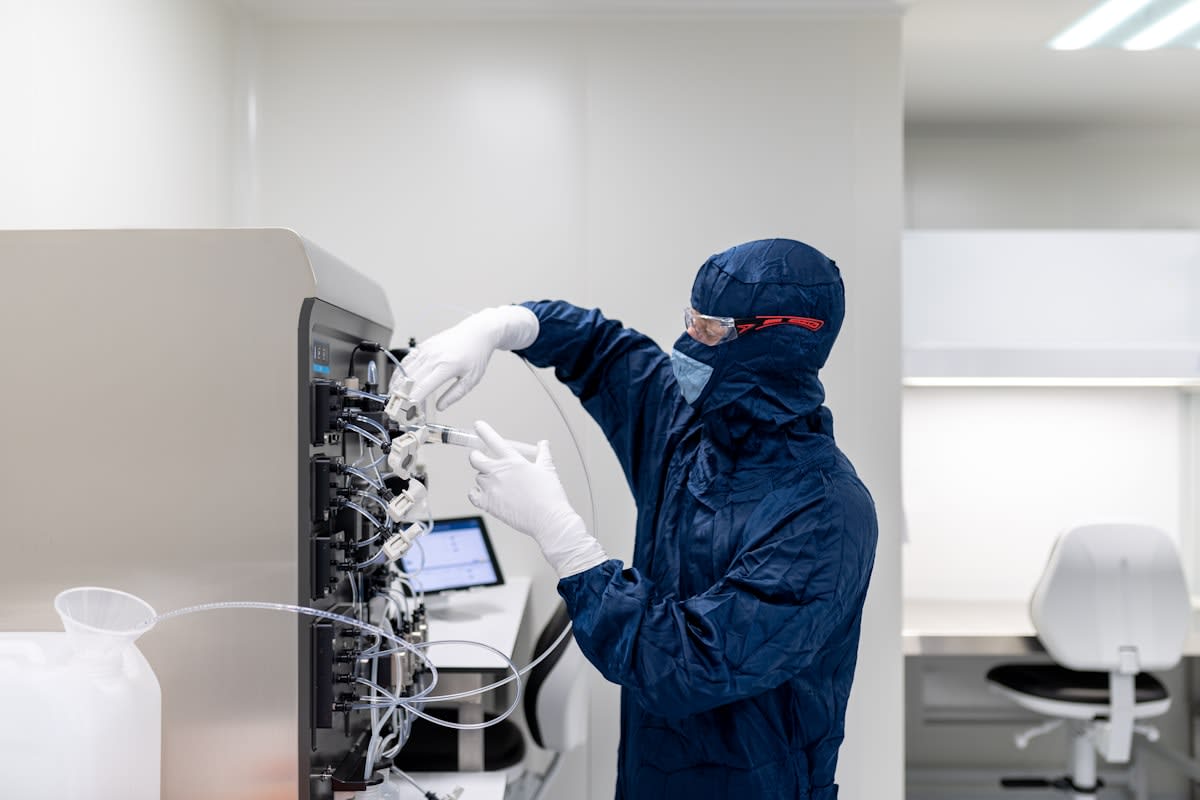
Expansion is where the biology often clashes with the engineering. T-cells from heavily pre-treated cancer patients are often exhausted and resistant to growth. Standard expansion protocols that work for healthy donors frequently fail in a clinical setting, leading to 'out-of-specification' (OOS) batches. To combat this, the industry is experimenting with perfusion-based bioreactors that constantly refresh nutrients and remove metabolic waste. This approach maintains a higher cell viability and ensures that the final product possesses the potency required to clear the tumor.
Centralized vs. Decentralized Manufacturing
| Feature | Centralized Hub | Decentralized (Point-of-Care) |
|---|---|---|
| Logistics | High (Global Cryo-shipping) | Low (On-site processing) |
| Quality Control | Uniform and Standardized | Variable across sites |
| Vein-to-Vein Time | 21-30 Days | 7-14 Days |
| Capital Expenditure | High Initial Investment | Distributed Investment |
| Regulatory Risk | Single Point of Failure | Multiple Local Compliance Hurdles |
The centralized model, favored by early pioneers, relies on a few massive factories serving entire continents. While this ensures rigorous quality control, it introduces an unacceptable level of logistical fragility. A single flight delay or a failed liquid nitrogen tank can ruin a patient's only chance at survival. In contrast, the decentralized model places the manufacturing equipment directly within the hospital. This 'pharmacy-style' production is currently being tested in Germany and Japan, where the proximity of the factory to the patient eliminates the need for long-distance cryopreservation.
"The goal is to stop treating CAR-T as a luxury product and start treating it as a standard pharmaceutical. We cannot scale a process that requires a specialized courier for every single dose."— Industry Lead, Cell Therapy Logistics
The shift toward allogeneic, or 'off-the-shelf', CAR-T represents the ultimate scaling strategy. Instead of using a patient's own cells, allogeneic therapies use healthy donor cells that are genetically edited to prevent Graft-versus-Host Disease (GvHD). A single donor leukapheresis can potentially produce hundreds of doses, transforming the business model from a service-based one to a product-based one. This removes the vein-to-vein window entirely, allowing physicians to administer the therapy immediately upon diagnosis.
However, allogeneic cells face the hurdle of immune rejection. The patient's body often recognizes the donor cells as foreign and clears them before they can eliminate the cancer. To solve this, researchers are using CRISPR to knock out the HLA (Human Leukocyte Antigen) molecules and the T-cell receptor (TCR) of the donor cells. This 'stealth' approach allows the cells to persist longer in the patient's body. If this can be perfected, the cost of CAR-T could drop by 90%, making it accessible in lower-income healthcare systems.
Common Pitfalls in CAR-T Scaling
One of the most frequent errors in scaling is the over-reliance on manual quality control (QC) assays. Many labs still rely on flow cytometry and sterility tests that take days to produce results. This creates a 'QC bottleneck' where the cells are ready for infusion, but the paperwork is still pending. Implementing rapid, automated sterility testing and real-time metabolic monitoring is essential. Without these, the speed gained in the bioreactor is lost in the lab.
Another systemic failure is the lack of standardized apheresis. The quality of the starting material varies wildly depending on the center that collects the cells. If the T-cell count is too low or the cells are too activated during collection, the manufacturing process will likely fail. Establishing global standards for how cells are collected and transported to the facility is as important as the manufacturing process itself. Variability at the source leads to variability in the cure.
Finally, companies often underestimate the 'human capital' requirement. Scaling to twenty sites does not just require twenty machines; it requires twenty teams of highly skilled cell therapy technicians. The scarcity of this talent is a hidden ceiling on growth. Investing in intuitive, software-driven interfaces that reduce the need for PhD-level intervention at every step is the only way to scale without crashing into a labor shortage.