Russia’s night of fire: Putin's lethal missiles pound Ukrainian cities as Zelensky begs for arsenal
Source Entity
Latest News: Today's Latest News Headlines from India & World | Hindustan Times | Hindustan Times
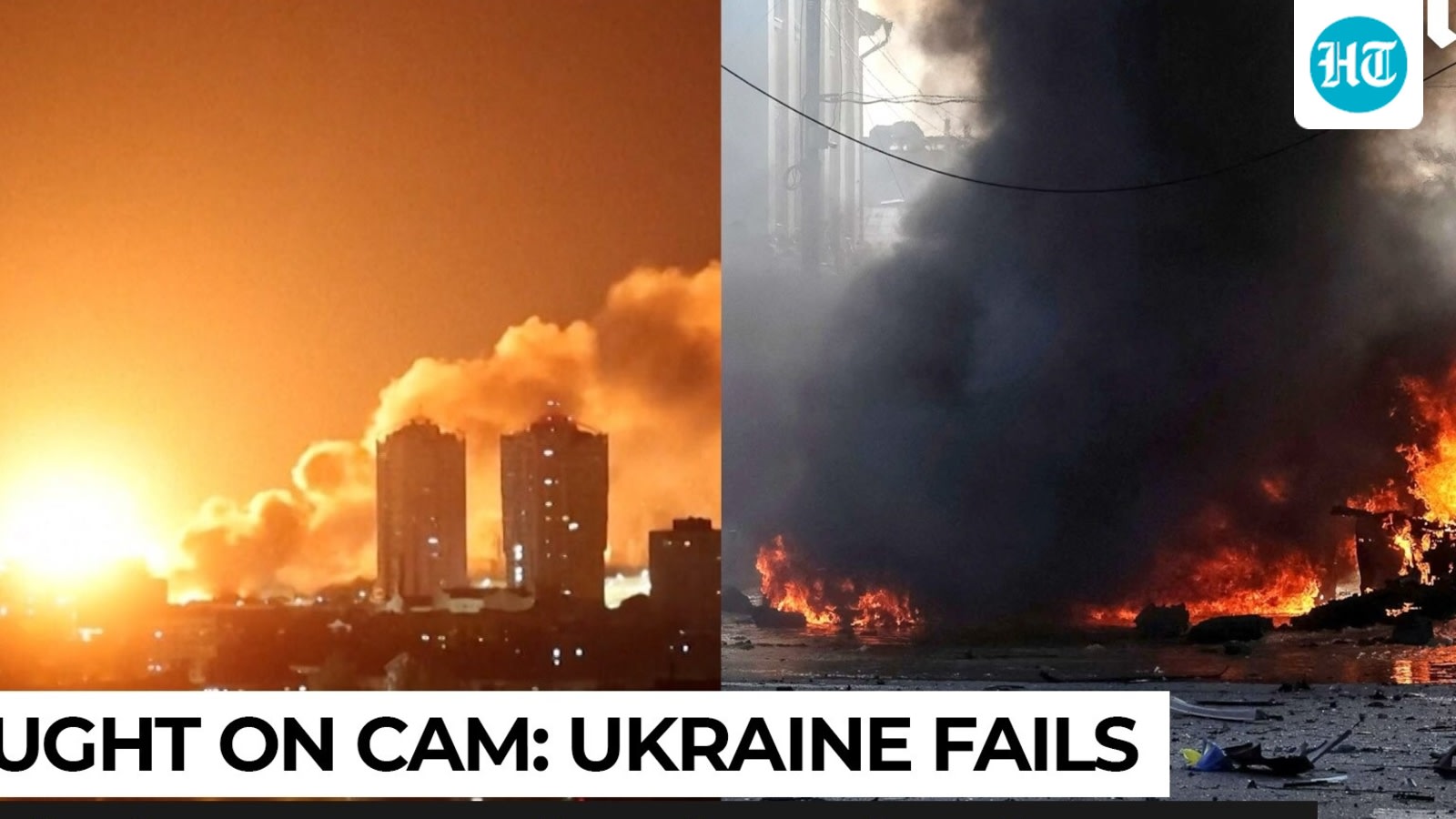
Russia launched another large-scale missile and drone attack across Ukraine, striking multiple cities in one of the latest waves of bombardment. According to Reuters, the July 11 attacks killed at least eight people and wounded dozens. In Sumy, two Russian glide bombs hit near a bus stop, killing five people and injuring around 30 others, while CCTV footage captured a woman shielding a child as the explosion unfolded. Additional strikes hit Zaporizhzhia and Odesa, as Ukraine said Russia fired six ballistic missiles, six cruise missiles and 121 drones. Kyiv claimed its air defences intercepted 111 drones and two cruise missiles, while President Volodymyr Zelensky again urged Western allies to speed up deliveries of air defence systems and military aid.
Russia's Escalation of Aerial Warfare: Analysis of the July 11 Strikes
On July 11, the conflict between Russia and Ukraine witnessed another devastating escalation as Russian forces unleashed a massive wave of missile and drone strikes targeting multiple urban centers. This specific operation, characterized by its scale and diversity of weaponry, underscores a persistent Russian strategy of attrition and psychological warfare. By targeting civilian hubs and critical infrastructure across Sumy, Zaporizhzhia, and Odesa, the Kremlin continues to apply pressure on the Ukrainian populace and government, aiming to degrade the country's resilience and exhaust its defensive capabilities.
The Tactical Shift to Saturation Attacks
The composition of the attack—consisting of six ballistic missiles, six cruise missiles, and a staggering 121 drones—points to a "saturation strategy." By launching a high volume of low-cost drones alongside high-precision missiles, Russia attempts to overwhelm Ukrainian air defense systems. The goal is to force Ukraine to expend expensive interceptor missiles on cheap drones, thereby leaving the cities vulnerable to the more lethal cruise and ballistic missiles. The interception of 111 drones and two cruise missiles demonstrates a high level of operational efficiency by Ukrainian forces, yet the remaining penetrations highlight the inherent risks of such high-volume assaults.
Human Cost and the Use of Glide Bombs
The tragedy in Sumy, where glide bombs struck near a bus stop, killing five people and injuring approximately 30, illustrates the lethal nature of Russian aerial tactics. Glide bombs are particularly devastating because they allow Russian aircraft to release heavy munitions from a distance, staying outside the immediate range of some short-range air defenses. The targeting of a bus stop—a quintessential civilian gathering point—serves as a grim reminder of the indiscriminate nature of these strikes. The imagery of a woman shielding a child during the blast underscores the profound humanitarian crisis and the constant state of terror faced by civilians in frontline and rear regions.
The Critical Need for Advanced Air Defenses
President Volodymyr Zelensky's urgent plea to Western allies for the accelerated delivery of air defense systems is not merely a request for equipment, but a strategic necessity for national survival. While Ukraine has shown remarkable proficiency in intercepting drones, the sheer volume of incoming threats creates a mathematical disadvantage. To secure the skies over cities like Odesa and Zaporizhzhia, Ukraine requires a multi-layered defense architecture—combining long-range systems for ballistic missiles with shorter-range, cost-effective solutions for drones. The gap between the current arsenal and the required capacity remains a critical vulnerability that Russia continues to exploit.
Broader Strategic Implications and Future Trends
Looking forward, this pattern of bombardment suggests that Russia will likely continue to utilize "waves" of attacks to test the limits of Western military aid. By maintaining a high tempo of strikes, Russia hopes to create a sense of instability and fatigue within the Ukrainian administration and its international backers. We can predict an increase in the use of combined-arms aerial assaults, where drones are used as scouts or decoys to pave the way for more destructive munitions. The conflict has now entered a phase where the war of attrition is being fought not just in the trenches of the Donbas, but in the skies over every major Ukrainian city.
Conclusion
The events of July 11 represent a microcosm of the current state of the war: a relentless Russian offensive leveraging mass-produced drones and heavy bombs, countered by a Ukrainian defense that is highly capable but stretched to its limits. The loss of civilian life in Sumy and the threats to Zaporizhzhia and Odesa emphasize that until a comprehensive air shield is established, the civilian population will remain the primary target of Russia's strategic pressure campaign. The outcome of this aerial battle will largely depend on the speed and scale of Western military replenishment.
Verification Required?