Blasts heard on Iran's Qeshm Island & Bandar Abbas: Trump errs again with strikes as Mojtaba rages?
Source Entity
Latest News: Today's Latest News Headlines from India & World | Hindustan Times | Hindustan Times
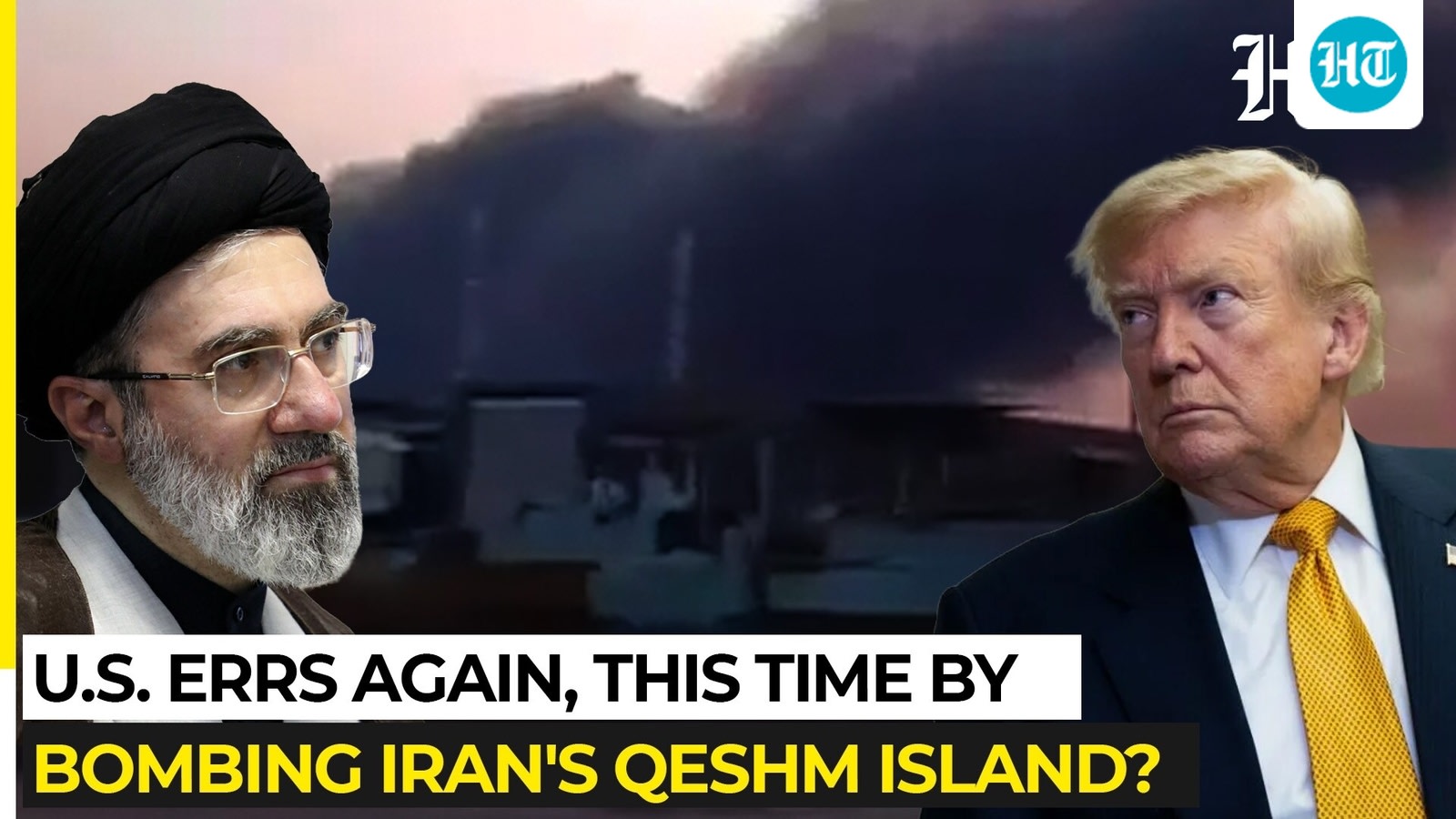
Fresh explosions have rocked Iran's southern coast after Iranian state media reported missiles heading toward Qeshm Island and blasts near Bandar Abbas. Fars News also reported explosions east of Bandar Abbas and near Qeshm, while U.S. officials cited by Axios said strikes targeted missile sites and IRGC boats. The developments come just hours after another round of military exchanges between Washington and Tehran, raising fears of a broader regional escalation. Is the Gulf heading toward a dangerous new chapter, or can diplomacy still prevent an even wider conflict?
Escalation in the Gulf: Analysis of Strikes on Qeshm and Bandar Abbas
Recent reports of explosions rocking the southern coast of Iran, specifically targeting Qeshm Island and the vicinity of Bandar Abbas, mark a significant and dangerous escalation in the ongoing shadow war between the United States and the Islamic Republic of Iran. According to Iranian state media, including Fars News, and U.S. officials cited by Axios, the strikes were precision-targeted at Islamic Revolutionary Guard Corps (IRGC) missile sites and naval boats. This development is not an isolated incident but rather the latest volley in a cycle of military exchanges that threatens to destabilize one of the world's most critical maritime corridors.
Strategic Significance of the Target Zones
The selection of Qeshm Island and Bandar Abbas as targets is deeply strategic. Bandar Abbas serves as Iran's primary commercial port and a vital military hub, while Qeshm Island provides a tactical vantage point over the Strait of Hormuz. By targeting IRGC boats and missile installations in these specific areas, the U.S. is effectively attempting to degrade Iran's ability to project power over the shipping lanes that transport a significant portion of the world's oil. The IRGC Navy utilizes these southern coastal installations to maintain a posture of deterrence and asymmetric warfare; therefore, direct strikes on these assets are intended to signal a shift from containment to active neutralization of Iranian capabilities.
The Cycle of Retaliation and Political Friction
These strikes occur against a backdrop of heightened political volatility. The mention of "military exchanges" suggests a pattern of tit-for-tat aggression where each side seeks to establish a new "red line." The internal Iranian reaction, characterized by the reported rage of leadership figures like Mojtaba, underscores the domestic pressure on the Iranian government to respond decisively. When the IRGC's prestige is challenged through the destruction of its hardware on home soil, the regime often feels compelled to retaliate to maintain internal stability and regional credibility, creating a feedback loop of violence that is increasingly difficult to break.
Broader Implications for Regional Stability
The broader implications of these strikes extend far beyond the immediate physical damage. The targeting of missile sites suggests that the U.S. is prioritizing the elimination of long-range threats that could reach regional allies or U.S. bases in the Middle East. However, such actions also increase the risk of a miscalculation. If the IRGC perceives these strikes as a precursor to a full-scale invasion or a regime-change operation, the response could shift from targeted strikes to a total blockade of the Strait of Hormuz, which would trigger a global economic crisis due to the sudden spike in energy prices.
Historical Context and the Pattern of Conflict
Historically, the relationship between Washington and Tehran has been defined by a struggle for hegemony in the Persian Gulf. From the "Tanker War" of the 1980s to the current era of drone warfare and cyber-attacks, the southern coast of Iran has always been a flashpoint. The current strikes mirror previous U.S. strategies of "maximum pressure," designed to force Iran back to the negotiating table by increasing the cost of its military adventures. However, history also shows that such pressure can sometimes harden the resolve of the Iranian leadership, leading them to double down on their military investments rather than concede diplomatically.
Future Outlook: Diplomacy vs. Total Escalation
Looking forward, the trajectory of this conflict depends on whether both powers view these strikes as a sufficient "punishment" or as an opening gambit for a larger war. There is a narrow window for diplomacy to intervene, perhaps through third-party mediators, to prevent the current situation from spiraling. However, the precision of the strikes on Qeshm and Bandar Abbas suggests a high level of intelligence and readiness on the U.S. side, which may embolden further operations. Conversely, if Iran chooses to respond by targeting U.S. assets in the region, the Gulf may indeed be entering a "dangerous new chapter" where conventional warfare replaces the previous era of proxy conflicts.
Summary
In conclusion, the strikes on Qeshm Island and Bandar Abbas are a clear indication that the U.S.-Iran conflict has moved into a more direct and volatile phase. By targeting the IRGC's strategic naval and missile infrastructure, the U.S. has challenged Iran's regional dominance, while the Iranian leadership's reaction suggests a high likelihood of further retaliation. The world now watches the Strait of Hormuz, where the balance between strategic deterrence and catastrophic escalation remains precariously thin.
Verification Required?