USS Lincoln clocks 200 days at sea, here's why it's not a good sign as Trump restarts war with Iran
Source Entity
Latest News: Today's Latest News Headlines from India & World | Hindustan Times | Hindustan Times
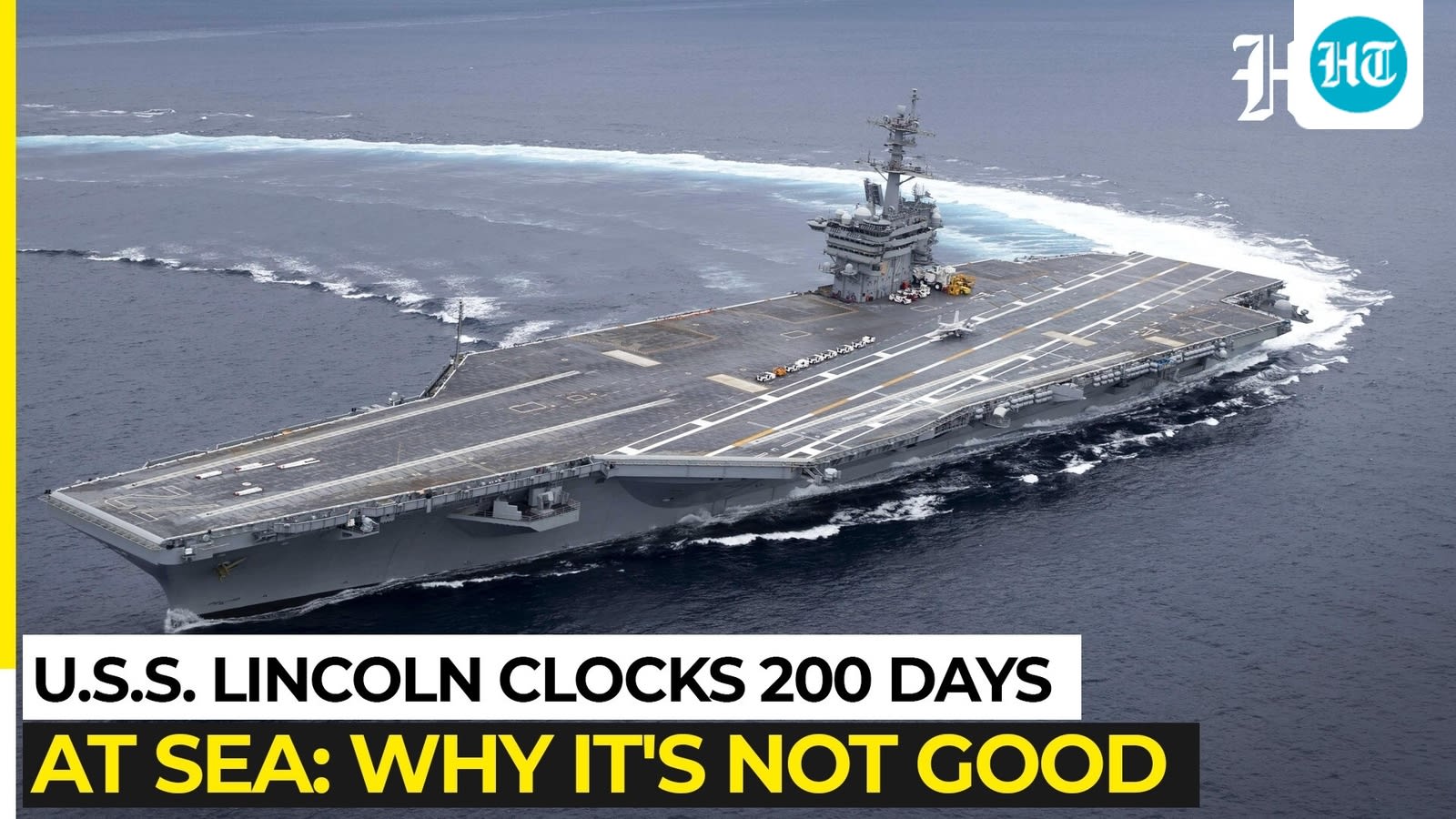
The USS Abraham Lincoln has set a modern U.S. Navy record after remaining continuously at sea for more than 200 days during operations spanning the South China Sea and the Arabian Sea. The deployment included missions linked to tensions involving Iran and other regional flashpoints, but it has also reignited debate over mounting pressure on America's 11-carrier fleet. Longer deployments can increase crew fatigue, accelerate wear on critical systems and strain maintenance schedules. Is this a remarkable display of naval endurance—or a warning sign for U.S. military readiness?
The Paradox of Endurance: Analyzing the USS Abraham Lincoln's Record Deployment
The recent announcement that the USS Abraham Lincoln has remained at sea for over 200 consecutive days marks a significant, albeit controversial, milestone in modern naval history. On the surface, such a feat represents a remarkable display of logistical endurance and operational capability, proving that a U.S. carrier strike group can maintain a persistent presence across vast distances. However, beneath this veneer of strength lies a deeper, more troubling narrative regarding the current state of American naval readiness and the unsustainable pressure being placed on its primary instruments of power projection.
Strategic Overextension in Global Flashpoints
The deployment's scope—spanning both the South China Sea and the Arabian Sea—highlights the precarious balancing act the U.S. Navy must perform. By pivoting between these two critical theaters, the USS Abraham Lincoln has been tasked with simultaneously deterring aggression in the Indo-Pacific and managing volatile tensions in the Middle East, specifically concerning Iran. This "dual-theater" demand suggests a strategic overstretch, where a single asset is leveraged to cover multiple geopolitical crises. Historically, the U.S. Navy relies on a rotational deployment cycle to ensure that ships and crews are rested and refurbished; breaking this cycle for 200 days indicates a gap in available assets or an urgent political necessity that overrides standard military doctrine.
The Human Cost: Crew Fatigue and Mental Readiness
One of the most critical implications of this record-breaking deployment is the impact on the human element. Naval operations are grueling, and carrier crews live in high-stress, confined environments. When a deployment extends far beyond the typical window, the risk of "burnout" increases exponentially. Prolonged separation from family and the relentless tempo of flight operations lead to cognitive fatigue, which can result in critical errors during high-stakes maneuvers. In the context of escalating tensions with Iran, where split-second decision-making is required to avoid unintended conflict, a fatigued crew represents a significant operational vulnerability rather than a strength.
Mechanical Attrition and the Maintenance Crisis
Beyond the personnel, the physical toll on the vessel itself is profound. Nuclear-powered aircraft carriers are marvels of engineering, but they are not designed for indefinite continuous operation without scheduled maintenance intervals. Extended sea time accelerates the wear and tear on propulsion systems, aircraft catapults, and onboard electronics. By pushing the USS Abraham Lincoln to 200 days, the Navy is effectively "borrowing" readiness from the future. The maintenance debt accrued during this deployment will likely require an extended period of shipyard repair, potentially removing the carrier from the available fleet for longer than usual once it finally returns to port.
Systemic Strain on the 11-Carrier Fleet
This event serves as a warning sign for the broader U.S. Navy fleet strategy. With only 11 aircraft carriers in the inventory, the margin for error is slim. When one carrier is forced to stay at sea for an abnormal duration, it often implies that the relief ship is delayed or that other carriers are bogged down in maintenance backlogs. This creates a domino effect across the fleet, where the pressure to maintain a global presence leads to a cycle of over-deployment and under-maintenance. If this becomes a trend, the U.S. risks a systemic decline in readiness, leaving the military less capable of responding to sudden crises without compromising the safety of its sailors.
Conclusion: A Warning Sign for Future Naval Doctrine
In summary, while the 200-day voyage of the USS Abraham Lincoln is a testament to the grit of the U.S. Navy, it is an unsustainable model for long-term security. The intersection of political instability in the Middle East and strategic competition in Asia is forcing the Navy into a posture of endurance that may eventually lead to failure. Moving forward, the U.S. must evaluate whether its current fleet size is sufficient for its global ambitions or if the reliance on "record-breaking" deployments is a symptom of a military stretched too thin. The true measure of naval power is not how long a ship can stay at sea, but whether it remains fully combat-effective when the call to action finally comes.
Verification Required?