
The New Identity Paradigm
Identity is no longer a static set of credentials; it is a dynamic, attackable surface. The rise of generative AI has transformed the act of impersonation from a clumsy effort into a high-fidelity science. We are seeing a fundamental shift where the speed of AI-driven processes is actively eroding the trust required to maintain them. In the corporate world, for instance, AI is enabling organizations to process job applications at an unprecedented scale, but this efficiency comes with a hidden cost. When speed outpaces verification, the barrier to candidate misrepresentation drops, forcing a total rethink of how we prove who we are.
The risks are not confined to a single sector. In healthcare, a single compromised identity can trigger a devastating chain reaction across a vast supply chain, disrupting critical patient care workflows. The Stryker incident serves as a stark reminder that identity-driven attacks have material financial impacts and operational consequences. Why do we continue to rely on legacy verification methods when the tools used to spoof them have evolved exponentially? The answer lies in a systemic lag between technological adoption and security governance.
The Practitioner's Insight
The core challenge of the AI era is the 'Verification Gap'—the space between how quickly an AI can simulate a persona and how slowly a human or system can authenticate it.
Prerequisites for the Digital Fortress
Before implementing technical safeguards, you must adopt a specific mental framework. Securing your identity against AI is not a one-time setup but a continuous process of adaptation. You need to move away from 'implicit trust'—the idea that a voice or a face is proof of identity—toward a 'zero trust' architecture for your personal and professional persona. This requires a willingness to introduce friction into your communications to ensure authenticity.
- A zero-trust mindset: Assume all unsolicited digital media is synthetic until proven otherwise.
- Verification toolset: Access to reverse-image search engines and AI-detection metadata viewers.
- Governance framework: A clear set of rules for how you and your organization disclose the use of synthetic media.
- Recovery plan: A pre-defined strategy for identity restoration after a compromise.
Establishing these prerequisites allows you to move from a defensive, reactive posture to one of proactive resilience. Once you accept that the visual and auditory evidence we once trusted is now malleable, you can begin building the actual layers of your fortress. The goal is not to eliminate AI impersonation—which is impossible—but to make the cost of a successful attack prohibitively high for the adversary.
Step 1: Auditing Visual and Auditory Evidence
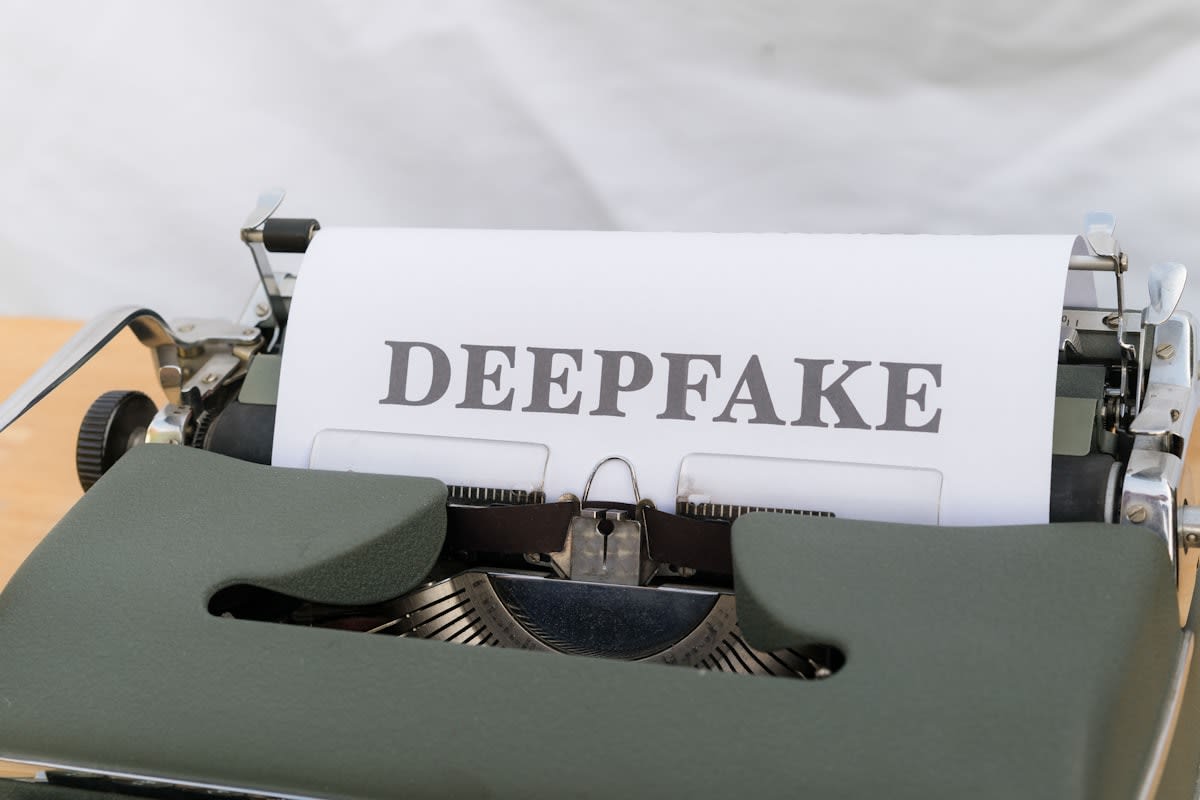
The first line of defense is the ability to spot the 'seams' in synthetic content. While generative models have pushed the boundaries of realism, they still leave fingerprints. Fact-checkers at Snopes have developed specific strategies to identify deepfakes by looking for common AI hallucinations. These often manifest as anatomical inconsistencies or lighting errors that a casual observer might miss but a trained eye can catch. If you see multiple anomalies in a single image, the probability of it being AI-generated skyrockets.
- Analyze anatomical details: Look for irregular finger counts, blurred earlobes, or asymmetrical pupils.
- Inspect background consistency: Search for warping in architectural lines or floating objects that don't obey physics.
- Check for AI-specific watermarks: Use tools to detect metadata or invisible markers introduced by high-end AI models.
- Cross-reference with known sources: Use reverse-image searches to see if the image appears in contexts that contradict the current claim.
Visual auditing is necessary but insufficient. We must now look toward institutional and legal frameworks to provide the secondary layer of verification. When the eyes can be deceived, the law and the process must act as the ultimate truth-tellers.
Step 2: Leveraging Legal and Institutional Frameworks
We are seeing the emergence of 'synthetic performer' laws, such as the recent legislation in New York. This law introduces critical disclosure requirements for AI-generated performers in advertising, creating a legal mandate for transparency. By forcing the disclosure of synthetic content, the law creates a paper trail of authenticity. This shift suggests that the future of identity security will rely heavily on mandated transparency rather than just technical detection.
In the professional sphere, specifically within HR and onboarding, the strategy is shifting. Organizations are moving identity verification to the very front of the workflow. Instead of verifying identity after a candidate has been screened by AI, the verification happens first. This prevents the AI-driven speed of hiring from creating an opening for imposters. By expanding the scope of verification early, companies create a filter that synthetic personas cannot easily bypass.
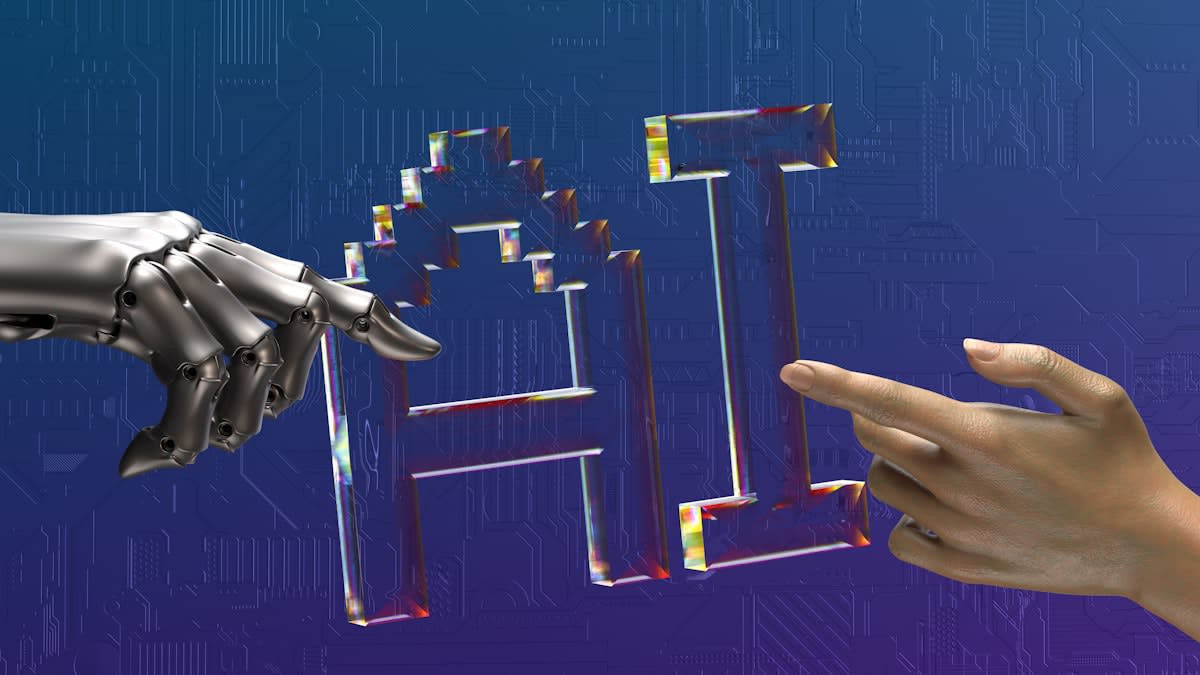
These institutional guardrails provide a safety net. However, for those in leadership positions, the responsibility for managing these risks is becoming an immense professional burden. The pressure on cybersecurity executives is reaching a breaking point as they balance governance with personal liability.
Step 3: Building Systemic Resilience and Governance
True security is not about preventing every attack, but about ensuring you can recover when one inevitably happens. This is the essence of cyber resilience. In healthcare, the stakes are life and death, yet there is a staggering gap in confidence. While most organizations recognize the threat, very few feel they have the tools to recover from an identity-driven breach. This lack of confidence is a systemic vulnerability that attackers are eager to exploit.
| Metric | Statistic | Context |
|---|---|---|
| Expected AI Attack Increase | 75% | Healthcare organizations anticipating more common identity attacks |
| Recovery Confidence | 27% | Healthcare organizations confident in recovering from admin credential exposure |
| CISO AI Governance Responsibility | 96% | Chief Information Security Officers now responsible for AI risk management |
| CISO Personal Liability Concern | 78% | Security executives worried about personal liability from AI incidents |
For the Master Practitioner, governance means implementing strict monitoring and best practices around autonomous agents. The current chaos in AI adoption has left many CISOs feeling the heat, with a lack of standardized monitoring for the agents that now act on behalf of human identities. To build a fortress, you must map every autonomous agent to a human owner and establish a kill-switch for any identity that exhibits anomalous behavior.
Resilience also requires a shift in how we view the public persona. In regions like Nigeria, the identity of public administrators is deeply tied to the state and public perception. When trust in these institutions erodes, the persona itself becomes a liability. The challenge for the modern professional is balancing the demands of their private self with the bureaucratic imperatives of their public persona, ensuring that neither is easily weaponized by synthetic impersonation.
Common Pitfalls to Avoid
Even the most sophisticated security plans can fail if they succumb to a few common traps. The most dangerous of these is the temptation to prioritize efficiency over authenticity. When we allow AI to handle the 'first touch' of a relationship without a human verification loop, we are essentially leaving the front door of our fortress unlocked.
- Over-reliance on automated detection: Assuming a 'deepfake detector' tool is 100% accurate without human oversight.
- Neglecting the recovery phase: Focusing entirely on prevention and ignoring the process of restoring a compromised identity.
- Ignoring the 'Persona Split': Failing to separate professional public identities from private personal data, making it easier for AI to synthesize a complete profile.
- Assuming liability is corporate: Forgetting that, as seen with 78% of CISOs, personal liability is becoming a real risk in AI governance.
By avoiding these pitfalls and implementing a layered approach—visual auditing, legal frameworks, and systemic governance—you can secure your identity against the rising tide of AI impersonation. The digital fortress is not a wall, but a process of constant verification and adaptation.