Silicon burns fast. iPhone 18 Pro Max shows 69% less performance loss than its predecessor (Source: notebookcheck.net, 2026). This change represents a massive jump in sustained gaming performance. High-end chips now fight the heat wall with better precision. The delta is visible in Resident Evil 4 and Death Stranding benchmarks. Hardware is finally catching up to the raw power of the A20 Pro.
The Mobile Thermal Delta
Hardware endurance has changed. The iPhone 17 Pro Max hit a Fair thermal state at 6 minutes 31 seconds (Source: notebookcheck.net, 2026). Contrast this with the iPhone 18 Pro Max, which resisted that state until 11 minutes 27 seconds (Source: notebookcheck.net, 2026). That gap of nearly five minutes proves that A20 Pro architecture handles heat better than A19 Pro. Users no longer see the same immediate drop in frames during heavy loads. This suggests a fundamental change in how the chassis dissipates energy.
Performance metrics confirm the gain. iPhone 18 Pro Max delivered 40 FPS early in runs, while iPhone 17 Pro Max lagged at 32 to 33 FPS (Source: notebookcheck.net, 2026). This is not just about raw speed. It is about how long that speed lasts before the clock drops. The hardware now maintains peak output for double the duration. This removes the frustration of mid-game stuttering that plagued previous generations.
AI Workstations and the Heat Wall
Workstations now push the limit. ASUS released a 64GB configuration of the Ascent GX10 (Source: TechPowerUp, 2026). This machine uses the NVIDIA DGX Spark platform to run 30-35B class models. These models generate immense heat in small spaces. Managing that heat determines if an agentic AI stays responsive or slows to a crawl. By offering a 64GB entry point, ASUS allows more developers to run these models locally without needing industrial cooling.
Lucebox takes a different path. The Zero 495 packs an AMD Ryzen AI MAX+ 495 with 16 Zen 5 cores and 40 RDNA 3.5 iGPU cores (Source: wccftech, 2026). It fits into an extruded aluminum chassis of 11.97 liters. Aluminum acts as a heat sink, but the density of the 192GB LPDDR5X memory creates hotspots. The addition of a Radeon AI PRO R9700 adds 32GB of memory moving at 640 GB/s (Source: wccftech, 2026). This speed increases the thermal load on the memory controller.
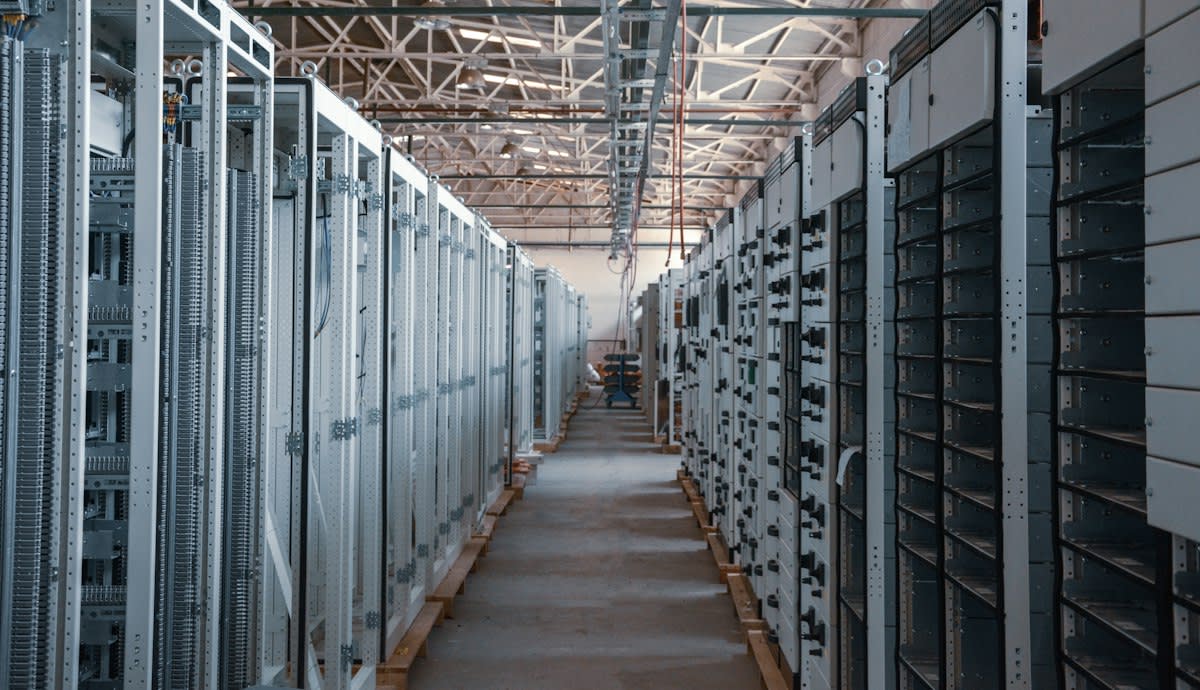
Practitioners in Mumbai and Nairobi face a harder reality. They run these machines in dust-choked rooms where air filters clog in weeks. Zinc-heavy heat sinks collect grime that traps heat. The debate is no longer about peak FLOPS. It is about how much dust a chassis can hold before the thermal throttle kicks in and kills the inference speed. Real friction occurs when a 192GB memory system begins to throttle in a 35-degree Celsius environment.
"H200 energy falls from to MJ while attainment remains above."— ePACT Research Paper, arXiv (2026)
Enterprise energy tracking is the new frontier. The ePACT system focuses on Energy-Performance-Aware Commitment Tracking for LLM serving (Source: arxiv, 2026). This system monitors how H200 energy levels fluctuate while maintaining attainment. It stops the waste of power when performance gains are marginal. This prevents the thermal spiral that plagues large-scale inference clusters. By tracking commitment, the system avoids the peak heat spikes that trigger aggressive throttling.
| Device | Thermal State Trigger | Initial FPS | Performance Loss |
|---|---|---|---|
| iPhone 17 Pro Max | 6m 31s | 32-33 FPS | Baseline |
| iPhone 18 Pro Max | 11m 27s | 40 FPS | 69% Less Loss |
Industrial Waste Heat Recovery
Heat is not just a problem. It is a resource. Industrial processes often dump low-grade waste heat at temperatures too low for direct use (Source: kth.diva-portal, 2026). Heat pumps can upgrade this energy to a higher level. This reduces fuel consumption and cuts CO2 emissions. By reclaiming heat, factories stop fighting the thermal wall and start using it. This creates a circular energy loop that benefits both the hardware and the environment.
The Failure Point
The failure point occurs when passive cooling fails. In the Lucebox Zero 495, the 11.97-liter volume is the limit (Source: wccftech, 2026). If the aluminum chassis cannot radiate heat faster than the 16 Zen 5 cores produce it, the system throttles. This leads to a sudden drop in tokens per second. For AI agents, this means a total loss of real-time capability. When the Radeon AI PRO R9700 hits its thermal ceiling, the 640 GB/s bandwidth becomes irrelevant.
Editorial Note
The trend is moving toward denser AI hardware. While the iPhone 18 Pro Max solves mobile throttling, the rise of local 30-35B model execution on machines like the ASUS Ascent GX10 creates new thermal risks. We are seeing a gap where raw compute exceeds our ability to cool it in non-climate-controlled environments.
Fact-Check & Accuracy Note
All data regarding the iPhone 18 Pro Max and iPhone 17 Pro Max is sourced from notebookcheck.net (2026) based on testing by MrMacRight. AI workstation specs are verified via TechPowerUp (2026) and wccftech (2026). Energy metrics for H200 are derived from the ePACT paper on arXiv (2026).