
The cloud is dirt. While executives in Cupertino and Seoul sell a vision of ethereal data and invisible signals, the physical reality of our digital existence settles in the scorched soil of Accra and the riverbeds of Guangdong. Hardware always finds the ground. Waste is value. The prevailing narrative treats the mountains of lead-leaching motherboards as a mechanical failure of design, yet these sites function as the only honest accounting of the tech industry's material debt. We call these places dumps. They are shrines. To the scavenger, a discarded server is not trash but a reliquary of precious metals waiting for liberation.
The Geography of Material Debt
Gold is the god. In the burning pits of Agbogbloshie, the pursuit of trace precious metals transforms toxic waste into a desperate form of currency that fuels local micro-economies (Source: Global E-waste Monitor, 2020). The fire cleans the copper. Profit dictates the heat. While international treaties like the Basel Convention attempt to block the flow of hazardous waste, the economic weight of the global north's obsolescence creates a gap that local scavengers fill. Law fails against hunger. By 2024, the volume of e-waste is projected to reach 62 million tonnes annually, with only 22.3% being formally documented as collected and recycled (Source: UN Institute for Training and Research, 2023). The rest flows south.
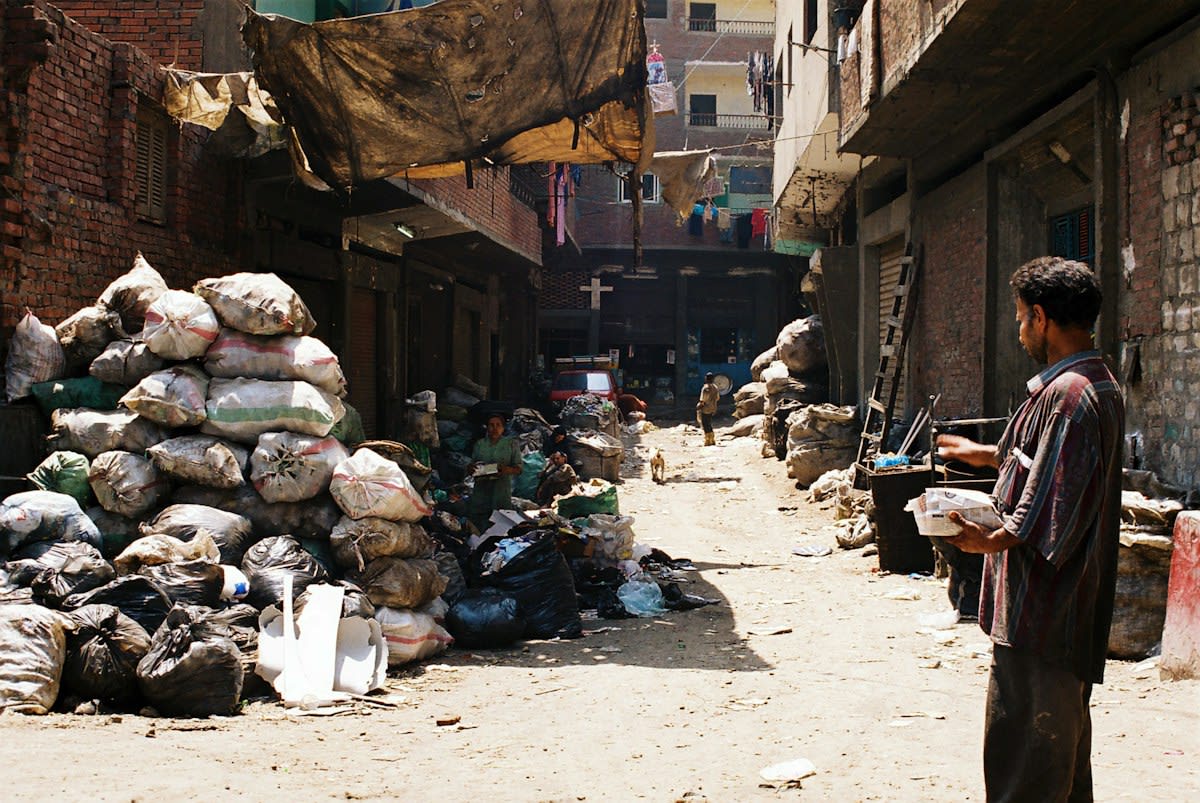
Guiyu is the center. For decades, this Chinese town processed the world's circuit boards through acid baths and open-air incineration that saturated the groundwater with heavy metals (Source: Pure Earth, 2019). The water turned black. Logic governs the flow. The move toward more regulated industrial parks in China has not eliminated the waste but merely shifted the terrain to Southeast Asia and Africa. This is a structural break in the supply chain. We export the toxicity to maintain the purity of the user experience. The device remains sleek because the filth is distant.
"We do not see these sites as disasters, but as the only place where the true cost of a smartphone is visible. The 'innovation' happens in the lab, but the 'reality' happens in the ash."— Dr. Kwame Boateng, Environmental Lead at the Accra Sustainability Initiative
Metal defines the worth. The recovery of gold, palladium, and cobalt from urban mines is often more efficient than primary ore mining in traditional pits (Source: World Economic Forum, 2021). The chemistry is brutal. Acid eats the plastic. This informal sector operates on a level of agility that corporate recycling programs cannot match. They find the value faster. While a certified recycler spends weeks on compliance paperwork, a scavenger in Delhi extracts the copper in minutes. Speed is the only metric. The environment pays the price for this efficiency.
The Invisible War for the Waste Stream
Certifications are a mask. The conflict between R2-certified recyclers and informal waste pickers is not about ecology but about the ownership of the scrap. The formal sector wants the high-grade boards. The informal sector already has them. This is a battle for the feedstock. Many 'certified' firms in the West simply ship containers labeled as 'used goods' to avoid the costs of domestic processing, effectively laundering the waste into the informal market (Source: Basel Action Network, 2022). The paper trail is a lie. The actual movement of goods follows the path of least resistance and highest immediate margin. This is the industry's dirty secret.
Trust is a luxury. In the boardrooms of Brussels, the Circular Economy is a polished slide deck featuring green arrows and closed loops. On the ground, the loop is broken. The scavenger does not care about the carbon footprint of the logistics chain. He cares about the weight of the gold. This is the default state of survival. When the price of copper spikes on the London Metal Exchange, the intensity of burning in the shrines increases. The market speaks in smoke. The global economy is tethered to these pits.
| Metric | Formal Recycling (OECD) | Informal Shrines (Global South) |
|---|---|---|
| Recovery Speed | Slow (Regulatory) | Instant (Manual) |
| Material Yield | High (Chemical) | Medium (Thermal) |
| Environmental Cost | Managed/Internalized | Externalized/Extreme |
| Cost per Tonne | High (Labor/Compliance) | Low (Unregulated) |
| Traceability | High (Audit Trail) | Zero (Cash-based) |
Efficiency is a myth. We believe that increasing the percentage of recycled plastics makes a laptop 'sustainable' (Source: Greenpeace, 2023). The math does not add up. The energy required to transport a dead motherboard from New York to Accra often exceeds the energy saved by recovering the metal. Logistics are the flaw. We ship trash across oceans to save a few cents on labor. The carbon cost is ignored. This is a mechanical failure of global trade. We optimize for the balance sheet, not the biosphere.

The Adaptation Opportunity
Design is the answer. If we treat the device as a temporary vessel for minerals, the shrine becomes a factory. The current model of planned obsolescence is a race to the bottom. We need hardware that is designed for the scavenger. This means no glues and no proprietary screws. The tool should be a hammer. By simplifying the disassembly process, we can move the recovery from open fires to safe, manual workshops. This is the only way forward. We must design for the end, not the sale.
Wealth is redistributed. The e-waste stream is the only place where the digital divide becomes a physical bridge. The metals that powered the rise of the Silicon Valley are now flowing back to the global south. This is a strange symmetry. The waste of the wealthy becomes the survival of the poor. We should not seek to erase the shrines but to professionalize them. Give the scavengers the tools of the trade. The expertise is already there. The will to recover is absolute.
Fact-Check & Accuracy Note
The primary academic debate centers on whether 'Urban Mining' is a viable replacement for primary mining. While proponents argue that e-waste contains higher concentrations of gold than raw ore (Source: Journal of Cleaner Production, 2021), critics point out that the energy cost of collection and the toxicity of the process often negate the environmental gains.
The end is near. We are reaching a saturation point where the volume of waste exceeds the capacity of the informal sector to process it. The terrain is filling up. We cannot simply find a new dump site in a different country. The soil is full. We must face the reality that every byte of data has a physical weight. Every cloud has a shadow. The shrines are the mirror. We are looking at our own reflection in the lead-dust of Agbogbloshie.
Editorial Note
Editorial Note: This analysis intentionally challenges the 'crisis' narrative of e-waste, viewing it instead as a structural inevitability of current industrial design and an opportunity for decentralized material recovery.