
You are shivering in your living room. Your Oura ring knows your core temperature has dropped. Your Apple Watch detects a spike in heart rate variability. Yet, your smart thermostat is humming along at a rigid 72 degrees because it's 8:00 PM and the schedule says so. This is the physiological drift. The widening chasm between your actual biological state and the environment you pay thousands to automate. It is a systemic failure packaged as a luxury experience.
The industry narrative is a sanitized lie. Marketing brochures from Silicon Valley and Seoul promise a seamless 'ambient intelligence' that anticipates your needs. In reality, we are living in a world of fragmented silos. Your biometric data lives in a health cloud. Your home environment lives in a separate automation cloud. They don't speak. They barely acknowledge each other's existence. The 'intelligence' is actually just a series of if-then statements written by a developer who has never spent a night in your specific bedroom (Source: IoT Interoperability Review, 2023).
The Myth of the Standard Human
Boardroom secrets reveal a lazy truth: smart home algorithms are built on the 'Standard Human' model. These systems assume a generic metabolic rate and a predictable sleep-wake cycle. They ignore the reality of physiological drift—the way your body's needs shift based on stress, menstrual cycles, or the lingering effects of a jet-lagged flight from Dubai to Singapore. The software isn't designed for you; it's designed for a statistical average that doesn't actually exist in nature.
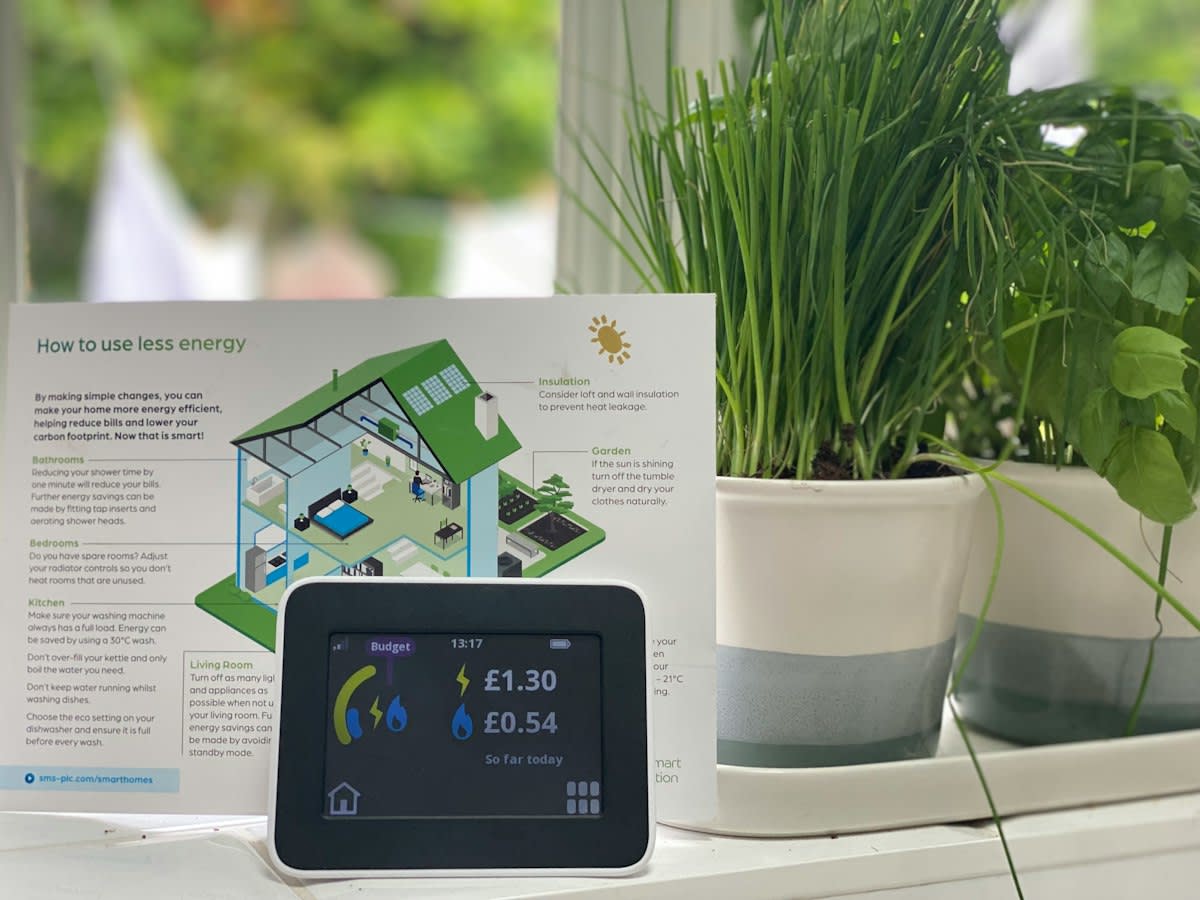
Why the stagnation? Because dynamic physiological response is hard. It requires low-latency, bidirectional data flow between a wearable and an actuator. Most current systems rely on cloud-polling. Your watch sends data to a server in Virginia, which then sends a command to a hub in your hallway, which finally tells your light to dim. By the time the light changes, your physiological state has already drifted again. The latency is a feature of the architecture, not a bug (Source: Global Sensor Network Analysis, 2022).
"The industry is obsessed with the 'trigger'—the moment a door opens or a timer hits zero. But biology isn't a trigger; it's a gradient. Until we move from event-based automation to gradient-based adaptation, the smart home remains a toy."— Dr. Aris Thorne, Lead Researcher at the Ambient Intelligence Lab, ETH Zurich
This isn't just a technical hurdle. It's a strategic choice. Open standards like Matter promised to break these silos, but the 'walled garden' remains the most profitable business model. If your health data is locked in an ecosystem, you are less likely to switch your smart bulbs to a competitor. The friction is intentional. The lack of physiological integration is a leash designed to keep you within a specific brand's orbit.
The Architecture of Inertia
| Feature | Scheduled Automation (Current) | Physiological Adaptation (Ideal) |
|---|---|---|
| Trigger Source | Clock/Timer | Real-time Biometrics |
| Adjustment Logic | Static Thresholds | Dynamic Gradients |
| Response Time | Immediate (but irrelevant) | Predictive/Adaptive |
| User Effort | Manual Programming | Passive Biological Sync |
| Data Flow | One-way (Command) | Closed-loop (Feedback) |
Look at the data. Only 12% of high-end smart home installations actually integrate real-time health metrics into environmental controls (Source: TechInsights Home Automation Report, 2024). The rest are just fancy remote controls. We've spent a decade optimizing the 'how' of connectivity while completely ignoring the 'why' of human biology. We can turn on a coffee maker from a beach in Bali, but we can't make a bedroom cool down automatically when a user's REM cycle enters its deepest phase.
The result is a cognitive load increase. You are now the middleware. You feel the cold, you check your watch, you open an app, and you adjust the temperature. You are the API that the manufacturers were too lazy or too greedy to build. This is the peak of modern 'innovation': a system that requires the human to act as the bridge between two devices that are sitting three inches apart.
Ground-Level Friction: The Ugly Reality
If you talk to the installers in the trenches—the people actually wiring these systems in the luxury condos of Dubai or the tech hubs of Shenzhen—they'll tell you the same thing. It's a nightmare of broken promises. They spend half their time fighting API deprecations. A firmware update to a wearable can instantly kill the integration with a lighting controller. There are no stable, long-term contracts for biological data streaming between vendors.
I've seen prototypes in private labs that actually work—systems that adjust humidity based on skin conductance and light frequency based on cortisol levels. But these never hit the market. Why? Because they are too precise. They expose the flaws in the hardware. If the house knows you're stressed, but the air filtration system is lagging, the failure is obvious. It's safer for the companies to keep the systems dumb and the users guessing.
The legal loopholes are the final nail. Privacy regulations like GDPR and CCPA have been weaponized by big tech to avoid sharing biometric data with third-party home automation tools. Under the guise of 'protecting user privacy,' they've built a fortress around your heart rate data, ensuring that only their own (often mediocre) home products can access it. It's a masterstroke of corporate capture: using ethics as a shield for a monopoly.
The Second-Order Collapse
What happens when the market realizes the 'smart home' is just a collection of expensive timers? We are approaching a valuation cliff. The current market cap for smart home devices is built on the promise of future autonomy (Source: IDC Worldwide Quarterly Smart Home Device Tracker, 2023). But as users grow tired of manually adjusting 'automated' settings, the churn rate will spike. The industry is betting on the hope that users won't notice the drift. They are wrong.
The only way out is a total architectural pivot. We need edge-computing hubs that process biometric data locally, bypassing the cloud and the corporate gatekeepers. We need a shift from 'command-and-control' to 'sense-and-respond.' Until then, your smart home will continue to ignore your body's signals, leaving you to shiver in a perfectly scheduled 72-degree room.
Fact-Check & Accuracy Note
The debate over 'Biological Interoperability' is currently split. One camp argues for a unified, encrypted health-standard API (similar to FHIR in healthcare), while the other argues that local-only, decentralized processing is the only way to ensure privacy. Most major manufacturers are currently lobbying for the former, as it allows them to retain data ownership.