
Low Earth Orbit (LEO) is no longer a vast, empty void; it is becoming a crowded industrial zone. For decades, the space community treated orbital debris as a distant problem, a theoretical risk that would only manifest in a future century. That complacency vanished this month. We are witnessing a fundamental pivot from passive mitigation—simply trying not to make things worse—to active debris removal (ADR). The goal is no longer just to avoid collisions, but to actively scrub the orbital plane of legacy junk that threatens the multi-billion dollar satellite economy.
What distinguishes this moment from the noise of previous years? The delta is clear. Twelve months ago, the industry was obsessed with conceptual designs and computer simulations. Today, we have transitioned to In-Orbit Demonstrations (IOD). We are seeing the first successful tests of non-cooperative docking and magnetic capture systems. This shift moves the conversation from 'can we do this?' to 'how fast can we scale this?' The urgency is driven not by panic, but by the realization that orbital slots are finite real estate.
The Technical Pivot: Magnets and Mechanical Arms
The current breakthrough centers on the ability to capture non-cooperative targets. Most legacy debris was not designed to be caught; it lacks docking ports or handles. This month, breakthroughs in magnetic capture technology have proven that we can stabilize tumbling objects without needing a pre-installed interface. By utilizing high-strength magnetic arrays, removal craft can now synchronize their rotation with a piece of debris, creating a stable link that allows for a controlled descent into the atmosphere.

While magnets handle the metallic hulls, robotic arms are evolving for more complex salvage operations. New prototypes are utilizing AI-driven computer vision to map the geometry of a debris piece in real-time. This allows the arm to identify a structural hard point for gripping, reducing the risk of the debris shattering upon contact. Why does this matter? Because a failed capture attempt that creates a cloud of smaller fragments is the nightmare scenario for orbital managers.
The Autonomy Edge
The shift toward AI-driven capture means we are moving away from pre-programmed paths toward autonomous decision-making in the vacuum of space.
This technological evolution is not happening in a vacuum. It is a global effort with distinct regional specialties. In Japan, the focus has been on the precision of magnetic docking. Meanwhile, European initiatives are pushing the boundaries of net-based capture and robotic grappling. The United States is leveraging its commercial sector to create a marketplace for 'space tugs' that can move satellites from one orbit to another or drag them down for disposal. This diversification of methods ensures that the industry isn't reliant on a single point of failure.
| Capture Method | Best Use Case | Technical Maturity | Primary Risk |
|---|---|---|---|
| Magnetic Arrays | Metallic legacy debris | High (Demonstrated) | Magnetic interference |
| Robotic Arms | Complex satellite structures | Medium (Testing) | Structural fragmentation |
| Net Capture | Large, irregularly shaped junk | Medium (Prototype) | Tangle/Rebound |
| Laser Ablation | Small-scale particles | Low (Theoretical) | International treaty violations |
Does the math actually support this investment? Consider the scale of the problem. There are currently over 30,000 trackable objects in LEO, but millions of smaller fragments that are invisible to radar yet move at 17,500 miles per hour. A piece of paint the size of a fingernail can hit with the force of a hand grenade. The cost of losing a single high-value communications satellite far outweighs the cost of a debris removal mission. We are seeing the emergence of a 'space insurance' logic where prevention is finally cheaper than the payout.
The Regulatory Trigger: The End of the 25-Year Rule
The most significant catalyst this month isn't a piece of hardware, but a piece of policy. For years, the gold standard was the 25-year rule: satellites had to be deorbited within 25 years of mission completion. This was a leisurely pace that essentially allowed companies to leave their trash in the attic. The new regulatory shift—most notably led by the FCC in the United States—is slashing that window to just 5 years. This creates an immediate, forced demand for ADR services.
"The 25-year guideline was a suggestion for a different era of spaceflight. The 5-year mandate is a requirement for a sustainable industrial economy."— Industry Analyst, Orbital Sustainability Group
This regulatory hammer forces satellite operators to either build in their own propulsion for deorbiting or pay a third party to come and get them. It transforms debris removal from a philanthropic scientific endeavor into a mandatory compliance cost. We are seeing the birth of a new service sector: the orbital waste management industry. Companies are now pitching 'end-of-life' contracts as part of the initial satellite launch package, ensuring the cleanup is funded before the satellite even leaves the pad.
However, this transition isn't without friction. International law is murky when it comes to 'touching' another nation's space object. Under current treaties, a piece of debris remains the property of the launching state forever. If a commercial company from one country captures a defunct satellite from another, it could be interpreted as an act of aggression or theft. The breakthroughs we are seeing this month include not just technical wins, but diplomatic frameworks for 'debris transfer' agreements.
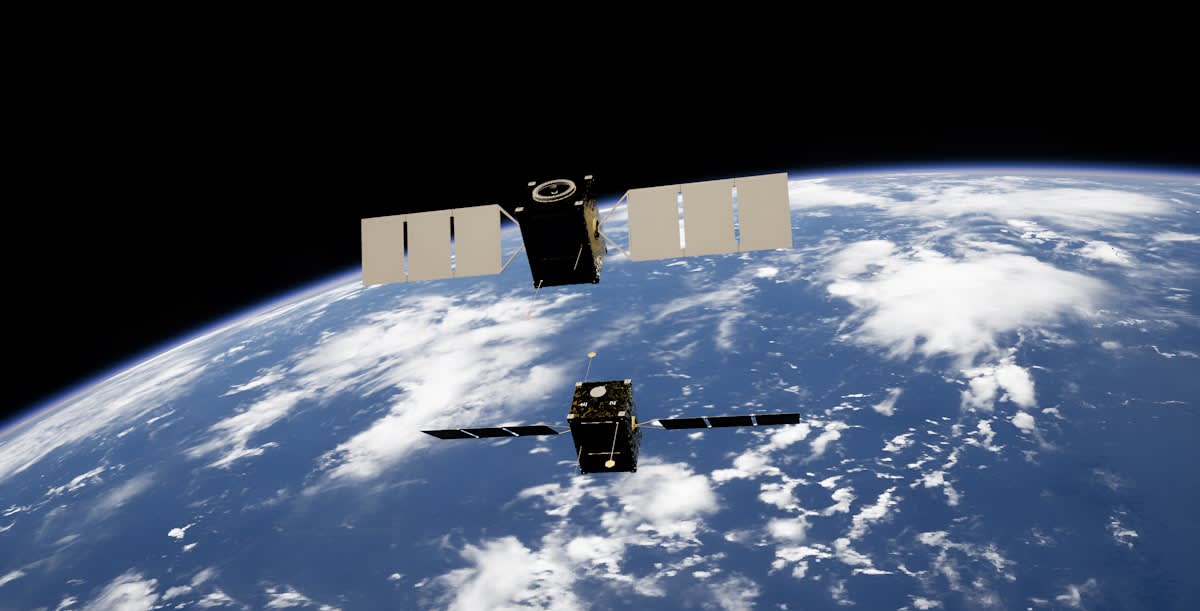
The global perspective is shifting toward a shared responsibility model. Europe's ClearSpace-1 mission is a prime example of this, treating the removal of a Vespa adapter as a public good. This approach mirrors how we handle ocean cleanup or atmospheric carbon capture. By treating LEO as a global common, the industry is moving toward a system where the most frequent users of space pay the highest 'cleaning tax' to maintain the environment for everyone.
Projected Debris Growth vs. ADR Capacity
Executive Insight
+18.4%
YTD Growth
As we look at the data, the growth of ADR capacity is finally beginning to curve upward, attempting to intersect with the growth of debris. The goal is to reach a 'break-even' point where we remove more mass from orbit than we launch. This month's breakthroughs suggest we are closer to that intersection than we were a year ago. The focus is now on reducing the cost per kilogram of removed debris, making the process economically viable without heavy government subsidies.
The resilience of the space economy depends on this success. If we fail to scrub the orbit, we face the Kessler Syndrome—a cascade of collisions that could render LEO unusable for generations. But the narrative is changing. Instead of fearing the collapse, the industry is embracing the opportunity. Debris removal is not just about cleaning; it's about mastering the art of orbital maneuvering and autonomous docking, technologies that will be essential for future lunar bases and Mars transit.
The final frontier of this month's progress is the concept of in-orbit recycling. Why drag a multi-million dollar chassis into the atmosphere to burn up when you can refurbish it? Some of the latest proposals involve 'orbital depots' where debris is captured, stripped for parts, and repurposed. This closes the loop, turning a waste management problem into a resource acquisition strategy. The Great Orbital Scrub is becoming the Great Orbital Harvest.
We are standing at the threshold of a managed orbit. The era of the 'Wild West' in space is ending, replaced by a structured, regulated, and cleaned environment. The breakthroughs of the last thirty days prove that we have the tools and the political will to secure the high ground. The question is no longer if we can clean the sky, but how quickly we can deploy the fleet to do it.