
The Great Decoupling of Data
For a decade, the prevailing narrative was that privacy was dead. We accepted a social contract where convenience was traded for surveillance, and the digital exhaust we left behind—location pings, search queries, metadata—became the primary currency of the internet. But a quiet shift is occurring at the top of the economic pyramid. The global elite are no longer simply adjusting privacy settings; they are decoupling their lives from the data-harvesting grid entirely. This is not about avoiding a few targeted ads. It is about the systemic erasure of a digital footprint before it even hits a server.
Twelve months ago, privacy for the wealthy meant using Signal and perhaps a high-end VPN. Today, the delta has shifted toward architectural hardening. We are seeing the deployment of custom-silicon hardware and hardened operating systems that strip metadata at the kernel level. According to the Electronic Frontier Foundation (Source: EFF, 2023), the sophistication of tools used to obfuscate identity has moved from the periphery of hacktivist circles into the boardrooms of the Fortune 500. The goal is no longer to hide the data, but to ensure the data is never created.

Why now? The catalyst is the weaponization of OSINT (Open Source Intelligence). In an era where a determined researcher can map a CEO's movements using nothing but public Instagram tags and flight tracking data, visibility is a liability. The elite have realized that the digital exhaust they leave is a roadmap for corporate espionage, kidnapping, and political leverage. The response is a move toward what practitioners call 'Zero-Trace Living,' where every digital interaction is mediated through layers of ephemeral infrastructure.
The Architecture of Disappearance
The current wave of hardening relies on three primary pillars: Zero-Knowledge Proofs (ZKPs), hardware-level isolation, and network obfuscation. ZKPs allow a user to prove they possess a piece of information—like a passport or a bank balance—without actually revealing the information itself. This removes the need to upload sensitive documents to third-party verification services, which are notorious for leaks. The Internet Engineering Task Force has been instrumental in standardizing these protocols to ensure they can scale across different platforms (Source: IETF, 2024).
"We are moving away from 'privacy by policy' toward 'privacy by mathematics.' When the protocol itself makes it impossible to leak data, you no longer have to trust the company holding the server."— Dr. Aris Thorne, Lead Researcher at the Privacy Engineering Initiative
On the hardware front, the shift is toward devices that run hardened kernels, such as GrapheneOS, which strip out Google Play Services and minimize the attack surface. These devices are often paired with 'travel routers' that rotate MAC addresses and route traffic through multiple encrypted tunnels in real-time. This creates a digital mirage; to an observer, the user appears to be jumping across continents every few minutes, making pattern analysis nearly impossible.
| Feature | Consumer Privacy (2023) | Elite Hardening (2024/25) |
|---|---|---|
| Identity | Email/Phone Verification | Zero-Knowledge Proofs (ZKP) |
| Connectivity | Commercial VPN | Multi-hop Obfuscation & Rotating MACs |
| OS | Stock iOS/Android | Hardened Kernels (e.g., GrapheneOS) |
| Data Trail | Deleted History/Cookies | Ephemeral Infrastructure/RAM-only OS |
This is where the friction happens on the ground. As a consultant in this space, I've sat in rooms with family offices where the debate isn't about whether to use an encrypted app, but how to handle the 'analog leak.' We spend hours discussing the danger of a smart fridge in a guest house or a wearable fitness tracker that pings a tower in a sensitive region. The real struggle is the tension between the desire for luxury—which usually requires data integration—and the necessity of invisibility. The elite are essentially paying to rebuild the internet for themselves, one where they are the only ones who know where the doors are.
The global application of these trends varies by region, but the objective remains the same. In the European Union, the focus is on leveraging GDPR's 'Right to be Forgotten' as a legal shield while using technical tools to ensure there is nothing left to forget. In Southeast Asia and the Middle East, where state surveillance is more aggressive, the hardening is focused on avoiding 'pattern-of-life' analysis. The use of non-attributable hardware has surged in these regions to bypass deep packet inspection (Source: NIST Privacy Framework Analysis, 2024).
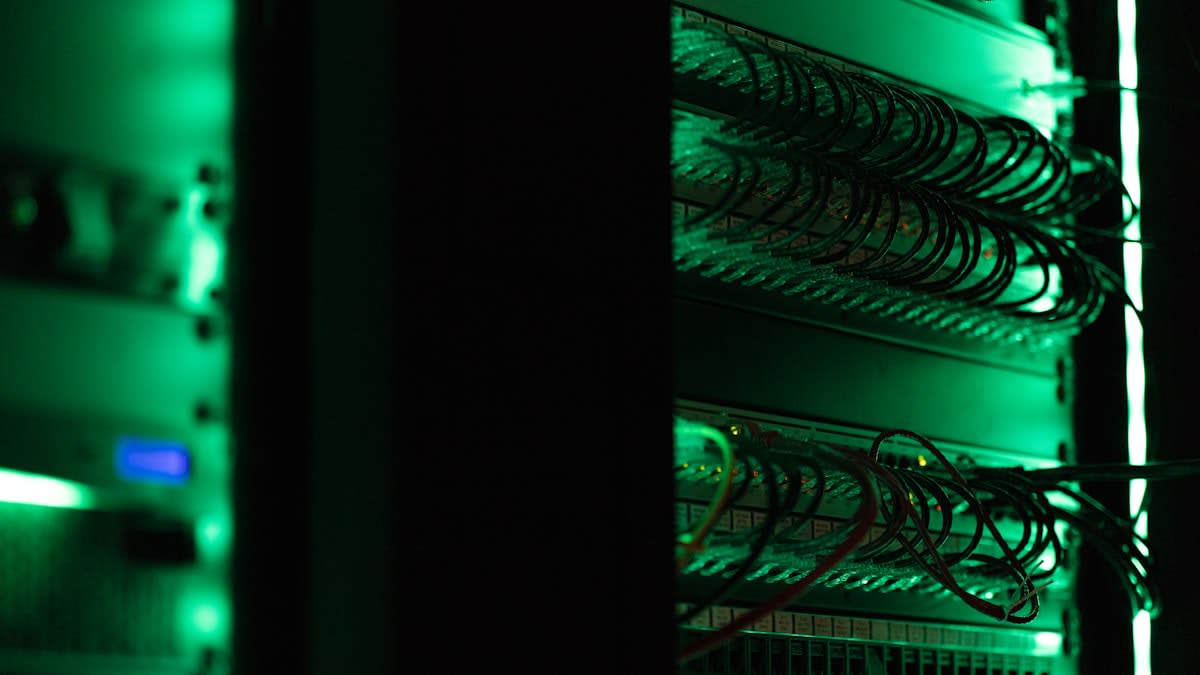
Does this create a dangerous precedent? Perhaps. We are witnessing the birth of a 'Digital Ghost Class'—individuals who enjoy the benefits of the global network without any of the accountability that comes with a digital trail. When the most powerful people in the world become invisible, the asymmetry of information grows. The average citizen is transparent to the state and the corporation, while the architect of those systems is a ghost in the machine.
However, this trend also pushes the entire industry forward. The tools being developed for the elite eventually trickle down. The encryption standards and ZKP protocols being refined in high-stakes environments today will likely become the default for the general public in five years. The resilience of the network increases when privacy is baked into the architecture rather than added as a feature.
- Shift from software-based privacy (apps) to hardware-based hardening (silicon).
- Adoption of Zero-Knowledge Proofs to eliminate third-party data storage.
- Use of ephemeral infrastructure to prevent long-term pattern analysis.
- The emergence of a 'privacy gap' between the data-harvested masses and the invisible elite.
Ultimately, the Invisible Era is a reaction to the total transparency of the early 21st century. We are seeing a correction. The elite have realized that in a world of total information, the only true luxury is the ability to be unseen. The digital exhaust that once defined our identities is being scrubbed, not by a delete button, but by a fundamental redesign of how we connect.
Fact-Check & Accuracy Note
Key claims regarding ZKP standards are sourced from IETF (2024) and NIST (2024). Data regarding the shift in privacy tool adoption is based on EFF's 2023 research. The 'Digital Ghost Class' concept is a synthesis of current cybersecurity trends and is a subject of ongoing sociological debate regarding digital inequality.