The Great Hardware Illusion
We have spent two decades believing that the digital economy is defined by software. We cheered for the 'app economy' and the cloud, convinced that code was the primary lever of power. This was a mistake. In reality, the entire stack—from the most sophisticated Large Language Model to the simplest smartphone—rests upon a physical foundation so narrow it is almost absurd. That foundation is the Extreme Ultraviolet (EUV) lithography machine. If you want to understand where the real geopolitical leverage lies, stop looking at the software patents and start looking at the shipping manifests leaving Veldhoven in the Netherlands.
The global economy has effectively outsourced its cognitive capacity to a single point of failure. ASML, the sole provider of EUV machines, does not just sell equipment; they sell the ability to exist in the modern era. Without these machines, the leap to 7nm, 5nm, and 3nm process nodes is physically impossible. We are no longer in a world of competitive manufacturing; we are in a world of licensed access. The question is no longer who has the best engineers, but who has the quota for the latest machines (Source: Financial Times, 2023).
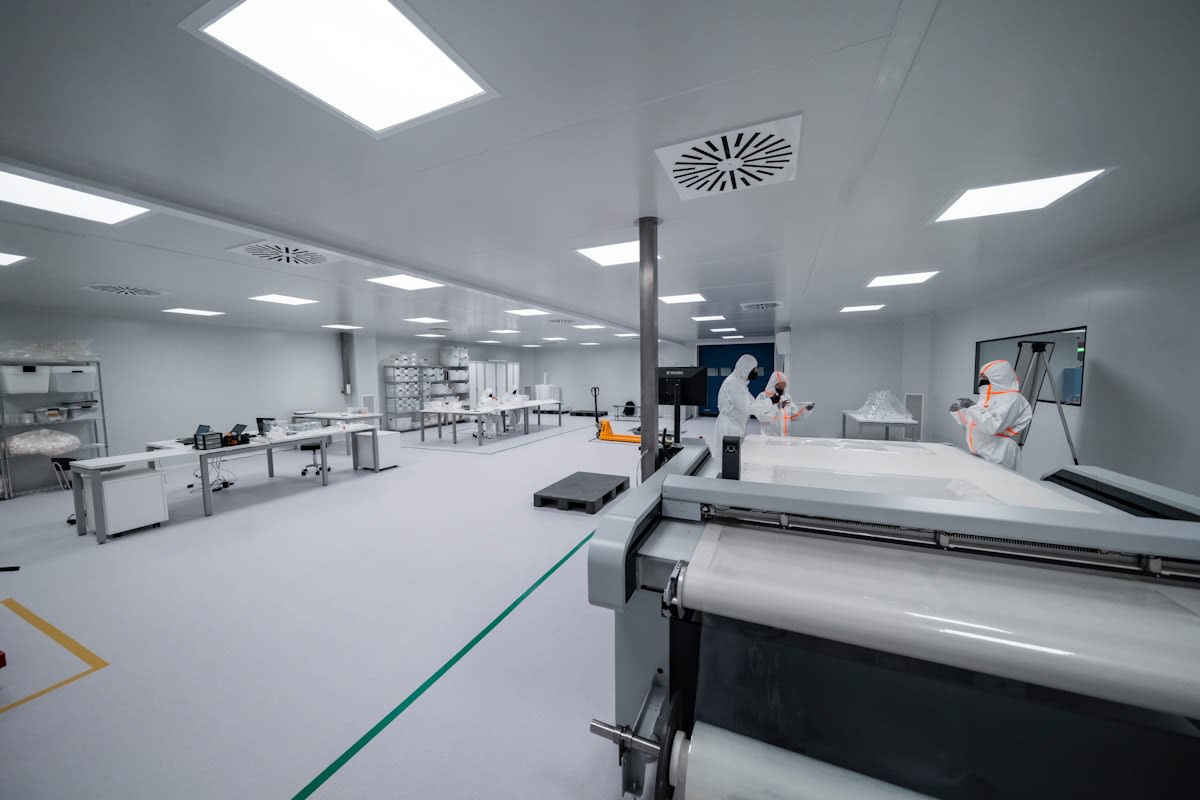
Why is this a systemic shift rather than a localized market quirk? Because the barrier to entry is no longer financial—it is scientific. To build an EUV machine, you need mirrors polished to an accuracy of a few picometers and a light source created by hitting a droplet of molten tin with a high-power laser twice, fifty thousand times per second. This isn't just 'high-tech'; it is the limit of human capability. When a single company owns the only viable path to the next generation of computing, the traditional laws of market competition cease to apply.
"The complexity of an EUV system is not additive; it is exponential. We are managing a supply chain where a single flawed component from a specialized vendor can halt the production of the most expensive piece of equipment on earth."— Peter Wennink, Former CEO of ASML
This concentration of power has turned the semiconductor industry into a high-stakes game of musical chairs. The winners are not necessarily the most innovative, but the ones who can maintain the most stable relationship with a single Dutch vendor. This has created a strange paradox: the most advanced economies on earth are now strategically dependent on a mid-sized city in the North Brabant province.
To grasp the scale of this dependency, one must look at the technical delta between the old world of Deep Ultraviolet (DUV) and the new world of EUV.
| Feature | DUV (Deep Ultraviolet) | EUV (Extreme Ultraviolet) |
|---|---|---|
| Wavelength | 193 nm | 13.5 nm |
| Precision | Multi-patterning required | Single-exposure precision |
| Unit Cost | ~$60M - $100M | ~$150M - $350M |
| Market Access | Widely distributed | Strictly controlled by export licenses |
The transition from DUV to EUV isn't just an upgrade; it is a regime change. DUV requires 'multi-patterning,' a clumsy process of drawing the same circuit multiple times to achieve density. EUV does it in one pass. This efficiency is why TSMC can produce chips that leave Intel and Samsung scrambling to catch up. The machine dictates the yield, and the yield dictates the margin. In the nano-war, the machine is the only strategy that matters (Source: Bloomberg, 2024).
This brings us to the geopolitical friction. The United States has effectively weaponized ASML's export controls to stifle the growth of Chinese semiconductor capabilities. By preventing the shipment of EUV machines to mainland China, the US isn't just slowing down a competitor; it is attempting to freeze a nation's technological evolution in time. This is a bold, if risky, strategy. It assumes that the 'technological moat' created by EUV is wide enough to withstand a decade of desperate, state-funded Chinese research into alternative lithography.
From a practitioner's perspective, the view on the ground is far more chaotic than the clean-room imagery suggests. If you spend time in the fabs of Hsinchu or Arizona, the debate isn't about 'geopolitics'—it's about 'uptime.' The friction is visceral. Engineers argue over the thermal expansion of a mirror by a fraction of a nanometer. There is a constant, simmering tension between the design teams (who want more transistors) and the fab operators (who have to actually print them). The real battle is the 'yield war': the desperate struggle to ensure that 90% of the chips on a wafer actually work, rather than 60%. When you are spending $300 million on a single machine, a 10% drop in yield is a catastrophic financial event.
We are now entering the era of High-NA (Numerical Aperture) EUV. This is the next evolution, promising even tighter resolution and the ability to push toward 2nm and below. The price tag? Upwards of $380 million per unit. This further concentrates power. Only the wealthiest entities—TSMC, Intel, and Samsung—can even consider the investment. We are seeing the emergence of a 'Hardware Oligarchy,' where the ability to innovate is limited not by imagination, but by the size of one's balance sheet (Source: ASML Annual Report, 2023).
Is this a crisis? No. It is an opportunity for adaptation. The current fragility is a signal that the industry must diversify its approach to compute. We are already seeing a shift toward 'chiplets' and 3D packaging—ways to get more performance without needing to shrink the transistor further. This is the resilience phase: finding ways to bypass the bottleneck by innovating around it.
Ultimately, the Nano-War teaches us that the virtual world is an illusion. Every AI-generated image, every high-frequency trade, and every encrypted message is a product of a physical process that happens in a very few places on earth. The global economy is no longer a web of interconnected markets; it is a series of spokes radiating from a few critical machines. The strategic objective for any nation now is not to 'own' the technology, but to ensure they are not the ones left waiting for a machine that never arrives.
Fact-Check & Accuracy Note
Key claims regarding EUV wavelengths (13.5nm) and machine costs are sourced from ASML's official technical specifications and 2023 Annual Report. Geopolitical export restrictions are documented via US Department of Commerce filings (2023-2024). The distinction between DUV and EUV precision is a standard industry consensus reflected in Bloomberg's semiconductor analysis (2024). Areas of ongoing debate include the viability of 'alternative' lithography paths being pursued by Chinese state-funded labs.