
The global approach to seed security is undergoing a fundamental pivot. For decades, the narrative centered on the passive storage of seeds in frozen vaults—a biological insurance policy for a rainy day. But in late 2026, the strategy has shifted toward active integration. We are seeing a move from simply guarding the genetic blueprints of Crop Wild Relatives (CWRs) to aggressively unlocking their traits to survive a more volatile planet. Why is this happening now? Because the gap between the stability of our domesticated crops and the hardiness of their wild ancestors has become a liability that modern agriculture can no longer afford to ignore.
South Korea is currently positioning itself at the center of this shift. As of August 2026, the nation is aggressively pursuing a larger global role in safeguarding genetic material through its global seed vault, recognizing that the acceleration of plant species loss is no longer a distant threat but a present reality (Source: Korea Herald, 2026). This isn't just about storage; it is about creating a high-tech hub where the genetic diversity of the world's flora can be analyzed and utilized to bolster food security in an era of rapid climate shifts.
The Legal Fortresses of Biodiversity
While high-tech vaults capture the headlines, the real work of guarding wild relatives often happens in the legal gray zones of national parks and wildlife sanctuaries. In India, the protection of biodiversity is not merely an environmental goal but a constitutional mandate. Under Article 48A and Article 51A(g), wildlife protection is framed as both a State duty and a citizen responsibility (Source: Vajiram & Ravi, 2026). This legal scaffolding, reinforced by the Wildlife (Protection) Act of 1972, allows state governments to designate ecologically sensitive zones where the exploitation of forest produce and wildlife is strictly regulated.
| State | Key Wildlife Sanctuary | Conservation Focus |
|---|---|---|
| Nagaland | Fakim / Rangapahar | Regional Biodiversity |
| Odisha | Baisipalli / Chilika (Nalaban) | Coastal and Wetland Habitats |
| Rajasthan | Keoladeo Bird Sanctuary | Avian and Flora Preservation |
| Punjab | Harike Lake | Wetland Ecosystems |
These sanctuaries, such as the Baghmara Pitcher Plant Wildlife Sanctuary, serve as living laboratories. Unlike a seed vault, these zones protect the evolutionary process itself, allowing wild relatives to adapt to changing pressures in real-time (Source: Vajiram & Ravi, 2026). The tension here lies in the balance between restricted tourism and undisturbed conservation. When a government prohibits the removal of forest produce, it isn't just protecting trees; it is protecting the genetic precursors of the crops that may feed the next century.
This legal framework creates a sanctuary for the 'unimproved' versions of our food. In the field, the debate among conservationists is no longer about whether to protect these areas, but how to integrate their genetic wealth into commercial agriculture without destroying the very ecosystems that harbor them.
The Perennial Pivot in the American Midwest
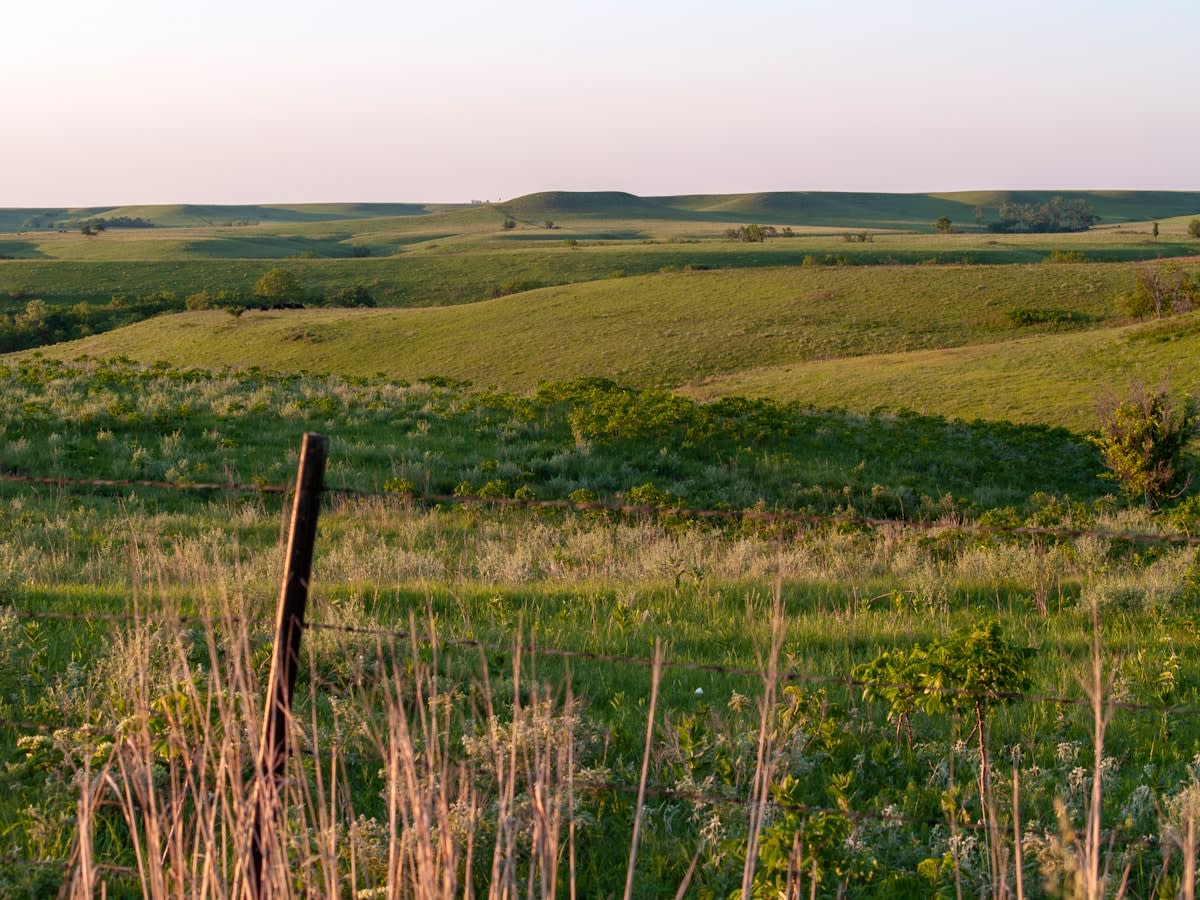
Across the globe in Kansas, the trend is moving toward 'domestication from scratch.' For decades, the agricultural engine of the Midwest has relied on annual grains—crops that must be replanted every single year. This cycle leaves the soil exposed and the farmer vulnerable to the volatile weather patterns that have squeezed conventional wheat and corn operations (Source: Global Agriculture, 2026). Enter Kernza, a perennial grain and domesticated relative of wheatgrass that regrows from its own root system for several years after a single planting.
The Land Institute, based in Salina, Kansas, has been driving this domestication program since 2001, with the first commercial harvest occurring in 2010 (Source: Global Agriculture, 2026). However, the transition is not without friction. Currently, Kernza yields only 20 to 40 percent of what comparable wheat yields provide in the same region (Source: Global Agriculture, 2026). This yield gap is the central point of contention for farmers: is the long-term resilience of a perennial root system worth the immediate loss in volume?
From a practitioner's perspective, the challenge isn't just the yield—it is the hardware. Standard combines and harvesters are designed for the predictable architecture of annual wheat. Kernza's growth habit is different, often requiring modifications to equipment or entirely new harvesting protocols. On the ground, you'll find farmers debating whether to invest in new machinery for a crop that currently produces a fraction of their usual tonnage, betting that the buffer against drought will eventually outweigh the overhead costs.
Seed Sovereignty and the Human Element
The technical side of seed guarding is only half the story; the other half is the social infrastructure. In South Africa, the focus has shifted toward the people who maintain these genetic lines. Hazera South Africa recently marked 20 years in the market, emphasizing that the future of food production is inextricably linked to the leadership and expertise of women in agriculture (Source: African Farming, 2026). This recognizes a critical truth: the most resilient seeds are often those managed by local practitioners who understand the micro-climates of their land better than any laboratory technician.
"Their leadership, expertise and determination continue to shape the future of farming and food production, not only in South Africa but also across the world."— Hazera South Africa, on the role of women in agricultural innovation
By investing in the people who build the agricultural future, organizations are moving away from a top-down model of seed distribution. Instead, they are fostering partnerships that treat farmers as co-innovators. This shift ensures that when a wild relative is integrated into a commercial crop, the resulting variety is actually suited for the realities of the field, not just the sterilized environment of a greenhouse.
Breaking the Genetic Wall: The Rice Breakthrough
The most striking evidence of this trend toward active genetic integration arrived in September 2026. Researchers at Nanjing Agricultural University have finally cracked a genetic barrier that had blocked the crossbreeding of Asian and African rice for decades (Source: Global Agriculture, 2026). By identifying three specific genes responsible for the reproductive barriers between Oryza sativa (Asian rice) and Oryza glaberrima (African rice), the team has opened the door to a new generation of hybrid varieties.
"The discovery published in the journal Science on August 28... could open the door to a new generation of higher yielding hybrid rice varieties."— Wan Jianmin, Lead Researcher at Nanjing Agricultural University's State Key Laboratory for Crop Genetics
This is the 'holy grail' of crop wild relative integration. Asian rice provides the high yield and grain quality the world relies on, but African rice possesses a hardiness, pest resistance, and tolerance for poor soil that Asian varieties lack (Source: Global Agriculture, 2026). For decades, breeders tried to combine these traits, but the genetic wall was too high. Now that the barrier is breached, we are looking at the possibility of rice that can thrive in degraded soils without sacrificing the yields necessary to feed a growing population.
This breakthrough underscores the overarching trend of 2026: we are no longer content to just store seeds in vaults or protect them in sanctuaries. We are now actively mining the genetic code of wild relatives to build a more resilient food system. Whether it is through the perennial roots of Kernza in Kansas or the hybrid vigor of African-Asian rice, the goal is the same—adaptation over stagnation.
Editorial Note
This article highlights a critical transition in agricultural science. The shift from 'conservation' (keeping things the same) to 'adaptive integration' (using wild traits to evolve) represents a new era of food security. The tension between low yields in perennial crops and the stability they provide is the primary debate currently facing Midwest farmers.
Fact-Check & Accuracy Note
Key claims in this article are sourced from the Korea Herald (August 2026), Global Agriculture (September 2026), African Farming (September 2026), and Vajiram & Ravi (September 2026). The specific genetic markers for rice crossbreeding are cited from a study published in the journal Science on August 28, 2026. The yield statistics for Kernza (20-40%) are based on data from The Land Institute as reported by Global Agriculture.