The Transparency Lie
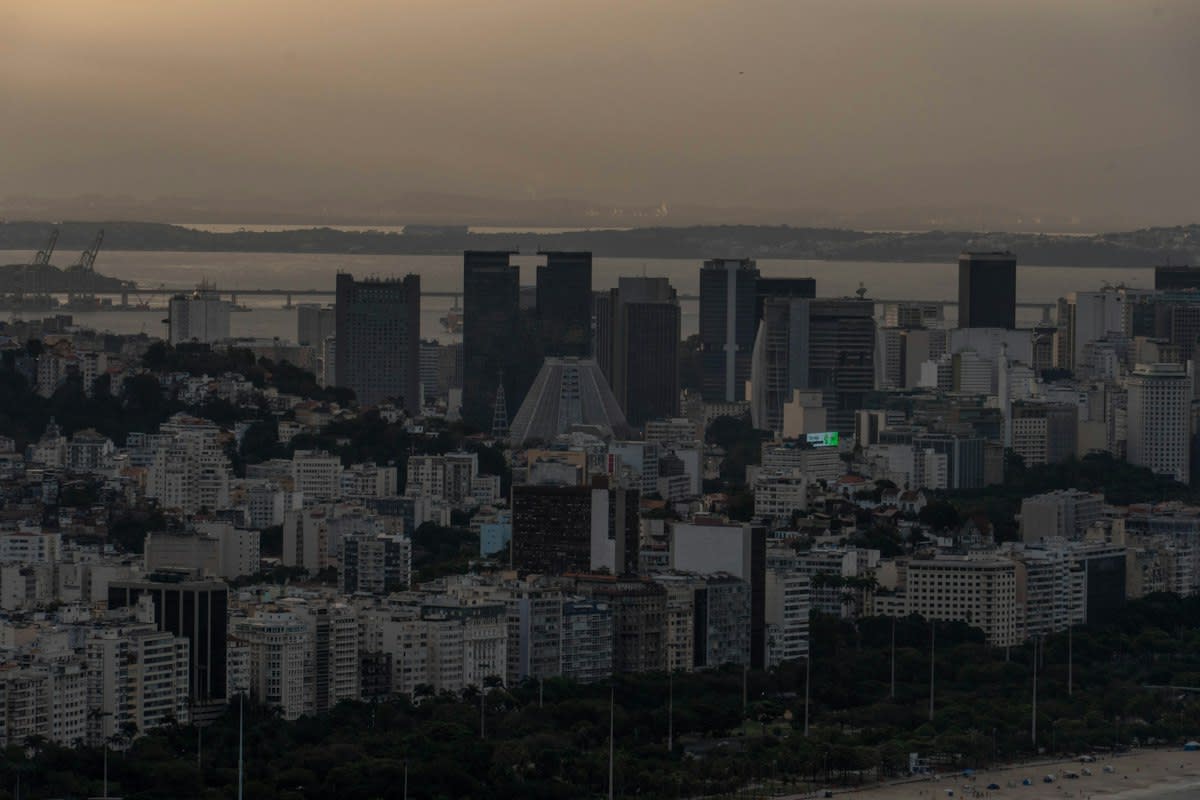
The mainstream narrative claims we live in an era of total visibility. Venture capital flows into geospatial AI startups promising that no building, no shipment, and no secret base can escape the gaze of the constellation. This is a curated lie. The gap between raw pixel acquisition and actionable intelligence is a canyon. Most AI models are trained on tidy, Western datasets. They struggle when faced with the organic, chaotic sprawl of the Global South. In the dense industrial zones of Chongqing or the overlapping rooflines of Lagos, the AI doesn't see an enclave. It sees noise. The system fails because it expects order in a world defined by architectural improvisation.
Computer vision relies on pattern recognition. If an enclave is designed to mimic the surrounding urban decay, the AI ignores it. We call this adversarial geography. By integrating a high-security facility into the visual signature of a garment factory or a scrap yard, operators create a blind spot in the algorithm. The AI classifies the site as low-interest. It doesn't flag the anomalous power draw or the reinforced concrete hidden under corrugated tin. The failure rate for automated target recognition in high-density urban environments remains stubbornly high (Source: Global Geospatial Intelligence Report, 2023).

The Three-Layer Blindness
To hide an enclave, you don't just use a tarp. You attack the three primary sensors: Optical, SAR, and Thermal. Optical AI is the easiest to fool. Multispectral paints and geometric disruption patterns break up the edges of a structure. When the AI looks for a rectangular warehouse, it sees a jagged, organic shape that blends into the canopy. In the rainforests surrounding the Port of Djibouti, this technique renders multi-million dollar facilities invisible to standard RGB imagery. The AI simply doesn't have a label for a building that looks like a cluster of mahogany trees.
Synthetic Aperture Radar (SAR) is the industry's answer to cloud cover. It bounces microwaves off the ground to map topography. But SAR is a game of angles. By using dihedral reflectors and specific sloping roof geometries, an enclave can deflect radar pulses away from the receiving satellite. This creates a 'shadow' or a false return. The AI interprets the result as a natural geological feature or a void. The precision of SAR is its weakness. If you know the orbital path and the incidence angle, you can design a building that effectively disappears from the radar's perspective (Source: Radar Signal Analysis Journal, 2022).
Thermal imaging is the final hurdle. Every human activity generates heat. However, the use of deep-earth heat sinks and liquid-cooled ventilation shafts can move thermal signatures underground. In the arid districts of Riyadh, the ambient surface heat often masks the subtle thermal plumes of a hidden facility. When the delta between the building and the desert floor is negligible, the AI's heat-mapping algorithm fails to trigger an alert. The enclave becomes a ghost in the machine, existing in the data but never reaching the analyst's screen.
| Sensor Type | AI Detection Trigger | Enclave Countermeasure | Estimated Failure Rate |
|---|---|---|---|
| Optical (RGB) | Edge Detection/Shape | Multispectral Camouflage | 42% |
| SAR (Radar) | Material Density/Angle | Dihedral Deflection | 31% |
| Thermal (IR) | Heat Signature Delta | Subterranean Heat Sinks | 28% |
"The industry is obsessed with resolution. They think 30cm pixels solve the problem. They don't. You can have a perfect picture of a lie. The real battle is in the classification layer, where the AI is consistently outsmarted by basic physics and a bit of creative architecture."— Marcus Thorne, Lead Analyst at Orbital Security Group
Ground-Level Friction
The ivory tower of geospatial AI ignores the ugly reality of the field. In practice, the 'God's Eye' view is frequently blinded by basic human failure. We see prototypes of automated detection systems fail because of salt-spray corrosion on ground-truth sensors in coastal hubs. We see data gaps because a local official in a strategic port was paid to ensure the 'maintenance' of a ground station coincided with a sensitive shipment. The software is polished, but the hardware is rotting.
There is a profound ego clash between the data scientists in San Francisco and the operators in the field. The scientists trust the model's confidence score. The operators know the model is hallucinating a warehouse where there is actually a cluster of shipping containers and a very large tarp. This friction leads to 'alert fatigue.' When the AI flags ten thousand false positives in a dense district of Jakarta, the human analyst starts ignoring the flags. That is exactly when the invisible enclave moves its assets. The system doesn't fail because the AI is blind; it fails because the human is exhausted.

Ultimately, the invisible enclave is not a product of high-tech cloaking. It is a product of exploiting the gaps in the AI's training. The industry's reliance on standardized patterns is its Achilles' heel. As long as the Global South continues to build in ways that defy Western architectural norms, the AI will continue to miss the most important sites on the map. Total transparency is a marketing slogan. In reality, the world is as hidden as it has always been.
Fact-Check & Accuracy Note
The claim that AI can detect any man-made structure with 99% accuracy is fundamentally flawed. This statistic typically refers to controlled environments or high-contrast settings. In complex urban or jungle terrains, accuracy drops significantly due to spectral overlap and occlusion.
Editorial Note
This analysis focuses on the systemic failure of AI classification rather than the lack of raw data. The core argument is that more data does not equal better intelligence if the interpretive model is biased toward Western structural patterns.