
The prevailing corporate narrative suggests that moving production from Shenzhen to Queretaro is a strategic masterstroke in risk mitigation. The logic is seductive: replace a 40-day ocean voyage with a five-day truck haul and eliminate the geopolitical headache of the South China Sea. But is this actually increasing resilience, or are we simply swapping one type of fragility for another? While Mexico became the leading U.S. trading partner in 2023 (Source: U.S. Census Bureau, 2023), the sheer velocity of this migration is colliding with a physical reality that cannot be solved by a board-room decree. We are witnessing the birth of the Nearshoring Paradox: as the distance to the customer shrinks, the pressure on the last mile expands to a breaking point.
The Hub-and-Spoke Pivot
The logistics landscape is shifting in real-time. In 2024, U.S.-Mexico truck crossings hit record levels, a surge that has fundamentally altered how maritime carriers operate in the Gulf and Caribbean (Source: Mordor Intelligence, 2026). We are seeing a strategic retreat of mainline carriers from smaller Gulf ports. Instead of direct calls, these giants are now contracting regional specialists to manage hub-and-spoke shuttles. This tactical shift compresses door-to-door cycles by two to four days, but it introduces a new layer of dependency. If a single regional feeder loop fails, the entire regional flow stutters. This is a far cry from the diversified, albeit slow, ocean lanes of a decade ago.
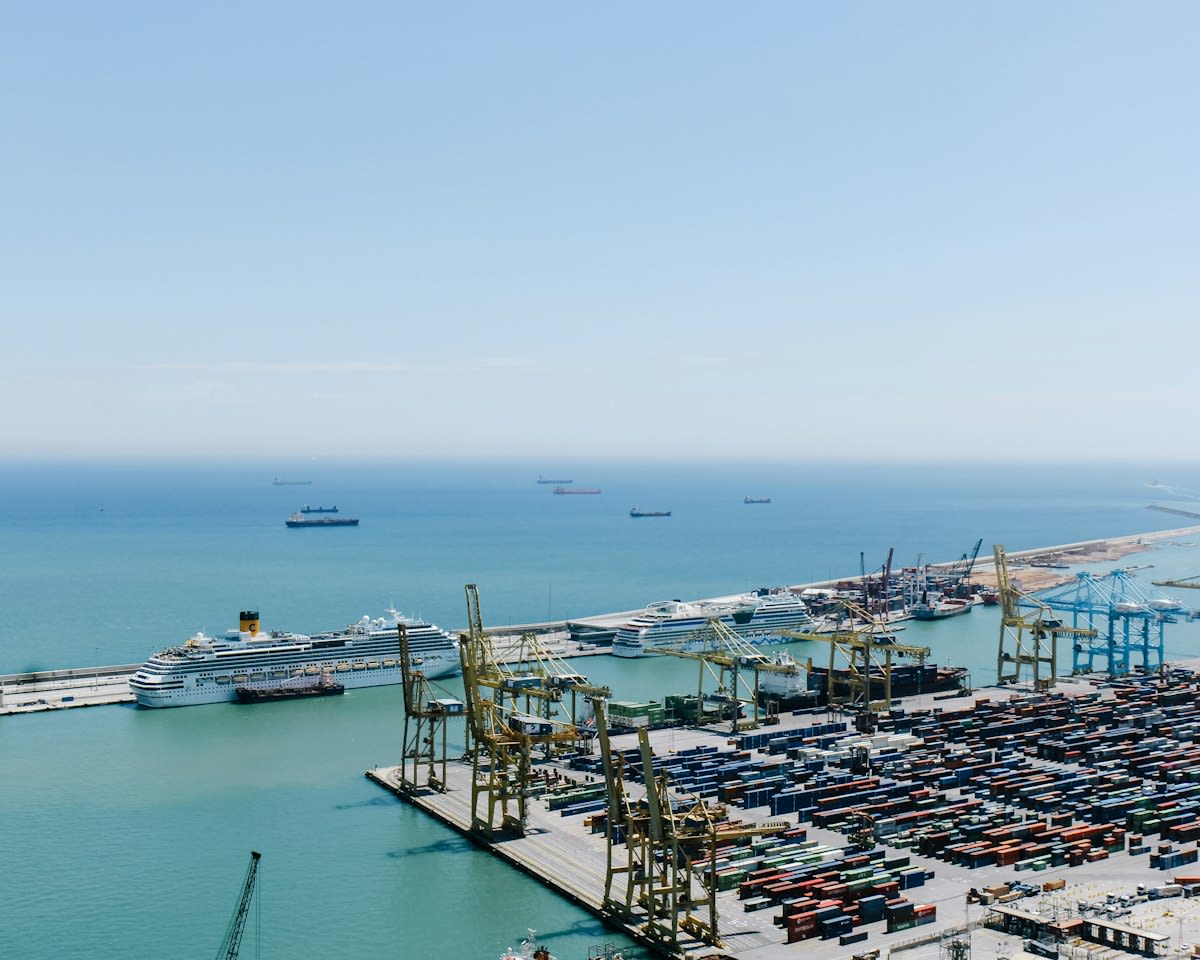
The pressure is not just on the water. North America is currently confronting a rare 1% contraction in container throughput, driven largely by tariff realignments and the impending Section 301 levies on Chinese-built vessels scheduled for October 2025 (Source: Mordor Intelligence, 2026). This creates an urgent, almost frantic, push to finalize nearshoring setups before the cost of Chinese hardware spikes. When companies move at this speed, they often overlook the 'invisible' frictions: the lack of reliable power grids and the saturated transmission lines that can shut down a factory as quickly as a port strike in Long Beach.
"Infrastructure, including ports, transmission lines, and reliable power, ultimately determines whether an investment announcement becomes an operational reality."— Inter-American Development Bank, cited in QUE.com (2026)
This is where the tension lies. The Inter-American Development Bank estimates that nearshoring could potentially add $78 billion annually in exports from Latin America and the Caribbean (Source: QUE.com, 2026). However, these figures represent potential, not a guarantee. The gap between a signed memorandum of understanding and a functioning assembly line is filled with regulatory uncertainty and security concerns. For the modern logistics manager, the question is no longer 'How do I get it across the ocean?' but 'How do I get it across the border without it sitting in a queue for three days?'
The Diversification Delta: Mexico vs. The World
Mexico is the undisputed nearshoring leader, primarily due to the USMCA's tariff-free advantages for qualifying goods (Source: QUE.com, 2026). The speed advantage is undeniable: shipping from Mexico to most U.S. destinations takes 2 to 5 days by truck, whereas the same journey from Asia takes 25 to 40 days by ocean (Source: QUE.com, 2026). This drastic reduction in transit time effectively slashes inventory carrying costs and allows firms to respond to demand shifts in real-time. But Mexico is not the only player adapting to this new world order.
| Region/Country | Primary Strength | Key Advantage | Primary Constraint |
|---|---|---|---|
| Mexico | General Manufacturing | USMCA Tariff-Free | Infrastructure Ceiling |
| Vietnam | Electronics/Textiles | High Assembly Volume | Tariff Pressures (~46%) |
| India | Pharma/Chemicals | Rapid Industrial Scale | Bureaucratic Complexity |
| Dom. Republic | Electronics/PCBA | DR-CAFTA Duty-Free | Smaller Market Scale |
Consider the Dominican Republic. Under DR-CAFTA rules, eligible electronic assemblies and finished box-builds enter the United States 100% duty-free (Source: Fenix Mfg, 2026). This presents a compelling alternative for US Original Equipment Manufacturers (OEMs) who want the benefits of nearshoring without adding more pressure to the already congested U.S.-Mexico land border. By diversifying across multiple nearshore hubs—Mexico for automotive, the Dominican Republic for electronics, and perhaps India for pharmaceuticals—companies can avoid creating a new single point of failure in the North American corridor.
The delta between 2024 and 2026 is clear: the initial rush was a binary choice between 'Asia' and 'Mexico.' Now, it is becoming a sophisticated exercise in regional layering. Firms are realizing that relying solely on one neighbor is just as risky as relying on one distant continent. We are seeing a move toward a 'multi-nearshore' strategy to balance the load across different regulatory regimes and infrastructure capacities.
Inside the War Room: The Practitioner's Reality
If you spend enough time in the logistics war rooms of Fortune 500 companies, you'll hear a different conversation than the one happening in investor calls. Internally, the debate isn't about the 'benefit' of nearshoring—it's about the 'landed cost' vs. 'operational exposure.' Practitioners are grappling with the hidden costs of the border. They discuss the nightmare of customs brokerage delays and the volatility of drayage rates at the border crossings. There is a quiet, pervasive anxiety that we are building a high-performance engine (the factories) but plugging it into a failing electrical grid (the infrastructure).
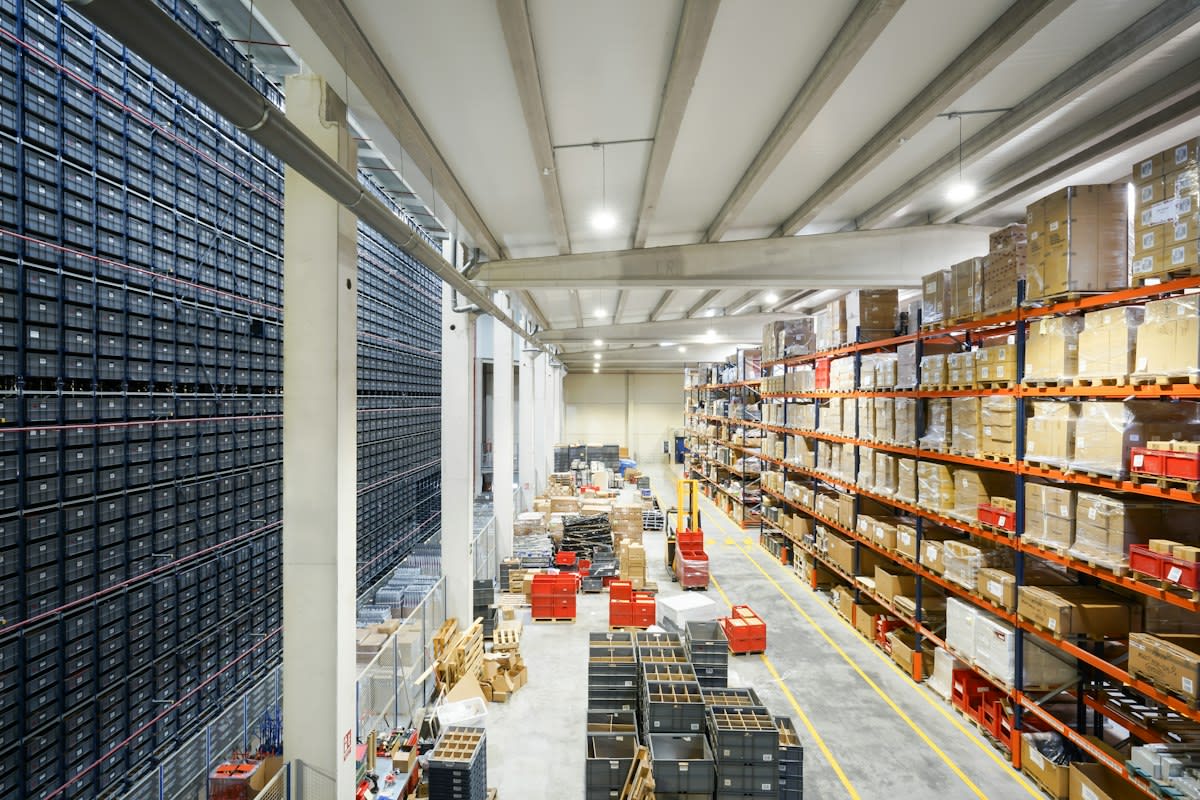
The real friction is often found in the automation gap. While Latin America is expected to hold a 5.6% share of the global automated truck loading system market by 2026, the adoption is uneven (Source: Persistence Market Research, 2026). Most of the 'record truck crossings' are still managed with legacy processes. The insider's view is that the bottleneck isn't the number of trucks, but the speed at which those trucks can be processed and dispatched. Until automation catches up with the volume, the '2 to 5 day' transit time remains a theoretical best-case scenario rather than a guaranteed operational standard.
Adapting for the 2025 Trigger
The window for a leisurely transition is closing. The October 2025 deadline for Section 301 levies on Chinese-built vessels acts as a hard catalyst (Source: Mordor Intelligence, 2026). This isn't just about where the product is made; it's about the vessels that carry the raw components to the nearshore factories. If the inputs for a 'Made in Mexico' product are arriving on vessels subject to these levies, the cost advantage evaporates. The strategy must therefore shift from 'moving the factory' to 'remapping the entire upstream ecosystem.'
Resilience in this new era requires a shift in mindset. Instead of chasing the lowest base unit cost, companies are prioritizing 'velocity certainty.' This means investing in green corridors—similar to the pact X-Press Feeders made with six European ports—to ensure streamlined, low-emission movements that satisfy both Scope 3 objectives and delivery timelines (Source: Mordor Intelligence, 2026). The goal is to create a closed-loop system where the movement of goods is as predictable as the production cycle itself.
Fact-Check & Accuracy Note
The claims regarding record truck crossings in 2024 and the 1% container throughput contraction are sourced from Mordor Intelligence (2026). The $78 billion export potential is attributed to the Inter-American Development Bank via QUE.com (2026). The specific transit time comparisons (2-5 days vs 25-40 days) are sourced from QUE.com (2026). The ongoing debate centers on whether Mexico's current infrastructure can actually scale to meet the 32% growth in FDI seen in manufacturing (Source: QUE.com, 2026).
Ultimately, nearshoring is not a sanctuary from fragility; it is a reallocation of risk. By moving production closer, we have reduced the risk of global maritime collapse but increased the risk of regional systemic failure. The winners of the next decade will not be the companies that simply moved their plants to Mexico, but those that built a diversified, automated, and infrastructure-aware network across the entire Western Hemisphere.