
The Death of the Adventure
Modern travel has devolved into a sterile exercise in confirmation. We arrive at destinations with a pre-curated list of Instagram pins and YouTube recommendations that dictate our movements before we even touch down. This is not exploration; it is a scavenger hunt. When you spend your trip standing where everyone else stood to capture the same angle of a landmark, you aren't experiencing a place. You are merely reproducing a digital ghost of someone else's experience. Why do we settle for this?
"The tourist photographs confirmation. The traveler photographs encounter."— Fstoppers
The distinction between a tourist and a traveler is psychological, not financial. You can spend thousands on a first-class ticket to a remote archipelago and remain a tourist if your mental framework remains intact. Conversely, you can be a traveler twenty minutes from your own front door. The goal of narrative travel is to move from the logic of the checklist to the logic of the encounter. It requires a deliberate decision to stop asking what a destination owes your portfolio and start asking what the place is trying to teach you.
Critical Insight
The 'Distance Fallacy' is the belief that the further you travel, the more you change. Research indicates that distance is not the variable that matters; genuine immersion is the only true catalyst for identity shift.
Prerequisites for Transformation
Before you book a flight or walk into an unexplored neighborhood, you must prepare your psychological infrastructure. Transformational travel is not a relaxing vacation; it is a process of breaking and rebuilding. If you enter a journey seeking comfort, you will find only a mirror of your own existing beliefs. To achieve a perspective shift, you must be willing to let your current identity fracture.
- A willingness to engage with the unfamiliar without a digital intermediary.
- The courage to abandon the 'saved' list of must-see locations.
- A commitment to cognitive friction—seeking out situations that challenge your assumptions.
- An appetite for social comparison with people who organize their lives differently than you do.
This preparation is essential because of how our brains function. We operate through cognitive schemas—mental frameworks that help us interpret the world. Over time, these schemas calcify. We stop seeing alternatives because our brains stop looking for them. To break this calcification, you need more than a change of scenery; you need a disruption of your internal map. This is where narrative design comes into play.

The Narrative Blueprint: A 5-Step Process
- Purge the Digital Checklist: Delete the saved pins and curated itineraries that dictate your behavior.
- Prioritize Cognitive Friction: Seek out environments and interactions that force you to navigate without your usual tools.
- Execute Genuine Immersion: Engage with the local environment through active participation rather than passive observation.
- Leverage Social Comparison: Intentionally encounter people whose life structures contradict your own.
- Synthesize the Global Mindset: Convert the experience into a new approach for solving problems and collaborating.
Step one is the most difficult: the purge. When you remove the 'famous spots,' you remove the safety net of confirmation. You are forced to look at the city as it is, not as it was presented to you on a screen. This creates a vacuum that can only be filled by genuine exploration. Without the checklist, you stop reproducing and start discovering. This is where the story actually begins.
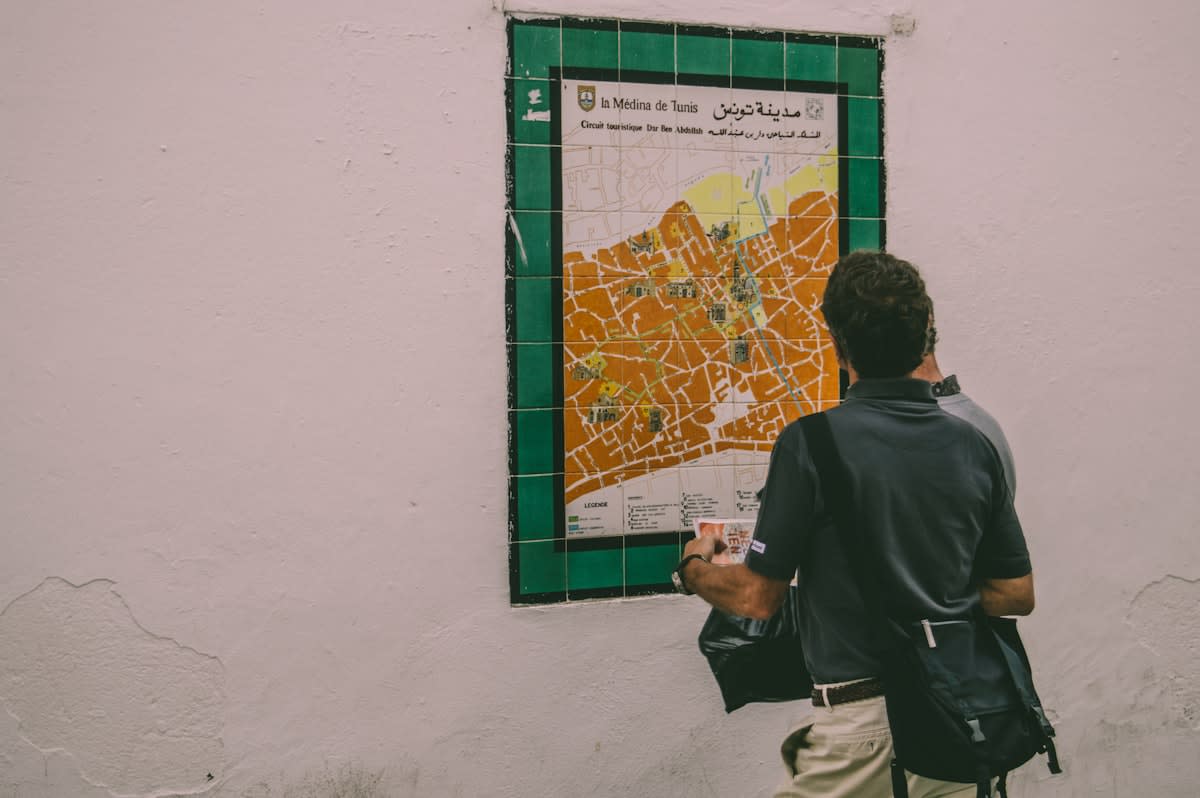
Once the checklist is gone, you must lean into cognitive friction. This means choosing the harder path—the neighborhood where you don't speak the language, the local transport system that makes no sense, or the market where there are no English signs. This friction forces self-reflection. When you have to navigate the world without your usual map, you discover who you are when your status and habits are stripped away.
Immersion is not about the number of days spent in a country; it is about the depth of engagement. You can spend a month in a resort and never be immersed. Genuine immersion requires a willingness to engage with the unfamiliar. This could be a weekend in a town you've never visited or a deep dive into a neighborhood in your own city. The goal is to break the identity you've built around your routine.
The most powerful tool for perspective shift is social comparison. By encountering people who organize their lives entirely differently, you realize that your way of existing is just one option among many. This is the core mechanism of transformational travel. It isn't the landmarks that change you; it is the subtle realization that your mental framework is not the universal standard.
Finally, you must synthesize these encounters into a global mindset. As highlighted by professionals working across international markets, the real transformation comes from experiencing different customs and unfamiliar ways of thinking to solve problems. This is where travel becomes an asset for professional and personal growth. You don't just come home with photos; you come home seeing differently, equipped with a broader flexibility of cognitive schemas.
| Dimension | Checklist Tourism (Confirmation) | Narrative Travel (Encounter) |
|---|---|---|
| Primary Goal | Reproducing known images | Breaking cognitive schemas |
| Mental State | Passive consumption | Active immersion |
| Outcome | Confirmation of existing beliefs | Identity disruption and growth |
| Key Metric | Number of landmarks visited | Depth of perspective shift |
Common Pitfalls to Avoid
The most pervasive trap is the 'Passport Stamp Fallacy.' Many travelers believe that the sheer volume of countries visited equates to a global mindset. This is a falsehood. Passport stamps are a bonus, not the transformation. If you move through three continents with your phone in your face and your usual mental frameworks intact, you have simply moved your comfort zone to a different coordinate.
Another danger is the 'Instagrammable' Trap. When we prioritize the visual proof of an experience over the experience itself, we outsource our perception to an audience. We stop asking what the place is teaching us and start asking how the place will look to others. This shifts the journey from an internal exploration to an external performance, effectively killing any chance of identity disruption.
The Creativity Link
Remember: Creativity is the ability to make connections between things that don't obviously belong together. By seeking the unfamiliar, you are literally expanding your brain's ability to be creative.