The Great Geography Delusion
It is a lie. The dream of the digital nomad—the beach, the laptop, the total freedom from geography—is a curated image for the few. We are told that the office is dead and that borders have become irrelevant in the age of Zoom. This is a fantasy sold by SaaS companies to people who have never tried to file taxes in two jurisdictions simultaneously. While the marketing materials for remote-first companies suggest a world without walls, the underlying reality is that geography has not disappeared; it has simply shifted its weight from the physical office to the tax code and the visa application.
Who actually benefits from this supposed borderless world? The data suggests a narrow slice of the population. For the high-earning professional, the world has indeed shrunk. They move between Lisbon, Bali, and Mexico City, treating the globe as a menu of lifestyle options. But for the person whose labor is tied to the soil or the machine, the border is not a line on a map; it is a wall of paperwork and missing data. This creates a collision between two different versions of reality: one where location is a choice, and one where location is a cage.
The evidence of this divide is visible in spending patterns. We see a sharp divergence in how different economic classes interact with the world. High earners are not just working remotely; they are consuming the world at an accelerating rate. This is not a democratic expansion of travel, but a concentration of mobility among the wealthy.
| Income Group | Airfare Bookings Change | Spending Change |
|---|---|---|
| Households >$200,000 | +29% | +38% |
| Other Income Groups | No Increase | No Increase |
The numbers are stark. According to an analysis of anonymized credit card transactions, households earning more than $200,000 were the only income group to increase both holiday airfare bookings and spending in September, with trips booked up 29% and spending up 38% from a year earlier (Source: Visa Business and Economic Insights, 2026). This proves that the ability to erase borders is directly tied to a specific salary threshold. The 'borderless' world is a premium service. For everyone else, the cost of travel and the rigidity of employment laws keep the map exactly as it was.
This leads to a deeper question. Does the ability to work from anywhere actually improve the quality of work, or does it just change who has the power to leave? We see a strange trend where those who have the most flexibility are the least likely to use it to find better opportunities.
The Flexibility Trap
Remote work was promised as a liberation. It was supposed to give us our time back. Instead, for many managers and professionals, it has become a digital leash. The boundary between the home and the office did not vanish; it simply dissolved, leaving the worker permanently available. The 'always on' culture is the hidden cost of the home office.
Recent surveys indicate that the spread of remote working has coincided with a significant rise in the proportion of managerial and professional workers who find it hard to take time off during working hours (Source: National Centre for Social Research, 2026). There has been no real improvement in their control over when they work. This is the great contradiction of the modern era. We have the tools to work from a mountain top in Nepal, yet we are more terrified than ever to turn off our notifications during a Tuesday afternoon.
"Remote working expands labour force participation by reducing barriers faced by women, older workers and people with disabilities, leading to a more efficient allocation of human capital."— M. Singhi, Author in the International Journal of Social Science Research
There is a positive side to this shift. The removal of the physical commute has opened doors for people who were previously locked out of the professional economy. By reducing barriers for women, older workers, and people with disabilities, remote work allows for a more efficient allocation of human capital (Source: International Journal of Social Science Research, 2026). This is a genuine victory. It is not about erasing borders between countries, but about erasing the borders of the physical office that excluded marginalized talent.
However, this inclusivity comes with a catch. While more people can enter the workforce, they are often trapped in their roles. Hybrid workers report they are less likely to look for a new job (Source: National Centre for Social Research, 2026). The fear of losing the flexibility of a hybrid arrangement acts as a set of digital handcuffs, dampening job-to-job moves in high-paying roles. People are trading their career mobility for the right to work in their pajamas.
This stagnation is a quiet crisis. If the most talented workers stop moving because they are wedded to a specific hybrid arrangement, the overall dynamism of the labor market suffers. We are seeing a shift from a market of competition to a market of convenience.
The Physical Anchor: Where the Map Still Matters
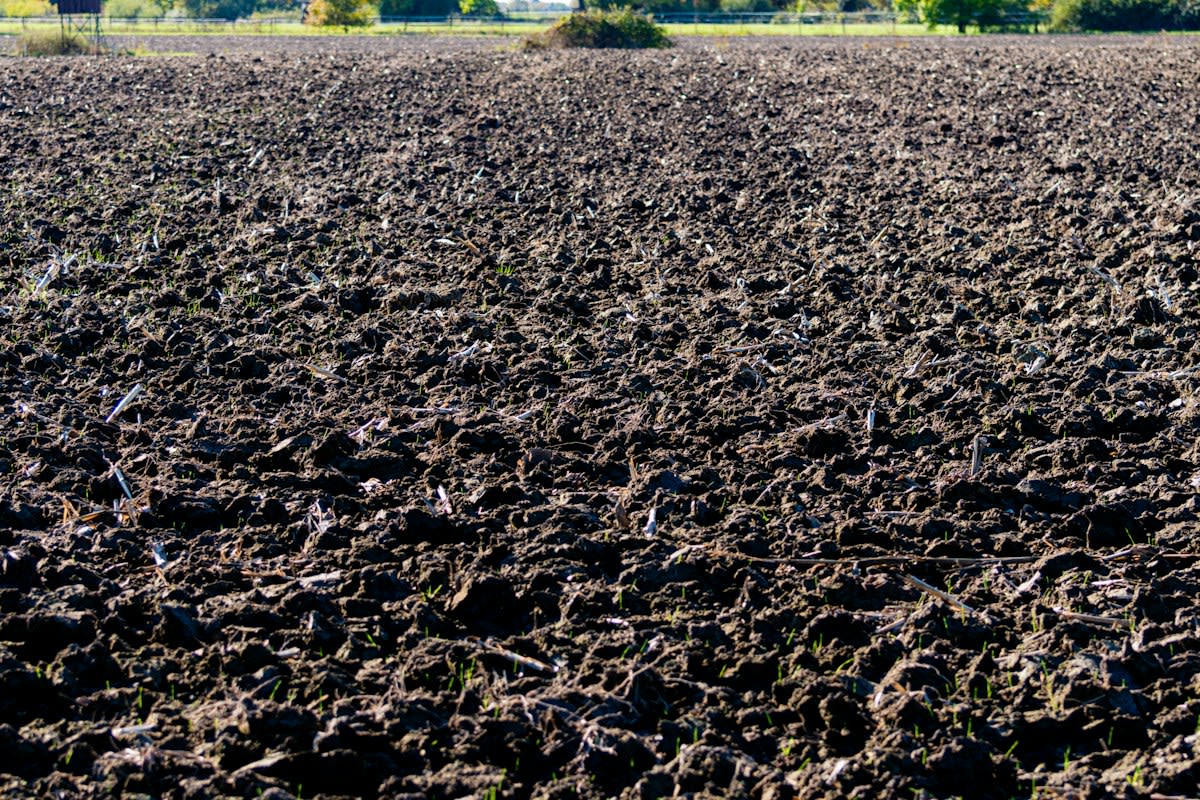
While we argue about Zoom backgrounds, the physical world remains brutal. There are millions of workers for whom 'remote work' is a linguistic impossibility. They are the backbone of global food and infrastructure, and for them, the border is a place of extreme vulnerability. The digital revolution has not reached the fields.
Consider the agricultural sector in Oregon. A recent state report found that the region lacks a unified system to track data and handle complaints about working conditions for farmworkers (Source: Oregon Capital Chronicle, 2026). The data on this industry is described as fragmented, lagged, and incomplete. This is the antithesis of the borderless world. While a software engineer can move their 'office' to a different continent with a click, a farmworker is trapped in a system where the state cannot even track their well-being or the efficacy of temporary visa programs.
This reveals the true terrain of the modern economy. We have created a dual-track system. On one track, we have the 'weightless' economy of data and services, where borders are a nuisance to be bypassed. On the other track, we have the 'heavy' economy of agriculture and manufacturing, where borders are strictly enforced and the workers are often invisible to the systems meant to protect them. The gap between these two tracks is widening.
As a practitioner who has spent years analyzing these shifts, I have seen the internal wars this creates within global companies. There is a constant, invisible rub between the Talent Acquisition teams and the Legal/Compliance departments. The recruiters want the best engineer in the world, regardless of whether they live in Buenos Aires or Bangkok. The lawyers, however, are terrified of 'permanent establishment' risk—the moment a remote worker's presence creates a tax liability for the company in a foreign jurisdiction. This is the real border. It is not a fence; it is a tax treaty.
Most companies do not have a strategy for this. They simply hope the worker doesn't tell the local tax authorities. This creates a precarious existence for the remote worker, who may be operating in a legal gray zone, and a brittle infrastructure for the company. The 'borderless' office is often just a series of ignored regulations waiting for an audit.
Fact-Check & Accuracy Note
The debate over remote work often pits urban economists, who predict the death of the city, against labor economists, who focus on the expansion of the workforce. The data from the National Centre for Social Research (2026) and IJSSR (2026) suggests that while city structures may change, the primary impact is on labor force participation and the internal dynamics of job flexibility rather than a total erasure of geographic importance.
Can remote work erase borders? No. It can only mask them for those who can afford the mask. For the high-earner, the world is a playground. For the professional, it is a digital leash. For the laborer, it is a fragmented system of missing data and rigid walls. We have not erased the border; we have simply decided who is allowed to ignore it.