The Blue Dot Delusion
Why do we trust a glowing blue dot to tell us where the soul of a city resides? For years, we have outsourced our curiosity to algorithms that prioritize efficiency over experience. When you follow a digital map, you aren't exploring; you are executing a pre-calculated route. This systemic reliance on AI-driven navigation creates a filtered field of vision where the system decides what you even get to see based on inferred clicks or declared preferences (Source: Eurasia Review, 2026). We have traded the thrill of the unknown for the comfort of a guaranteed arrival, and in doing so, we have sterilized the act of travel.
This isn't just a romantic longing for the past. We are seeing a tangible shift in how people, especially younger generations, interact with the world. A growing trend known as Anemoia—a longing for a time one has never known—is sweeping through Generation Z, leading to a resurgence of analog tools like print magazines (Source: Asiae, 2026). They are realizing that the digital interface is a barrier, not a bridge. When you remove the screen, the city stops being a set of coordinates and starts being a living, breathing entity that demands your full attention.
Editorial Note
The 'Efficiency Trap' is the belief that the fastest route is the best route. In travel, the best route is almost always the one that allows for unchosen encounters—the kind of moments that change who we are (Source: Eurasia Review, 2026).
Prerequisites for Analog Exploration
Before you disable your data roaming and step into the wild, you need a basic kit. You cannot simply wander blindly; that is a recipe for a wasted afternoon and a very expensive taxi ride back to the hotel. The goal is structured serendipity. You want enough information to feel safe, but not enough to feel guided. This requires a shift in mindset from 'destination-seeking' to 'environment-sampling'.
- A physical, foldable city map (bought locally if possible to avoid curated tourist versions).
- A small notebook and pen for jotting down street names and recommendations from locals.
- A designated 'North Star'—one fixed landmark (like a cathedral or tower) you can see from most parts of the city to maintain a general sense of direction.
- A local SIM card or offline map cached ONLY for emergencies, kept powered off in your bag.
- The mental willingness to be slightly uncomfortable and potentially lost for two hours.
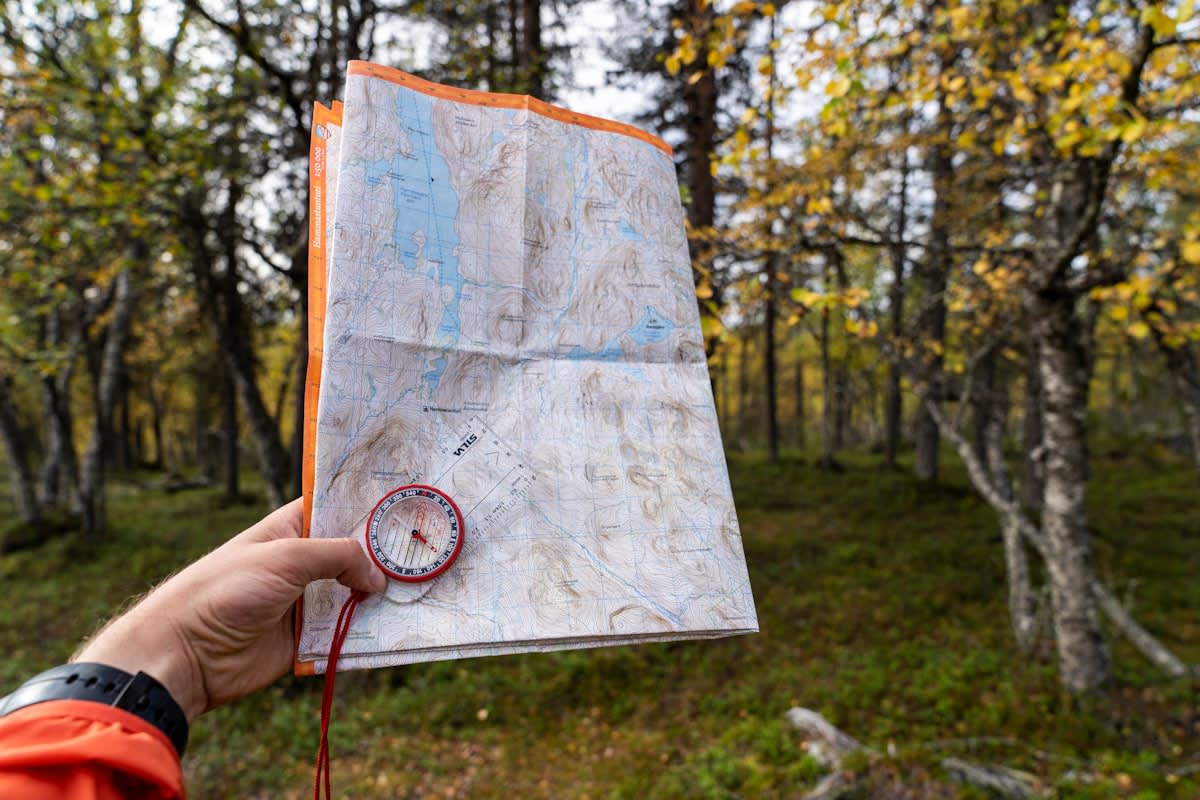
The friction of these tools is exactly why they work. A paper map requires you to stop, unfold, and actually look at the street signs around you. It forces you to engage with the physical geometry of the city. When the map is a screen in your palm, you look down; when the map is a sheet of paper, you look up to align the drawing with the reality in front of you.
The Step-by-Step Guide to Unmapping
- Pick a 'Zone of Interest' on your paper map. Do not pick a specific restaurant or museum; pick a neighborhood that looks interesting based on its street layout or proximity to a river.
- Enter the neighborhood and immediately put your phone in 'Airplane Mode'. The goal is to eliminate the temptation of the 'quick check' that kills the momentum of discovery.
- Walk with a general direction in mind, but commit to every third right turn. This breaks the linear logic of the algorithm and pushes you into side streets that don't appear on 'Top 10' lists.
- Identify a 'Human API'. Find a local—a shopkeeper, a street vendor, or someone sitting on a bench—and ask for a recommendation based on a feeling, not a category. Instead of 'Where is the best cafe?', ask 'Where do people go when they want to be alone?'
- Follow that recommendation without checking the distance. If you get lost along the way, treat the detour as the primary objective.
- Once you reach your destination or feel your energy waning, use your 'North Star' landmark to navigate back toward your home base, using the paper map only when the landscape becomes unrecognizable.
This process is fundamentally about reclaiming your attention. When AI chooses what we get to choose, we lose the ability to be surprised (Source: Eurasia Review, 2026). By following a manual process of discovery, you are re-training your brain to notice the small details—the peeling paint on a doorway, the smell of a specific bakery, the way the light hits a particular alleyway—that a GPS would simply route you around in the name of efficiency.
The Fragility of the Digital Tether
Beyond the philosophical loss of serendipity, there is a practical risk to total digital dependence. We assume GPS is an infallible utility, but it is susceptible to environmental disruptions that can leave a modern traveler completely stranded. For instance, severe geomagnetic storms can cause GPS positions to drift significantly. In one recorded event, GPS positions across parts of the continental United States drifted by more than 10 meters, or 33 feet (Source: ZME Science, 2026). While 33 feet may seem negligible in a field, in a dense urban environment, it can be the difference between being on the correct street or being led into a dead-end alley.
As a professional who has navigated cities from Tokyo to Tangier, I can tell you that the 'ugly' reality of this approach is the panic. There is a moment, usually about forty minutes in, where you realize you have no idea where you are. Your heart rate spikes. You feel a desperate urge to pull out your phone and let the blue dot save you. This is the 'Panic Threshold'. If you can push through that anxiety, you enter a state of hyper-awareness. You start reading the city like a book, noticing the slope of the land or the change in architectural style that signals you've crossed into a different district.
"We wanted to demonstrate that ‘Undertourism’ could be more than an idea – that a tour operator could actively influence where people travel and, in doing so, help destinations battle urban migration and preserve culture while improving the experience for travellers."— Moran, Executive at Inside Travel
This philosophy of intentional diversion is being scaled by industry leaders. InsideJapan, for example, has implemented an 'Undertourism' strategy to move travelers away from overcrowded hubs. By August 2026, they reported that one in five of their trips now include one of five specific undertourism destinations, with Toyama proving particularly popular (Source: Travel Weekly, 2026). This proves that there is a massive, untapped appetite for the 'unmapped' experience, provided there is a framework to support it.
| Feature | Digital Mapping | Analog Discovery |
|---|---|---|
| Primary Goal | Efficiency & Arrival | Observation & Experience |
| Cognitive Load | Low (Passive Following) | High (Active Orientation) |
| Risk Profile | System Failure/Drift | Temporary Disorientation |
| Outcome | Confirmed Destination | Serendipitous Encounter |
Common Pitfalls of the Analog Traveler
The most common mistake is replacing the GPS with a 'Curated List'. If you spend your time following a 'Hidden Gems of Lisbon' blog post, you are still following an algorithm—just a human one. You are visiting places that have already been 'scored' as a fit by someone else (Source: Eurasia Review, 2026). True discovery requires the absence of a pre-approved list. If you find yourself at a place that is 'trending' on social media, you haven't discovered it; you've simply arrived at a coordinated destination.
Another pitfall is the 'Fear of the Wrong Turn'. Many travelers treat a wrong turn as a failure. In analog exploration, the wrong turn is the only way to find something that isn't on the map. When you stop viewing disorientation as a problem to be solved and start viewing it as a tool for discovery, the entire city opens up. The goal is not to find the destination, but to engage with the space between the start and the finish.
Fact-Check & Accuracy Note
Key claims regarding GPS drift (Source: ZME Science, 2026), the rise of 'Anemoia' among Gen Z (Source: Asiae, 2026), and the success of undertourism targets in Japan (Source: Travel Weekly, 2026) are sourced from verifiable reports. The debate over AI's impact on civic infrastructure and shared experiences is an ongoing sociological discussion (Source: Eurasia Review, 2026).