Canva’s first AI image model plans designs before generating them
Source Entity
Emma Roth
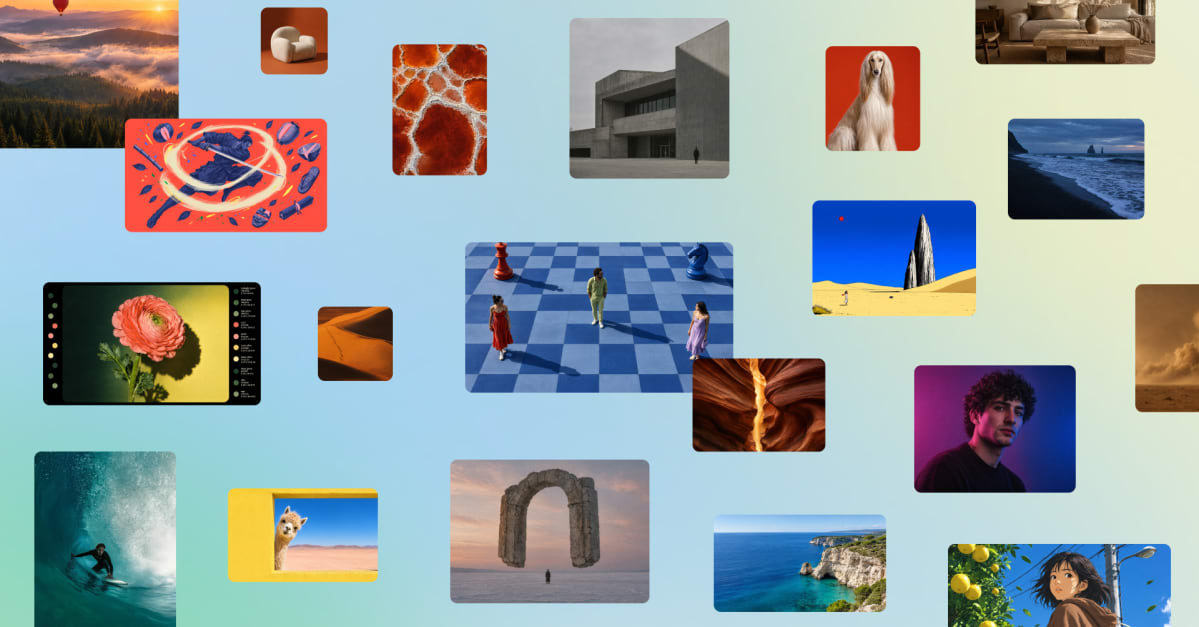
Canva has launched 'Canva Craft,' its proprietary two-stage AI image generation model designed for high precision and control. The model improves upon existing market offerings by planning spatial relationships and text rendering before generating 2K resolution images.
The Evolution of Creative AI: Canva Enters the Generative Market
Canva has officially signaled a major shift in its product strategy with the release of its first proprietary image generation model, dubbed Canva Craft. While the platform has long integrated third-party AI tools, the development of an in-house engine marks a strategic pivot toward vertical integration. By controlling the underlying technology, Canva aims to compete directly with industry heavyweights like OpenAI, Google, Meta, and ByteDance, ensuring that its user base—ranging from casual creators to professional marketers—has access to sophisticated design tools within a unified ecosystem.
A Two-Stage Architectural Innovation
The core differentiator of Canva Craft is its unique two-stage architecture. Unlike many generative models that attempt to synthesize pixels directly from a prompt in a single pass, Canva’s model first develops a comprehensive 'plan.' During this initial phase, the AI interprets the user's intent to establish critical design elements, including spatial relationships, visual hierarchy, relative scale, and the specific requirements for text generation. This foundational planning stage is designed to address one of the most persistent weaknesses in current generative AI: the inability to maintain structural logic and legible typography.
Precision and Control in Design
By separating the planning phase from the generation phase, Canva Craft promises users significantly higher levels of precision. This is particularly vital for business-oriented users who require consistency in branding and marketing assets. The model’s ability to generate images at up to 2K resolution across 30 different aspect ratios ensures that the output is immediately ready for various social media platforms and professional media formats. Furthermore, the architecture allows for precise, targeted edits, enabling users to modify specific elements without the degradation or unintended changes to the rest of the image composition.
Competitive Landscape and Market Positioning
The generative AI market has become increasingly crowded, with tech giants aggressively deploying models that prioritize speed and scale. However, Canva’s focus on the 'design-first' approach—prioritizing the logic of a layout—positions it uniquely against models that often struggle with text rendering and complex spatial layouts. By embedding this capability directly into its platform, Canva lowers the cost and complexity barrier for its users, effectively challenging the reliance on disparate AI tools and streamlining the creative workflow into a single, cohesive experience.
Future Trends and Implications
The launch of Canva Craft highlights a broader industry trend where software platforms are moving away from being mere conduits for third-party AI and toward becoming AI-native environments. As Canva continues to refine its models, we can expect further advancements in how AI handles complex design systems, potentially automating even more intricate aspects of graphic design. This move suggests that the future of creative software will be defined by 'controllable' AI, where the balance between human creative intent and algorithmic generation is managed through structured, iterative planning processes rather than random, stochastic outputs.