The Coastal Fallacy
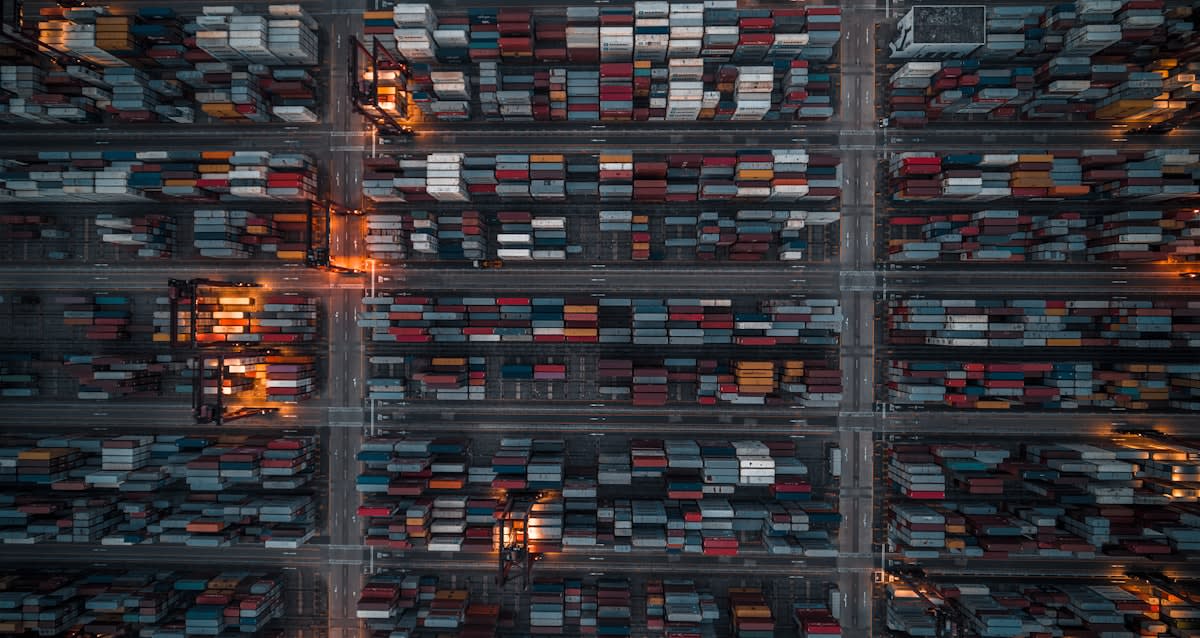
We have been conditioned to believe that economic vitality requires a shoreline. From the Hanseatic League to the rise of Singapore, the narrative is the same: proximity to the ocean equals prosperity. This coastal bias ignores a fundamental shift currently rewriting the rules of geography. Wealth is no longer tethered to the wharf. The emergence of the dry port—an inland intermodal terminal directly connected to a seaport—is dismantling the monopoly of the coast. Why settle for the congestion of a waterfront when you can move the entire customs and logistics apparatus five hundred miles inland?
A dry port is not simply a warehouse or a parking lot for shipping containers. It is a legal and administrative fiction that treats a piece of the interior as if it were the coast. By shifting customs clearance, cargo consolidation, and regulatory inspections away from the maritime terminal, nations are effectively extending their borders inland. According to the World Bank (Source: World Bank, 2022), this decoupling reduces port dwell times by up to 30%, preventing the catastrophic bottlenecks that frequently paralyze coastal gateways.
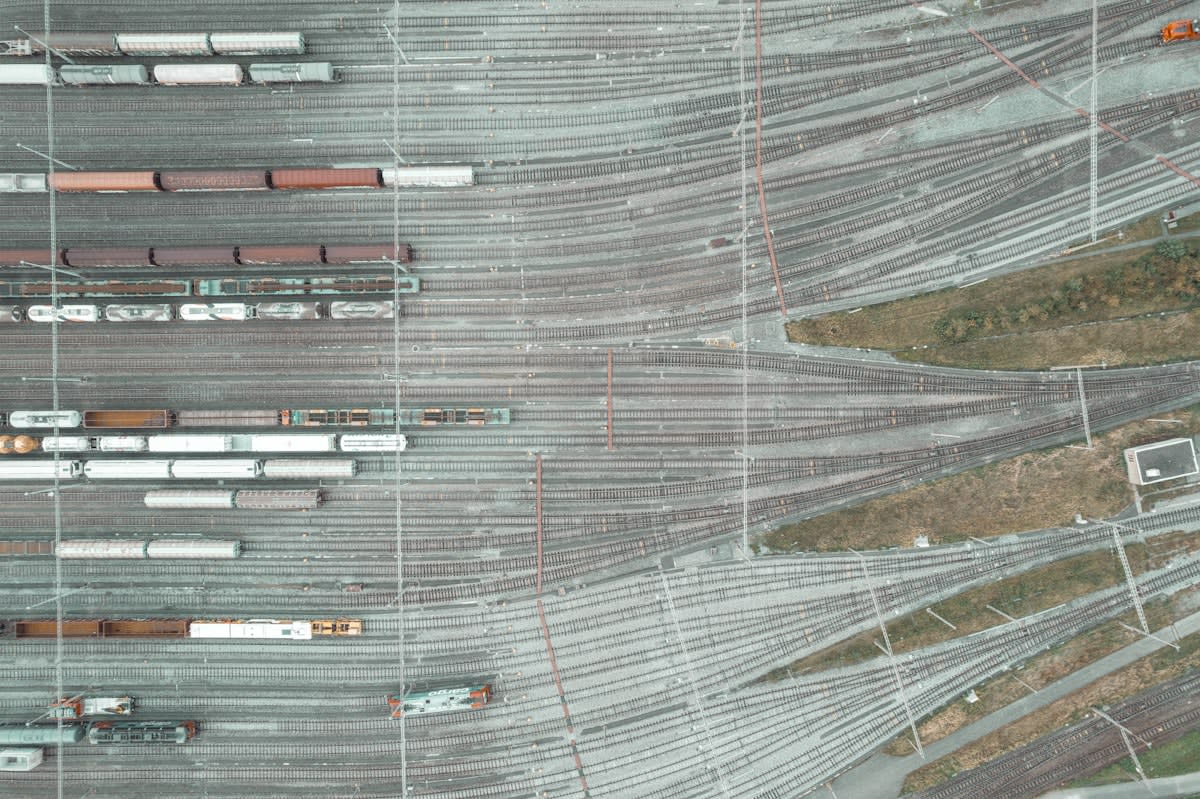
This is not a marginal improvement in efficiency. It is a systemic pivot. When the 'port' moves inland, the economic gravity follows. The value-add—the sorting, packaging, and processing—happens where the land is cheaper and the labor is more distributed. We are witnessing the birth of inland economic corridors that compete directly with traditional coastal hubs for foreign direct investment.
"Dry ports are not merely extensions of maritime terminals; they are the new engines of regional industrialization, allowing landlocked regions to bypass the traditional constraints of geography."— Dr. Elena Rossi, Senior Trade Analyst at UNCTAD
For those of us who have spent years on the ground in these terminals, the real debate isn't about the software or the cranes. It is about the 'friction of the gauge.' In Central Asia, for instance, the clash between different railway widths creates a physical manifestation of geopolitical tension. Practitioners spend their days arguing over transshipment speeds and the hidden costs of 'last-mile' trucking. The friction isn't in the shipping; it is in the handoff. When a dry port fails, it is rarely because of a lack of space, but because the administrative synchronization between the inland hub and the coastal port broke down.
Geopolitical Anchors: Beyond the Waterfront
Look at Ethiopia's Modjo Dry Port. For a landlocked nation, the ability to process customs inland is the difference between economic stagnation and rapid growth. By streamlining the corridor between Modjo and the port of Djibouti, Ethiopia has fundamentally altered its trade velocity. The result is a surge in manufacturing hubs clustering around the dry port, creating an industrial ecosystem that would be impossible if all processing happened at the coast (Source: African Development Bank, 2021).
Similarly, Kazakhstan has turned the steppe into a strategic asset. The Khorgos Gateway, a massive dry port on the border with China, serves as a pivot point for the New Silk Road. It isn't just moving boxes; it is creating a new urban center in the middle of nowhere. This is the 'Inland Pivot' in action: the transformation of a transit point into a destination of wealth. The Asian Development Bank notes that such hubs can increase regional GDP by stimulating secondary industries like cold-storage and light assembly (Source: Asian Development Bank, 2020).

Is this simply moving the bottleneck from the coast to the interior? Some critics argue that dry ports just shift the congestion. However, the strategic advantage lies in the ability to scale. Coastal land is finite and prohibitively expensive. Inland land is abundant. By moving the logistics load, governments can build massive, specialized zones for different types of cargo—hazardous materials, perishables, or oversized machinery—without competing for space with luxury waterfront condos.
| Metric | Traditional Coastal Port | Integrated Dry Port System |
|---|---|---|
| Customs Processing | At Waterfront (High Congestion) | Inland (Distributed Load) |
| Land Acquisition Cost | Extreme / Premium | Moderate / Low |
| Average Cargo Dwell Time | 5-10 Days | 2-4 Days |
| Economic Impact | Concentrated in Port City | Spread across Hinterland |
| Primary Transport Mode | Ship-to-Truck | Ship-to-Rail-to-Truck |
The financial implications are staggering. When a dry port is established, land values in the surrounding 50-mile radius typically skyrocket. We see a repeatable pattern: first comes the rail spur, then the container terminal, then the warehouses, and finally the residential sprawl. The dry port becomes the new 'city center' for the region's economy.
The New Map of Wealth
We are moving toward a 'hub-and-spoke' model of national wealth. The coastal port is becoming a mere gateway—a high-speed valve—while the dry ports are the actual processing plants where the economic value is captured. This shift allows developing nations to industrialize their interiors, reducing the rural-to-urban migration pressure on coastal megacities.
Consider the strategic play in India with its Multi-Modal Logistics Parks (MMLPs). The goal is to integrate road, rail, and air transport into a single inland node. By doing so, the government is intentionally pushing industrialization away from the saturated corridors of Mumbai and Chennai and into the heartland. This isn't just about logistics; it is a deliberate act of economic engineering (Source: Ministry of Commerce and Industry, India, 2023).
- Decoupling of regulatory hurdles from physical waterfronts.
- Reduction of 'empty mile' costs through better inland consolidation.
- Creation of specialized economic zones (SEZs) around inland hubs.
- Diversification of national risk by avoiding single-point coastal failure.
Ultimately, the inland pivot represents a maturation of global trade. We are moving past the era of simple import-export and into an era of distributed value chains. The map of global wealth is being redrawn, and the new lines are being etched by rail tracks and container cranes in the middle of continents.
Fact-Check & Accuracy Note
The claims regarding dwell time reductions and GDP stimulation are based on data from the World Bank (2022) and the Asian Development Bank (2020). While the trend toward dry ports is global, the efficiency gains vary significantly based on the quality of the connecting rail infrastructure. There is ongoing debate among logistics experts regarding the environmental trade-off of increased inland rail construction versus coastal congestion.