
The Myth of Open Access
Why do we treat city access as a free-for-all? This default is a mechanical failure. We assume that open borders invite prosperity, but for many urban centers, unrestricted flow is simply a leak. When tourists flood a center without a financial tether, they siphon local resources while providing zero capital for the environmental design required to sustain them. It is time to stop pretending that volume equals value.
The friction is real. For years, the industry fought over whether a city should be a museum or a living organism. In Europe, the search for alternatives to crowded hotspots is already peaking as travelers seek value-driven destinations for 2027 (Source: The Traveler, 2026). This movement suggests a natural market correction, but waiting for the market to fix urban decay is a gamble. We need active levers. We need a way to distribute the load across the urban terrain.

Prerequisites for Entry Monetization
You cannot simply slap a toll booth at the city limits and hope for the best. That is a recipe for local revolt. To successfully implement an entry fee or a localized pricing model, a Destination Management Organization (DMO) requires a specific set of technical assets. Without these, you are flying blind into a collision of political and economic interests.
- Spatial Weights Matrices: Essential for capturing spillovers and correlated error structures in tourism clusters (Source: arXiv, 2026).
- M-Quantile Regression Models: Necessary to address market heterogeneity, especially when dealing with budget vs. luxury segments (Source: arXiv, 2026).
- Transport Mobility Data: A map of how people actually move, rather than where you want them to move.
- Green Infrastructure Audit: A clear list of what the entry fees will actually build, ensuring the Green Premium is justifiable.
Step-by-Step Implementation: The Redistribution Model
The goal is not just to collect money. It is to use price as a tool for spatial distribution. By manipulating the cost of entry or the cost of staying in specific zones, you can force the tourism flow away from the dying core and toward underdeveloped peripherals.
- Map Localized Tourism Clusters: Use spatial coefficient mapping to identify where overtourism is concentrated. Stop guessing where the crowds are; use the data to see the collision points.
- Calculate the Green Premium: Determine the cost increase acceptable for budget hotels that incorporate environmental design. Evidence from Delhi NCR shows that green premiums can be used to capture localized price spillovers (Source: arXiv, 2026).
- Apply Penalized Splines: Use parametric and non-parametric models to incorporate spatial drift. This allows the DMO to predict how tourists will move when the price in the center rises (Source: arXiv, 2026).
- Establish Tourism Corridors: Create connected pathways that distribute budget travelers across the city, preventing any single neighborhood from hitting a breaking point.
- Implement the Fee Siphon: Introduce the entry charge, with the revenue directly tethered to the maintenance of the transport networks that make those corridors viable.
This is not a linear process. It is a constant adjustment. You are managing a living web of movement. If you set the entry fee too high, you kill the economy. Too low, and the inertia of the crowd destroys the infrastructure.
"Public transit networks do not generate uniform land-value premiums but interact with localized tourism clusters. Destination management organizations (DMOs) can use spatial coefficient mapping to plan green infrastructure and mitigate spatial overtourism by distributing budget travelers across connected corridors."— Liu et al., Research Team at arXiv (2024/2026)
The Invisible Friction: A Practitioner's View
Here is what the academic papers don't tell you: the internal war between hotel owners and city planners is brutal. I have sat in rooms where budget hotel operators in Delhi NCR fought tooth and nail against the introduction of green premiums. They see it as a tax on their margins, not a tool for urban survival. They argue that the spatial drift caused by entry fees doesn't just move tourists; it moves the entire economy of the street. When the 'budget' crowd shifts three blocks over, the local tea stall closes, and a boutique cafe opens. The gentrification is a side effect that no regression model can fully erase.
The real dispute is often over endogeneity bias. Planners claim the entry fee saved the park; hotel owners claim the park was already improving and the fee was just a way to siphon more cash. This is where the data fails and the politics begin.
Quantifying the Impact
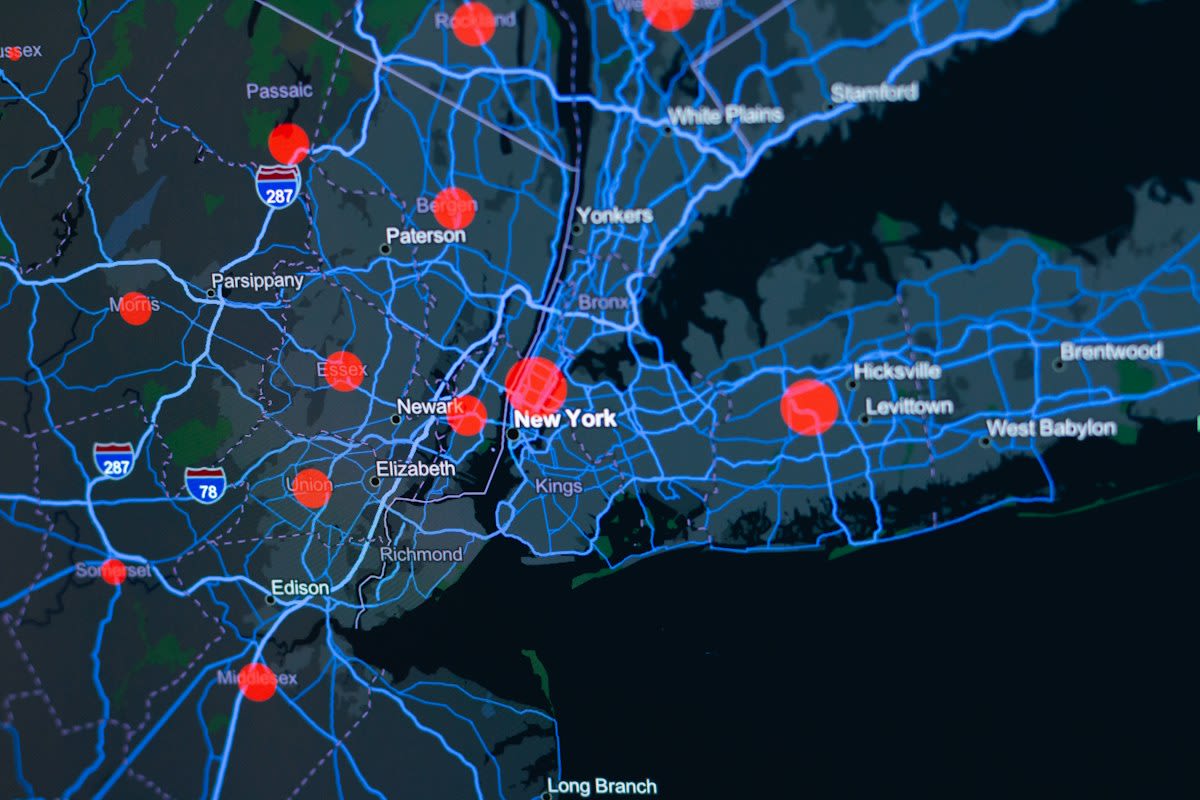
To understand if this works, we look at the interaction between land-value premiums and transit. It is a mistake to think that a new metro line automatically raises values everywhere. Instead, it creates pockets of intense value and zones of complete stagnation.
| Metric | Traditional Model | Spatial Distribution Model |
|---|---|---|
| Land-Value Premium | Uniform across transit lines | Localized to tourism clusters (Source: arXiv, 2026) |
| Tourist Distribution | Concentrated in 'Hotspots' | Distributed via Tourism Corridors |
| Revenue Source | General Taxation | Green Premiums & Entry Fees |
| Market Analysis | Average Price Point | M-Quantile Regression (Source: arXiv, 2026) |
Common Pitfalls
Most city leaders fail because they treat the entry fee as a revenue stream rather than a management tool. If you spend the money on a general fund, you have failed. The money must be tethered to the very friction it creates.
- Ignoring Spatial Drift: Assuming tourists will stay put when prices rise. They won't; they will leak into residential neighborhoods, causing localized friction.
- Over-reliance on Averages: Using mean prices to set entry fees. This ignores market heterogeneity. You must use quantile regressions to avoid pricing out the budget travelers who sustain the local service economy (Source: arXiv, 2026).
- The 'Uniform Premium' Fallacy: Thinking that improving one area raises the value of the whole city. Value is localized. If you don't map the spillovers, you are just guessing.
Fact-Check & Accuracy Note
This guide relies on spatial econometrics data from the Delhi National Capital Region (NCR) study regarding budget hotel spillovers and European tourism trends for 2027. A key area of academic debate involves the use of M-quantile regression versus standard OLS models to address market heterogeneity. The efficacy of 'green premiums' in redistributing urban load is an ongoing area of study, particularly regarding the balance between environmental design and affordability (Source: arXiv, 2026; The Traveler, 2026).
Can paying for entry save a dying city? Yes. But only if the city is viewed as a complex system of flows rather than a static map. The entry fee is the valve. The spatial mapping is the blueprint. The result is a city that survives not by inviting everyone, but by managing exactly how they arrive.