The algorithm is lying. It processes billions of data points to tell you what you like, but it actually tells you what people like you liked five minutes ago. It creates a feedback loop of mediocrity. Do we still possess an independent eye? If your mood board looks like a trending page on Pinterest, you have already surrendered your agency to a mathematical average. This is not a crisis of technology but a failure of will.
The Prerequisites of Resistance
Stop the feed. You cannot cultivate a unique eye while swimming in a stream of optimized content designed to keep you scrolling for hours. You need a clean slate. Before following this guide, you must establish a discomfort log where you intentionally record art, music, or design that you initially dislike. This log serves as a map of your current biases. It forces you to question why the default feels comfortable.
- A physical notebook for analog sketching and observation.
- A 'Source Map' consisting of at least five non-algorithmic inputs (e.g., printed zines, physical archives, local street art).
- A subscription to a publication from a different continent than your own.
- A commitment to spend two hours a week in a state of aesthetic boredom.
The Framework for Manual Curation
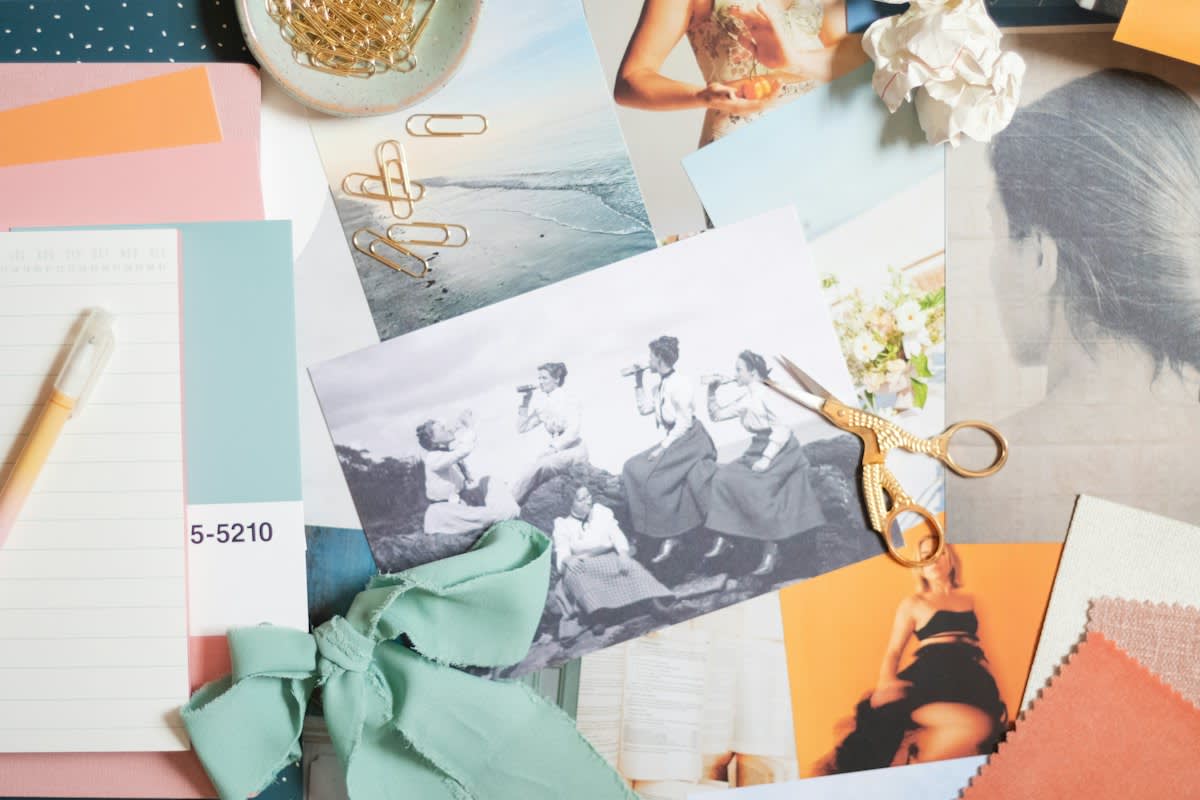
Taste requires friction. The seamless nature of AI curation removes the struggle of discovery, which is exactly where the growth happens. We must reintroduce the hunt. By treating curation as a manual labor process, you reclaim the weight of every choice you make. This is how you avoid the grey sludge of AI-generated aesthetics.
- Audit the Default: Analyze your last ten 'saved' images and identify the recurring patterns that the AI has pushed toward you. Note the colors, compositions, and moods that have become your unconscious default.
- Inject Noise: Seek out a medium or a region entirely foreign to your work, such as studying the bold color palettes of Nigerian signage or the brutalist layouts of 1970s Japanese magazines. The goal is to break the pattern of similarity that AI rewards.
- Manual Weighting: Instead of using 'like' buttons, assign a numerical value to why a piece of work is effective. Is it the tension? The scale? The mechanical failure of the composition? This forces analytical thought over emotional reaction.
- Human Validation: Present your findings to a peer who disagrees with your aesthetic preferences. The friction created by their critique prevents you from slipping back into the comfort of the algorithmic average.
Noise is essential. When we remove the outliers, we are left with a mean that satisfies everyone but inspires no one. AI-generated content is expected to reach 90% of online content by 2026 (Source: Europol, 2023). This saturation will make the 'human error' the most valuable asset in the fray. Embrace the mistake.
"The danger is not that AI will create bad art, but that it will make 'good enough' the only standard."— Sarah Drasner, VP of Engineering
The Invisible Friction
Industry disputes are brewing. In high-end design studios from Seoul to Lagos, a quiet war is being waged between the account managers and the creative directors. The managers want the Midjourney v6 'look' because it is safe, predictable, and matches the client's existing mood board. The directors argue that this approach is a mechanical failure of imagination that will eventually render the agency invisible. I have sat in rooms where the argument wasn't about quality, but about the fear of being 'too different' in a world that rewards the average. This tension is where the real work begins.
Data proves this. User engagement drops by 14% when novelty is replaced by extreme similarity (Source: Journal of Consumer Research, 2021). We are bored. We just haven't realized it yet because the interface is so smooth. The only way out is to intentionally seek the jagged edge.
Common Pitfalls in Modern Curation
- The 'Reference Trap': Using AI to generate references for a project, which then dictates the final output, creating a closed loop of AI-inspired-AI art.
- Over-reliance on 'Discovery' Playlists: Allowing a streaming service to define your sonic palette without ever searching for a specific artist or label.
- The Aesthetic Echo Chamber: Following only creators who share your exact design philosophy, which the algorithm then amplifies until you believe your taste is universal.
- Mistaking Speed for Quality: Believing that the ability to curate 1,000 images in a minute is superior to spending an hour analyzing one single photograph.
Fact-Check & Accuracy Note
This guide relies on data regarding AI content saturation (Europol, 2023) and the psychological effects of novelty in consumer behavior (Journal of Consumer Research, 2021). There is an ongoing academic debate regarding whether AI truly 'homogenizes' taste or simply reveals existing human preferences for the average. However, from a practitioner's perspective, the trend toward 'algorithmic beige' is observable across global design markets.
Editorial Note
Editorial Note: This guide is intended for practitioners who feel their work is becoming derivative. It does not suggest the total abandonment of AI tools, but rather the implementation of a manual override to ensure human intent remains the primary driver of the work.