You still believe advertising is something you can turn off. You think a commercial is a discrete event, a break in the action, a banner you can block. You are wrong. The boundary has not just blurred; it has been surgically removed. We have entered the era of ambient media, where the environment itself is the pitch. It is a ghost. A quiet, pervasive grip on the senses that we mistake for convenience while it reshapes our default behavior.
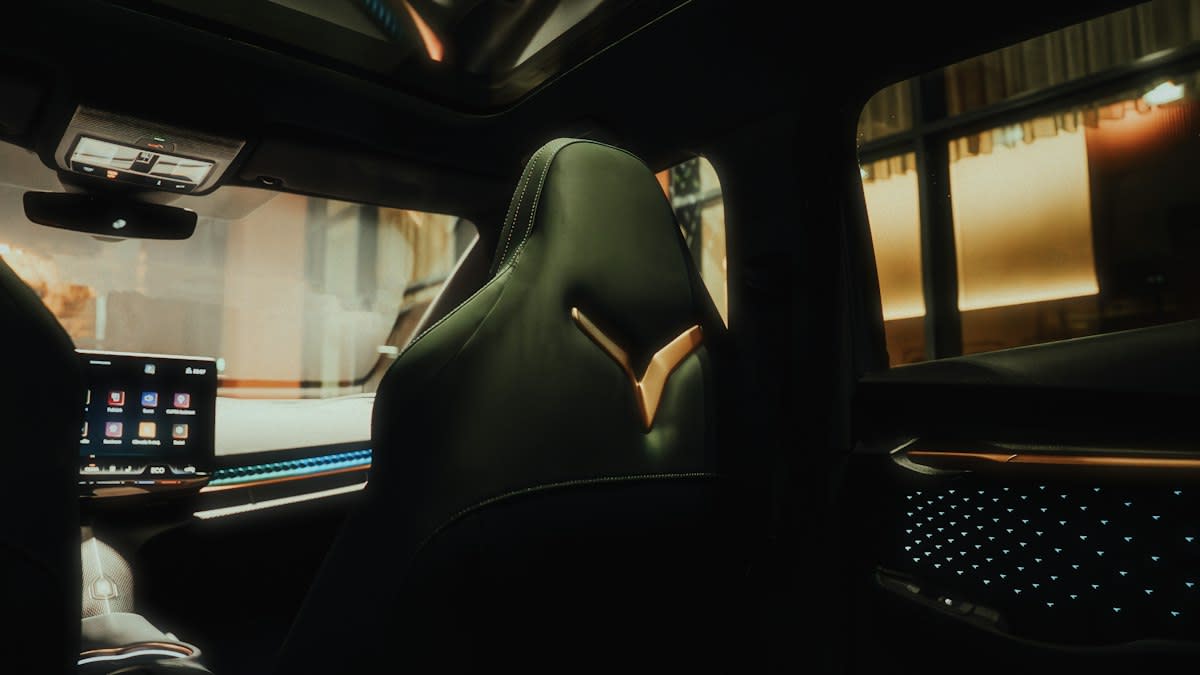
Look at the interior of the Toyota bZ4X. It is not merely a car. It is a curated sensory chamber. By integrating ambient lighting and automatic doors, Toyota is not just selling transport; they are selling a specific atmospheric state (Source: Toyota, 2023). This is where art and advertising collide. The lighting is the art. The feeling of seamlessness is the advertisement. When the environment does the talking, the brand no longer needs to shout.
The Clinical Ghost: Efficiency as Aesthetic
The most aggressive form of ambient media is the one you cannot see. In healthcare, the rise of ambient-scribe tools represents a hard turn in how we perceive the 'art' of medicine. One commercial ambient tool reduced physician time-in-note by approximately 9.5% (Source: onhealthcare.tech, 2026). This is not just a productivity gain. It is the commodification of the doctor-patient gaze. The software becomes an invisible layer, a suture between the human interaction and the digital record.
Yet, the results are brittle. Another tool in the same trial produced only a 1.7% reduction, a figure that was not statistically significant (Source: onhealthcare.tech, 2026). This discrepancy reveals the hollow promise of uniform enterprise adoption. The 'art' of the tool is often a mask for mechanical failure in the underlying logic, where the brand promises a seamless experience but delivers a marginal, erratic utility.
"Under Article 3(63), a general-purpose AI model is one that ‘displays significant generality’ and can ‘competently perform a wide range of distinct tasks’, and that can be integrated into a variety of downstream systems or applications."— European Parliament, AI Act Documentation (2026)
Does the definition of 'generality' not mirror the goal of ambient media? The European Parliament's focus on these models shows a recognition that AI is no longer a tool we use, but a terrain we inhabit (Source: European Parliament, 2026). When an AI can 'competently perform a wide range of tasks,' it ceases to be a product and becomes the environment. The advertising is no longer about the model's features; it is about the model's presence.
This is the insider's friction: the war between the product designers and the compliance officers. In the boardrooms, the push is for 'invisible' integration—making the AI so ambient that the user forgets it exists. But the practitioners know the fray. They see the gender bias in music recommendations and the false positives in police misidentification (Source: European Parliament, 2026). The fight is over whether the 'art' of the seamless interface is worth the cost of the hidden bias.
| Ambient Modality | Functional Goal | Advertising Signal | Observed Impact |
|---|---|---|---|
| Automotive Lighting | Accessibility/Comfort | Premium Brand Identity | Seamless Entry/Exit (Source: Toyota, 2023) |
| Clinical Scribes | Note Reduction | Enterprise Efficiency | 9.5% time reduction (Source: onhealthcare.tech, 2026) |
| Generative AI | General Task Performance | Omnipresent Utility | Downstream System Integration (Source: EU, 2026) |
| Chemical Footprint | Industrial Output | Corporate Dominance | PFAS Limit Reversals (Source: CAP, 2024) |
We must now address the darkest form of ambient media: the chemical legacy. Corporate branding isn't just about lights and software; it is about the physical weight of the products left behind. The reversal of legal limits on four PFAS chemicals by the Trump administration in May 2025, despite previous promises, illustrates a different kind of ambient presence (Source: Center for American Progress, 2024). These toxins are the ultimate ambient media. They are invisible, pervasive, and they signal the absolute grip of corporate interest over public health.
Is it not a collision of the highest order? On one hand, we have the bZ4X creating a sanctuary of light; on the other, we have synthetic cosmetics and PFAS saturating our water and skin (Source: Center for American Progress, 2024). Both are 'ambient.' One is designed to seduce; the other is a byproduct of the production of that seduction. The boundary between the art of the experience and the advertising of the corporation is not just erased—it is a lie.
The opportunity here is not to fight the ambient, but to demand transparency in the suture. We see this in the push for 'consumer-empowered innovation' in cosmetics (Source: Center for American Progress, 2024). The goal is to move from a passive inhabitation of branded environments to an active interrogation of them. Why does the AI recommend this song? Why does the car glow this color? What is in the water?
Fact-Check & Accuracy Note
The claims regarding PFAS regulatory reversals and synthetic cosmetic safety assessments are based on reports from the Center for American Progress (2024). The data on clinical AI efficacy (9.5% vs 1.7% reduction) is derived from randomized trials cited by onhealthcare.tech (2026). Academic debate persists regarding the 'predictive parity' of AI systems as outlined in the European Parliament's analysis of the AI Act (2026).
In the end, ambient media is the final stage of the advertising evolution. It no longer asks for your attention; it assumes your existence. By blending into the very architecture of our lives—our cars, our clinics, our laws—it creates a world where the brand is the only available reality. The only way out is to recognize the web for what it is: a carefully designed, highly profitable, and often brittle illusion.