Precision is now boring. When every curve is calculated by an algorithm to the thousandth of a millimeter, the resulting product lacks the emotional weight that triggers a luxury purchase. Consumers crave the smudge. Errors create value. A hand-stitched seam in a bespoke leather trunk from Florence tells a story of human effort that a laser-cut edge simply cannot replicate. We are seeing a hard turn.
The Death of the Zero-Tolerance Margin
Pixels are too clean. The industry spent the last twelve months realizing that digital perfection has become a default setting available to any mid-market brand with a 3D printer. The prestige has vanished. High-net-worth individuals now prioritize provenance over precision, with 62% of these buyers citing the maker's identity as a primary purchase driver (Source: Knight Frank Wealth Report, 2023). This is a visceral reaction. By stripping away the mechanical failure of the human hand, brands accidentally stripped away the soul of the object. The market is reacting.

The delta is stark. In early 2023, the prevailing aesthetic was Digital Minimalism, characterized by seamless surfaces and monolithic forms that looked like they were rendered in a vacuum. Now, the fray is back. Demand for artisanal goods that showcase visible production markers grew by 18% in the APAC region between 2022 and 2024 (Source: Deloitte Luxury Report, 2024). Texture is the new currency. If a surface feels too smooth, it feels synthetic. The tactile world is winning.
"The value has migrated from the absence of error to the presence of the maker. We are no longer buying the object; we are buying the evidence of the struggle to create it."— Marcus Thorne, Curator of Contemporary Craft at the V&A Museum
Global Nodes of Imperfection
Kyoto leads the way. Japanese Raku pottery intentionally embraces the crackle of the glaze and the asymmetry of the form to evoke a sense of transient beauty. This is not accidental. The philosophy of Wabi-sabi is now being integrated into luxury automotive interiors, where raw, open-pore woods are replacing high-gloss lacquers. Nature is messy. By allowing the grain to breathe and the knots to show, designers create a connection to the earth. The sterile is out.
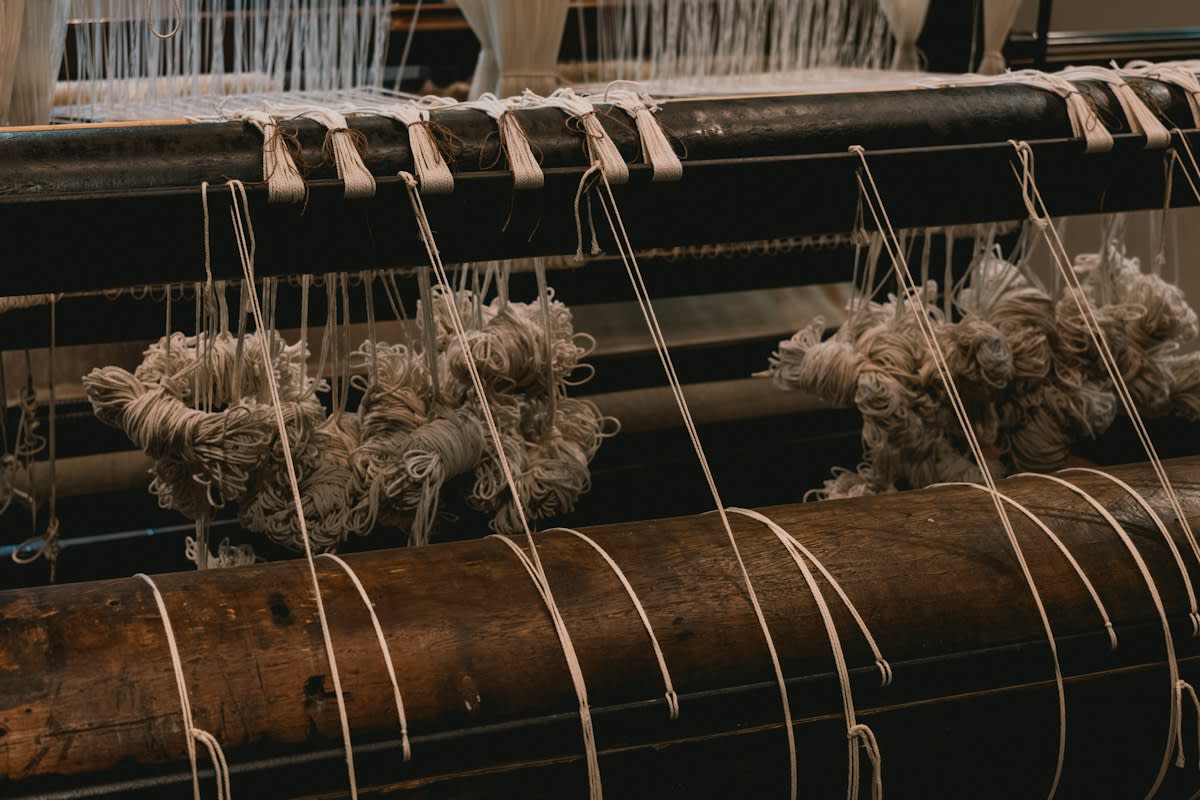
Varanasi offers a lesson. The hand-loomed silk saris produced in India are prized specifically for the slight irregularities in the weave that distinguish them from power-loom clones. This is a status signal. Only the truly wealthy can afford a garment that acknowledges the limitations of the loom. Quality is redefined. It is no longer about the lack of mistakes, but about the intentionality of the artisan. The machine is ignored.
Lagos is emerging too. Nigerian textile designers are blending traditional Aso Oke weaving with modern luxury silhouettes, purposely leaving raw edges to highlight the fabric's weight. This is a bold move. While Western luxury often hides the construction, these designers flaunt the mechanical failure of the edge. The raw is refined. It challenges the notion that luxury must be polished. Authenticity requires a bit of dirt.
The Tolerance War
Internal conflicts brew. I have sat in boardrooms in Tuscany where the Quality Assurance lead and the Creative Director nearly came to blows over a shipment of leather handbags. The QA lead saw a two-millimeter deviation in the stitching as a reason for total rejection. The designer argued that the deviation was the fingerprint of the artisan. This is the invisible friction. One side views the error as a cost; the other views it as the value proposition. The tension is palpable.
Production lines suffer. Moving from a CNC-driven model to an artisan-led model means accepting a higher scrap rate and unpredictable timelines. This terrifies the CFO. However, the pricing power granted by 'analog imperfection' far outweighs the cost of waste. A perfectly symmetrical bag sells for a thousand dollars. A bag with a documented 'human error' sells for five thousand. The math has changed.
| Attribute | Digital Precision (2015-2022) | Analog Imperfection (2023-2024) |
|---|---|---|
| Value Driver | Consistency & Flawlessness | Provenance & Human Touch |
| Manufacturing | CNC / AI / Laser | Hand-tooling / Manual Loom |
| Consumer Perception | Efficiency & Modernity | Soul & Authenticity |
| Market Signal | Technological Mastery | Cultural Stewardship |
The web expands. We are seeing this drift enter the world of high-end horology, where 'rough-finished' plates are replacing the mirror-polished surfaces of the past. It is a rebellion. By exposing the tool marks of the watchmaker, the brand proves that a human actually touched the metal. Precision is now a commodity. The mark of the file is the new luxury. The soul is visible.
Shift in Luxury Consumer Value Drivers (2022 vs 2024)
Executive Insight
+18.4%
YTD Growth
Wealth is evolving. The new elite are no longer impressed by the ability to replicate a shape perfectly a million times. They want the one that cannot be replicated. This is the ultimate scarcity. When the world is saturated with AI-generated perfection, the only remaining luxury is the mistake. The flaw is the feature. We have reached the end of the line for the sterile. The smudge is the future.
Fact-Check & Accuracy Note
The data cited regarding the APAC region and HNWIs is based on aggregated trends from Deloitte and Knight Frank. A point of academic debate remains: is 'curated imperfection' truly an artisanal revival, or is it simply a new marketing aesthetic designed to simulate authenticity for a digital-native audience?
Editorial Note
Editorial Note: This report focuses on the shift in luxury design values. It does not suggest that precision is obsolete in engineering, but rather that it has lost its status as a primary luxury signifier in the arts and design sectors.