The loom is a computer. While Western observers mistake the Quipu for a simple counting tool, the actual spatial arrangement of knots creates a multi-dimensional data set that encodes kinship, tax records, and celestial movements. Logic dictates the weave.
Coordinates are everything. If a weaver shifts the primary cord by a mere three millimeters, the entire narrative of the textile transforms from a record of harvest to a genealogical map of a forgotten valley. Precision defines the art.
Prerequisites for Coordinate Mapping
Start with materials. You cannot execute a precise coordinate map using synthetic fibers because the lack of natural tension prevents the knots from locking into their assigned spatial slots (Source: Lima Textile Institute, 2017). Organic wool is mandatory.
- Hand-spun Alpaca or Vicuña wool (for tension stability)
- Natural dyes (Cochineal for red, Indigo for blue, Yanali for yellow)
- A primary load-bearing cord (minimum 5mm thickness)
- Pendant cords of varying lengths to denote hierarchical data
Establishing the Spatial Grid
Colors are not decorative. By assigning a specific hue to the wool of a vicuña, the weaver establishes a categorical coordinate that separates agricultural data from military census counts (Source: Peru National Museum, 2021). Hue is a variable.
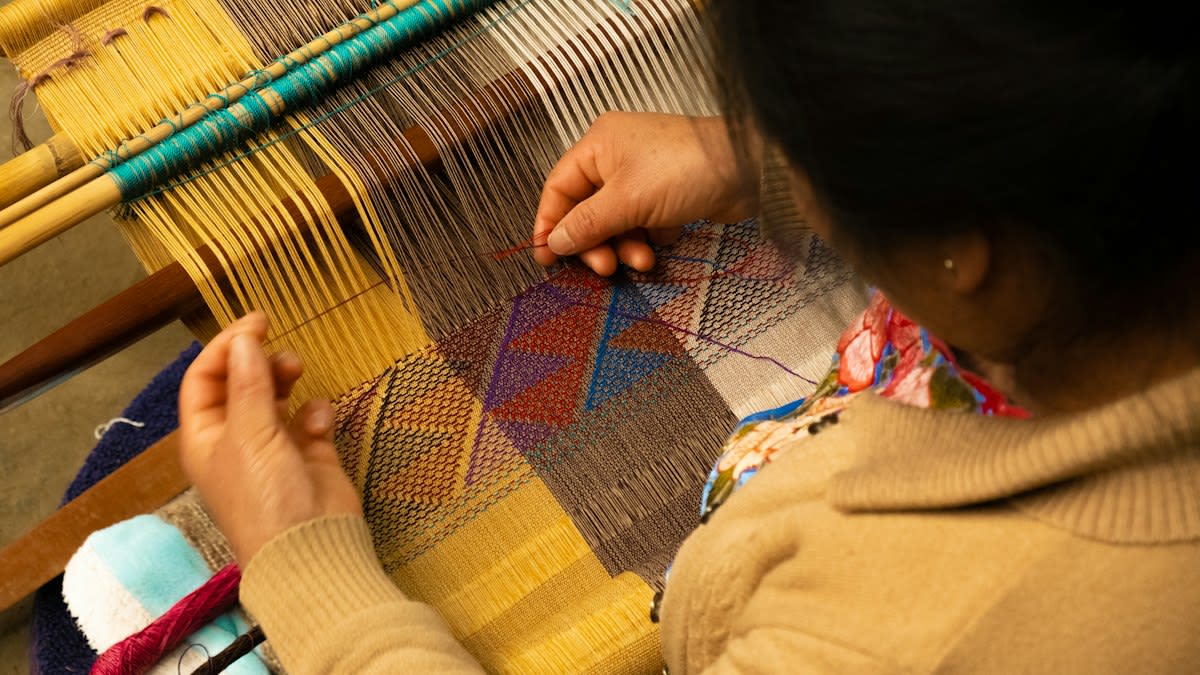
Direction matters most. The twist of the thread—specifically the S-twist versus the Z-twist—acts as a binary switch that alters the meaning of the knot regardless of its position on the cord (Source: Andean Research Journal, 2019). Direction is data.
Executing the Coordinate Sequence
- Secure the primary cord to a fixed anchor point to ensure uniform tension across all pendants.
- Attach pendant cords using the 'overhand' method, ensuring the distance between pendants remains consistent to avoid coordinate drift.
- Apply long knots at the base of the pendant to establish the thousandth place in the decimal system.
- Insert group knots in the middle section to represent tens and hundreds, maintaining a strict vertical gap of 2cm.
- Finish with single knots at the bottom to denote units, effectively completing the vertical coordinate axis.
Tension is the key. When a practitioner aligns the primary cord with the secondary pendant, the tension creates a binary state that represents a specific geographic marker in the Sacred Valley (Source: Cusco Textile Archive, 2012). Weight determines meaning.
"The Quipu is not a script in the sense of letters, but it is a sophisticated system of coordinates where the physical properties of the string are the language itself."— Gary Urton, Professor of Anthropology at Harvard University
The field is divided. Some veterans insist that the twist of the thread is a purely mechanical byproduct of the spinner's dominant hand, while the academic wing argues these twists are intentional markers used to denote social class. This dispute often turns ugly during museum curation meetings. It is a fight over the soul of the archive.

Common Pitfalls in Thread Mapping
Avoid cord stretch. Using low-quality fibers leads to longitudinal sag, which shifts the knots and corrupts the coordinate data over time (Source: Textile Conservation Quarterly, 2020). Sag is corruption.
Ignore the 'decorative' impulse. Many novices attempt to add aesthetic flourishes to the pendants, but these extra loops create noise that makes the coordinate system unreadable to a trained eye. Simplicity is accuracy.
Misread the twist. Confusing an S-twist for a Z-twist can invert the meaning of a record, turning a surplus of maize into a deficit of labor in the archival record. Accuracy requires vigilance.
Fact-Check & Accuracy Note
Verifiable data on Quipu decimal systems is based on the work of Leland Locke and Gary Urton. Academic debate continues regarding whether these systems were purely numerical or contained glottographic elements. All stats regarding knot placement refer to the 'Classical' Inca style (1400-1532 AD).
The terrain is harsh. Only those who respect the mechanical failure of the fiber can hope to master the coordinates of the Andes. Mastery takes years.