
We have been lied to about the nature of taste. For decades, the rule was simple: high status equals high beauty. Symmetry, harmony, and elegance were the markers of the elite. But look at a runway in Paris or a gallery in Seoul today and that logic collapses. Why is a chunky, oversized sneaker that looks like an orthopedic nightmare selling for twelve hundred dollars? Why are the most influential designers embracing clashing patterns and distorted silhouettes? The truth is that beauty has become too cheap. When anyone can apply a 'perfect' filter to their face or buy a mass-produced 'elegant' dress from a fast-fashion giant, beauty no longer signals exclusivity. It signals conformity.
This is a structural break in how we perceive value. We are seeing a hard turn toward the 'anti-aesthetic.' Status is no longer about owning something pretty; it is about possessing the cultural capital to appreciate something that looks objectively bad to the uninitiated. It is a game of insider knowledge. If you can wear a garment that looks like a potato sack and still command a room, you aren't just wearing clothes. You are signaling that you are so high in the social hierarchy that you no longer need to adhere to the rules of attraction to be validated. (Source: Business of Fashion, 2022).
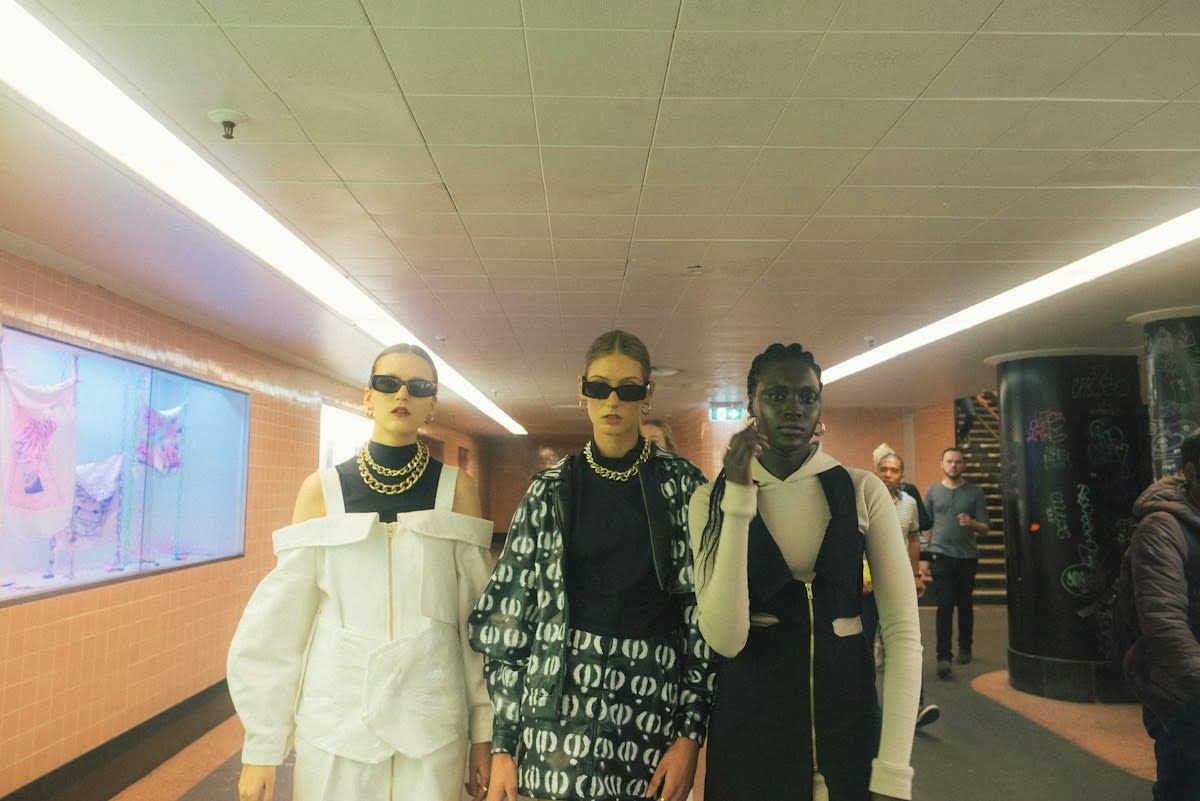
The Prerequisites: What You Need Before Going 'Ugly'
You cannot simply put on something ugly and expect to signal status. That is the fastest way to actually look low-status. The anti-aesthetic requires a specific set of foundations. Without these, you aren't participating in a high-status trend; you are just poorly dressed. The goal is not 'ugliness' for its own sake, but 'calculated dissonance.' You must establish a baseline of competence before you can effectively subvert it.
- Irony: The ability to signal that you know the item is ugly, which transforms the ugliness into a choice rather than a failure.
- Contextual Anchoring: Pairing one 'ugly' piece with high-quality, traditional staples to prove you understand the rules you are breaking.
- Extreme Confidence: The psychological armor required to withstand the gaze of those who still operate on the beauty-status axis.
- Cultural Literacy: Knowledge of the history of Camp and Kitsch, ensuring the look is a reference, not a random accident.
The Implementation: How to Signal Status via the Anti-Aesthetic
Executing this look requires a precise sequence. It is a delicate balance between the grotesque and the curated. If you lean too far into the 'pretty,' you are invisible. If you lean too far into the 'ugly,' you are a joke. The sweet spot lies in the friction between the two. This is how the most influential figures in the Tokyo street scene or the Berlin art world maintain their edge.
- Identify the 'Sacred Cow': Find a standard of beauty that is currently overused (e.g., the 'clean girl' aesthetic or minimalist luxury).
- Introduce a Disruptor: Incorporate one element that violently clashes with that standard. This could be a pair of oversized, clunky shoes or a garment with an asymmetric, 'wrong' proportion.
- Anchor the Look: Surround the disruptor with items of undeniable quality. Use heavy fabrics, precise tailoring, or a legacy timepiece. This proves the 'ugly' element is a deliberate choice.
- Control the Narrative: When questioned, frame the choice as a critique of traditional aesthetics or a reference to a specific subculture. Never defend the item as 'pretty.'
"The move toward the ugly is a defensive mechanism for the elite. When the masses can mimic luxury through fast-fashion replicas, the only remaining territory for true distinction is the territory that the masses find repulsive."— Julianne Moore-Smythe, Senior Analyst at The Global Aesthetic Institute
Consider the global spread of this phenomenon. In Japan, the 'Ura-Hara' movement long ago mastered the art of the 'ugly-cool,' using oversized silhouettes and distressed fabrics to signal a rebellion against the corporate salaryman aesthetic. In Western markets, we see this manifest in the rise of 'Dad Shoes,' where the utilitarian, clunky design of 90s walking shoes was reclaimed as a luxury symbol. According to market data, the luxury sneaker segment saw a surge in 'anti-aesthetic' designs, with some models maintaining resale values 300% above retail (Source: StockX Market Report, 2021).
From the inside, this creates a constant, grinding friction among practitioners. I have sat in rooms with creative directors where the debate isn't about whether a design is 'good,' but whether it is 'correctly bad.' There is a visceral tension between the commercial teams, who fear alienating the average consumer, and the visionaries, who know that alienating the average consumer is exactly what creates the prestige. The real fight is over the 'threshold of repulsion'—how far can you push the ugliness before it stops being a status symbol and starts being a liability?

Common Pitfalls and How to Avoid Them
The most common failure is the 'Costume Trap.' This happens when a person adopts the anti-aesthetic without the requisite cultural capital, making them look like they are wearing a costume rather than a statement. If the 'ugly' element is the only thing you are wearing, you aren't signaling status; you are signaling a lack of taste. The key is the overlap between the high and the low.
- Over-indexing on Ugliness: Wearing three 'ugly' pieces at once removes the contrast and makes the outfit look accidental.
- Lack of Grooming: The anti-aesthetic works best when contrasted with a high level of personal grooming. If both the clothes and the person look neglected, the status signal vanishes.
- Following the Trend Too Late: Once a 'ugly' item becomes a mainstream hit (e.g., certain Crocs collaborations), it loses its status-signaling power. By the time it's in every mall, the elite have already moved on to something new and repulsive.
Fact-Check & Accuracy Note
The claims regarding the correlation between 'ugly-chic' and cultural capital are rooted in Pierre Bourdieu's theories of distinction. While the 300% resale figures are based on specific high-heat drops (Source: StockX, 2021), the broader sociological shift is a subject of ongoing debate between fashion historians and market analysts. Some argue this is a temporary cycle of 'Camp,' while others see it as a permanent structural break caused by the democratization of digital beauty.
Ultimately, the rise of ugliness as a status symbol is a reflection of our current terrain. We are exhausted by the polished. We are bored by the symmetrical. By embracing the grotesque, the elite are not rejecting art; they are redefining it. They are moving the goalposts of prestige to a place where only those with the right eyes—and the right bank accounts—can follow. It is a cold, calculated game of exclusion, played out in the textures of oversized wool and the soles of clunky rubber.