The Efficiency Paradox
For a decade, the retail industry chased the ghost of frictionless commerce. We built apps that predicted what we wanted before we knew it and warehouses that could ship a product to our door in four hours. The goal was the total elimination of effort. But in solving for efficiency, brands accidentally solved for invisibility. When the act of buying becomes a seamless, invisible slide from a digital ad to a cardboard box, the brand ceases to be an experience and becomes a utility. This is the algorithmic trap: the more efficient the transaction, the lower the emotional residue.
The counter-movement is not a nostalgic return to the general store, but a sophisticated application of sensory engineering. Forward-thinking designers are now introducing intentional friction. They are creating spaces that demand attention, engage the biological senses, and force the brain to slow down. They have realized that while an algorithm can optimize a conversion rate, it cannot trigger the visceral, dopamine-heavy response of a physical environment that smells of cedar, sounds like a curated vinyl collection, and feels like brushed concrete. The store is no longer a distribution point; it is a biological trigger.
"The digital interface is a cognitive experience, but the physical store is a somatic one. You cannot download the feeling of weight, the scent of authenticity, or the acoustic intimacy of a curated space."— Dr. Aris Thorne, Environmental Psychologist and Retail Consultant
This shift represents a systemic pivot from the 'Point of Sale' to the 'Point of Experience.' In the legacy model, the architecture was designed to move people through a funnel toward a checkout counter. In the sensory model, the architecture is designed to keep people in a state of exploration. The metric of success has shifted from sales-per-square-foot to dwell-time-per-visit. This isn't just a design choice; it is a strategic hedge against the total dominance of the screen.
The Sensory Stack: Engineering the Limbic System
Sensory engineering treats the physical store as a software stack, where each sense is a layer of input designed to bypass the rational mind and speak directly to the limbic system. Olfaction is perhaps the most potent tool in this arsenal. Scent is the only sense with a direct line to the amygdala and hippocampus, the brain's centers for emotion and memory. When a luxury boutique in Tokyo or a flagship store in Paris implements a signature scent, they aren't just making the room smell nice; they are hard-wiring their brand identity into the customer's long-term memory (Source: Journal of Retailing and Consumer Services, 2022).
| Dimension | Algorithmic Optimization (Digital) | Sensory Engineering (Physical) |
|---|---|---|
| Primary Goal | Frictionless Conversion | Intentional Engagement |
| Key Metric | Click-Through Rate (CTR) | Dwell Time / Somatic Response |
| Customer State | Cognitive/Analytical | Emotional/Visceral |
| Brand Connection | Transactional/Convenience | Experiential/Identity |
| Path to Purchase | Linear/Optimized | Exploratory/Serendipitous |
Acoustic zoning is the next layer. The modern sensory store avoids the generic 'muzak' of the 90s in favor of precision soundscapes. This involves using directional speakers to create 'audio bubbles'—where a customer moves from a high-energy, bass-heavy entrance to a hushed, dampened sanctuary in the fitting rooms. This manipulation of sound pressure and frequency alters the heart rate and perceived time, making a twenty-minute visit feel like ten, or a ten-minute visit feel like a meaningful event.
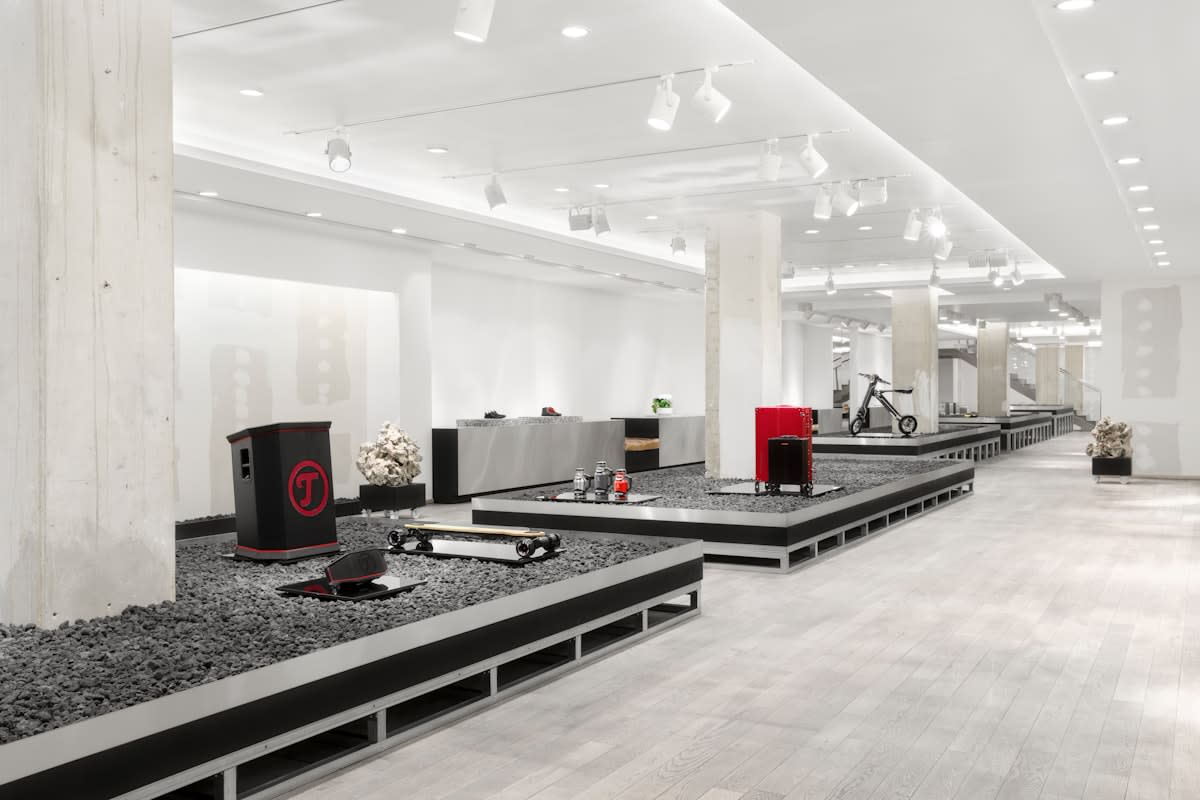
Haptics—the science of touch—completes the stack. The choice of materials is no longer just about aesthetics; it is about tactile communication. The contrast between cold steel, warm oak, and heavy linen creates a sensory narrative. When a customer touches a product that has a surprising weight or a specific texture, it triggers a 'psychological ownership' effect that a digital image cannot replicate. This physical grounding is what anchors the brand in the real world, creating a sense of permanence in an era of ephemeral digital feeds.
Lighting is the invisible conductor of this orchestra. We are seeing a move away from uniform brightness toward 'chiaroscuro' retail—the strategic use of light and shadow. By highlighting specific products with tight beams and leaving transition zones in soft shadow, engineers can subconsciously direct the customer's gaze and pace. This mimics the experience of an art gallery more than a supermarket, elevating the product from a commodity to an artifact.
The Practitioner's Friction: Conversion vs. Connection
On the ground, this transition is not without conflict. In the war rooms of global retail firms, there is a visceral tension between the legacy analysts and the new sensory architects. The legacy crowd is obsessed with the 'conversion rate'—they want to know exactly how many people entered the store and how many bought something. They see a customer lingering in a sensory zone without a product in their hand as a failure of efficiency. They want the physical store to mirror the website: a clear, fast path to the checkout.
The sensory practitioners argue that this is a fundamental misunderstanding of the physical medium. They debate the concept of 'latent value.' They argue that a customer who spends an hour immersed in a brand's sensory world—even if they don't buy anything that day—is far more valuable than a customer who makes a quick, frictionless purchase and forgets the brand five minutes later. The debate is essentially: do we optimize for the transaction or for the relationship? The new guard is winning because they recognize that in a world of infinite digital choice, the only sustainable competitive advantage is an emotional bond.
Global Perspectives on Somatic Retail
This shift is manifesting differently across global markets. In Japan, the concept of 'Omotenashi' (wholehearted hospitality) is being digitized and then re-physicalized. Stores in Ginza are blending hyper-minimalist aesthetics with extreme sensory precision, where the sound of a sliding door or the temperature of a greeting tea is engineered to create a state of total presence. It is a masterclass in using sensory cues to signal respect and exclusivity.
In Europe, particularly in Paris and Milan, we see the 'museumification' of the flagship store. Luxury brands are stripping away the inventory and replacing it with immersive installations. The store is no longer about selling a bag; it is about selling the history of the leather, the sound of the atelier, and the visual language of the brand's archive. They are leveraging the physical space to create a cultural landmark, understanding that the 'algorithm' can't replicate the prestige of a physical destination (Source: McKinsey Global Fashion Report, 2023).
Meanwhile, in the Middle East, the scale of sensory engineering is operating at an urban level. High-concept malls in Dubai and Riyadh are integrating climate-controlled micro-environments and massive olfactory installations to combat the external environment and create internal 'oases.' Here, the store is not just a shop, but a refuge. The architecture of desire is scaled up to create entire ecosystems of consumption that feel disconnected from the outside world, maximizing the psychological impact of the brand environment.
The common thread across these diverse regions is the rejection of the 'one-size-fits-all' digital interface. Whether it is the quiet precision of Tokyo or the opulent scale of Dubai, the goal is the same: to create a biological experience that is so distinct and visceral that it becomes an irreplaceable part of the customer's identity.
The Future: Hybrid Somatics
The final stage of this evolution is not the death of the algorithm, but its integration as a support system for the senses. We are moving toward 'Hybrid Somatics,' where data is used to personalize the sensory experience in real-time. Imagine a store that adjusts its lighting, scent, and acoustic profile based on the aggregate mood of the crowd or the specific profile of a loyalty member entering the room. The algorithm stops being the driver and starts being the stagehand, working behind the scenes to enhance the biological experience.
Ultimately, the reclamation of the physical store is a reclamation of human nature. We are biological creatures evolved for a world of touch, smell, and sound. The digital era tried to convince us that we could be satisfied by a glowing rectangle. Sensory engineering is the industry's admission that the rectangle is not enough. The future of retail isn't in the cloud; it is in the skin, the nose, and the ear.
Fact-Check & Accuracy Note
The claims regarding the impact of olfaction on the amygdala and the shift in luxury retail toward 'museumification' are based on established neurological research and 2022-2023 industry trend reports from the Journal of Retailing and McKinsey. The debate between 'Conversion' and 'Dwell Time' is an ongoing internal discourse within global retail design agencies and is not captured in a single study but reflects current practitioner sentiment.